



The bilateral relationship between India and Qatar is entering a high-tech phase as both nations move to leverage emerging technologies and startup mobility to drive economic diversification.
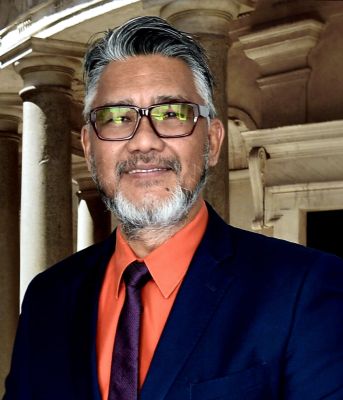
“The vision of Viksit Bharat 2047 has close resonance with the Qatar National Vision 2030. The direction we have set is towards ensuring the responsible use of these emerging technologies, especially artificial intelligence (AI), blockchain, and related innovations. There are numerous avenues where both sides can come together to discuss these initiatives,” Chargé d’Affaires Sandeep Kumar of the Indian embassy told Gulf Times, highlighting how digital public infrastructure, AI, and private sector innovation are reshaping bilateral cooperation beyond traditional trade ties.
Platform engagements are opening direct pathways for startup exchange, according to Kumar. Pointing to India’s active participation across three consecutive editions of Web Summit Qatar, he said the annual event has allowed Indian tech firms to connect directly with regional investors and local markets.
“Qatar has already hosted three editions of Web Summit, marking the first of its kind in the Mena region. In the 2025 edition, we established a country pavilion, enabling several Indian start-ups to showcase their products and services.
“For the summit’s third edition, numerous Indian companies participated, with the embassy facilitating their visits and arranging meetings with Qatari counterparts,” said Kumar, adding that India’s Minister of Electronics and Information Technology Ashwini Vaishnaw attended the inaugural Web Summit Qatar, where he also met with the Minister of Communications and Information Technology HE Mohammed bin Ali al-Mannai.
He said these institutional connections extend to Qatar’s research and technology (R&D) infrastructure, with the Indian embassy facilitating links between visiting delegations and private and public entities like the Ministry of Communications and Information Technology, Qatar Science & Technology Park (QSTP), and the Qatar Research, Development and Innovation (QRDI) Council, among others.
Frameworks like the India-Qatar Startup Bridge initiative, launched by India’s former vice president M Venkaiah Naidu during the India-Qatar Business Forum in Doha on June 5, 2022, remain active channels to scale corporate and startup operations across both borders, Kumar explained.
Underpinning this technological push is India’s digital infrastructure and demographic profile, said Kumar, noting that over 50% of global digital transactions occur in India, backed by a population where roughly 65% of citizens are below the age of 35.
This youth dividend drives practical advances in deep-tech industries, emphasised Kumar, citing space startup Agnikul Cosmos, which demonstrated this capability by launching its Agnibaan SOrTeD rocket from Sriharikota, powered by the world’s first single-piece 3D-printed engine and developed by a team with an average age of 28.
“Qatar and India can connect and collaborate strongly across advanced manufacturing, digital innovation, emerging technology, semiconductor manufacturing, logistics, food security, and infrastructure. Both countries need to work on improving their technology environments while understanding and adapting new technologies responsibly,” Kumar reiterated.