
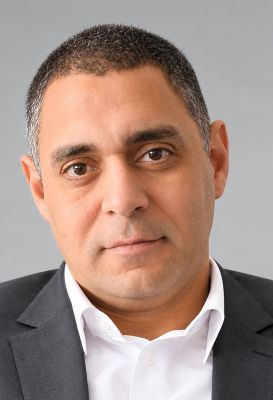



Qatar’s invitation to Iran to send a technical team to review the details of search and rescue operations involving its pilots remains open, HE Dr Majed bin Mohamed al-Ansari, Adviser to the Prime Minister and Official Spokesperson for the Ministry of Foreign Affairs said yesterday.
Speaking at the Ministry of Foreign Affairs’ weekly press briefing yesterday, Dr al-Ansari noted that Tehran had previously received the official invitation but had not responded. Accordingly, Qatar was surprised by Iranian media statements that he described as “completely baseless,” stressing that Doha had taken all necessary measures in line with its international and humanitarian obligations.
He explained that the involved Iranian aircraft had entered Qatari airspace and targeted Doha in March this year. After confirming the violation of Qatari airspace, the aircraft were dealt with under the applicable rules of engagement; as such aircraft were clearly there to breach the sovereignty of the Qatari territories and risk the safety and security of the country and its people. He wondered that these were not obviously breaching the airspace of Qatar for a promenade or leisure.
However, the concerned Qatari authorities attempted to establish contact with the pilots, but received no response, prompting the necessary measures to be taken. Search and rescue teams began their work immediately in accordance with relevant international obligations.
Dr al-Ansari stressed that Qatari search and rescue teams carried out their duties fully and were able to locate the remains of one of the pilots. The Iranian side was informed, and the search operation was subsequently concluded after the remains were recovered. The body was later handed over to the Iranian authorities, who held a funeral for the pilot in Iran.
He added after that Qatar received an Iranian delegation and provided information on the search and rescue operations, reiterating that the invitation for a technical Iranian team to review the details remains open.
Accordingly, he stressed Qatar is not concerned with what he described as attempts at “internal media consumption,” emphasising that Doha’s position remained firm on protecting its sovereignty and responding to any similar aggression in the future.
Regarding the Qatar-Iran relations, Dr al-Ansari said Qatar had faced violations of its sovereignty while taking measures to protect its security and the security of the residents on its territory.
At the same time, he underscored the importance of respecting the sovereignty of states and maintaining coexistence based on mutual respect and good neighbourhood. He noted that the geography of the region makes it necessary for its countries to continue living alongside one another and maintaining relations founded on respect for sovereignty.
In the meantime, Dr al-Ansari said that currently the immediate focus was on containing the current crisis and returning to the diplomatic track and to continue the regional de-escalation efforts.
He also noted to the violation of the ceasefire and developments surrounding the Strait of Hormuz, saying these developments made it necessary to return to the provisions of the memorandum of understanding and resume negotiations.
He affirmed that diplomatic efforts are still going on intensively, with Qatar hoping for an agreement between Oman and Iran concerning the Strait of Hormuz that could create the conditions necessary for a return to negotiations.
He explained that he the only way for a real development and resolve of the issue involve a serious ceasefire, guaranteed freedom of navigation through the Strait and a return to the negotiating table.
Dr al-Ansari recalled that mediation efforts involving Qatar and its partners had previously contributed to achieving a ceasefire, but that the ceasefire was subsequently violated.
The immediate priority is now to halt further escalation and bring the parties back to the negotiating table, whether to implement existing understandings or work toward a new agreement.
On negotiations between Oman and Iran, he said there were no new developments at present, adding that efforts were still underway to reach an agreement between the two sides that would facilitate the resumption of negotiations and prevent further escalation in the region.
On Gulf co-ordination, Dr al-Ansari confirmed continued co-ordination among GCC countries at the level of leaders, foreign ministers, and security and defence officials.
The co-ordination is aimed at ensuring preparedness for any potential repercussions, with Gulf diplomatic mechanisms working collectively to address the evolving regional situation.