
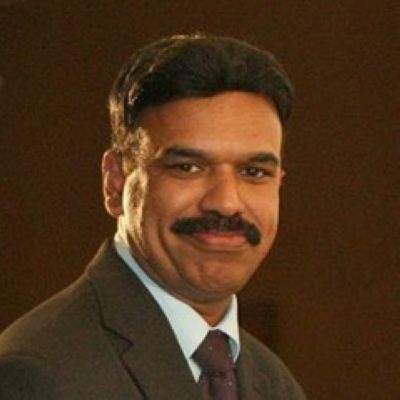



For Yasamin Shaikhi, it was a moment of realisation and great pride when her artwork ‘The Loudest Grain’ made of rice, won Media City Qatar’s inaugural "Next in Arts" programme at Art Basel Qatar 2026.
It was a great moment in her career as several high-profile dignitaries and artists visited her work and suddenly she was among the talks of the inaugural edition of Art Basel Qatar.
Shaikhi, an alumna of Virginia Commonwealth University School of the Arts Qatar (VCUarts Qatar), told Gulf Times that the number of high profile visitors to her work was truly exciting and the significance of ‘The Loudest Grain’ lies in the irony of its material.

She said “Presenting the work through this platform has also shown me how widely that idea can resonate. Seeing The Loudest Grain viewed by figures such as Her Highness Sheikha Moza bint Nasser, Her Excellency Sheikha Al Mayassa bint Hamad bin Khalifa al-Thani, Angelina Jolie, and thousands of exhibition visitors reinforced for me that even the most ordinary materials can spark meaningful global conversations when framed in the right way.”
“We usually think of rice as something quiet, humble, and biodegradable. A material that exists in volume, but is rarely noticed as an individual unit. By transforming rice waste into a rigid, structural biomaterial that represents digital waves, I’m giving that “quiet” grain a loud, permanent voice. It’s about making the invisible signals of our media landscape tangible through a material that everyone recognises,” she explained.
Shaikhi noted that she first came across the topic during her master’s programme at VCUarts Qatar as she was deeply researching food waste renaissance, exploring how everyday organic waste could be repurposed into high-quality design materials.

She continued: “When the opportunity with Media City Qatar came up, I wanted to find a way to bridge that material research with the concept of media. I realised that both rice and media are ubiquitous. They are everywhere. They sustain us, yet we rarely stop to think about their underlying substance. That’s when the idea clicked: using the “grain” of the rice to visualise the “grain” of a digital signal.”
The young artist noted that some of the challenges associated with creating The Loudest Grain were primarily about precision and predictability. “Technically, I had to ensure the material cured at exactly the right thickness and strength, while also understanding how to manipulate it in its uncured, flexible state. It was a bit of a puzzle to predict exactly how the final form would hold once fully cured,” she remarked.
“Conceptually, the challenge was in giving form to something invisible, finding a way to translate the abstract digital signals into a physical language while remaining true to the grounded, organic nature of the material. Balancing that tension between the high-tech concept and the low-tech material is exactly what made the final piece so rewarding,” she underlined.
She said that her next steps are deeply rooted in collaboration. She emphasised: “I firmly believe that when different disciplines come together and exchange ideas, a certain kind of magic happens, the work begins to speak across multiple worlds and audiences. I want to continue partnering with local creatives to explore how my material research can intersect with their fields and practices.”
“I also plan to work closely with local galleries, institutions, and museum platforms to exhibit these pieces more widely across the country, creating greater visibility for this type of experimental design work. My hope is to spark curiosity in viewers and, in turn, inspire other emerging artists and designers to think differently about materiality, process, and sustainability,” added, Shaikhi.

