
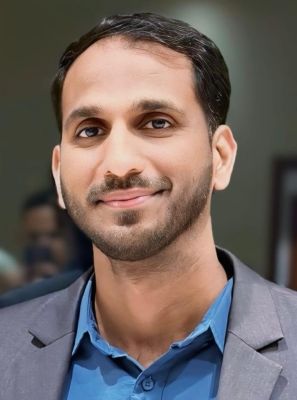



In 2010, Imthiyas Aboobacker, a well-known finger dance expert, envisioned a unique way to enhance mental focus among children with special needs. After extensive research, study, and consultations with experts, he launched Mind Moves, an initiative that combines creativity with cognitive development through finger-based exercises.
“I have a superhero in my family,” Aboobacker recalls, referring to his differently-abled cousin who once showed a keen interest in finger movements during a visit. “Each child responds differently. Once they begin moving, they start enjoying it and gradually immerse themselves in the rhythm.”

The programme is structured into multiple levels—around 25 in total—designed to progressively build skills. Through consistent practice, Aboobacker believes the therapy can bring significant improvements in fine motor skills, eye-hand coordination, and attention span.
Inside classrooms where Mind Moves is practised, the transformation is visible. Children who were once hesitant now follow rhythmic patterns—not with their feet, but with their fingers. What may seem like a simple activity is, in reality, a carefully designed therapy that stimulates both sides of the brain.
At its core, Mind Moves focuses on fine motor movements—small, deliberate actions that enhance brain activity and cognitive function. These exercises, often presented as engaging “finger games,” are particularly beneficial for children facing attention challenges, including those on the autism spectrum.

“Finger movements can contribute significantly to brain development,” Aboobacker explains. “Through subtle, engaging activities, we can improve focus and overall quality of life.”What distinguishes the initiative is its personalised, human-centric approach.
There is no one-size-fits-all method. In one session, Aboobacker introduced a sequence built around the story of a man going out to buy a guitar—turning therapy into an imaginative experience. Teachers observed that children not only followed the movements but also connected emotionally with the narrative.
“Initially, I had doubts, as we had tried several activities without much success,” said a school principal. “But gradually, it proved to be very beneficial; the students were happy and engaged.”Parents share similar hope. “After seeing the session, I feel confident that with practice, their skills will improve,” said one parent.
The inspiration behind Mind Moves remains deeply personal. Encouraged by his cousin’s response to finger movements, Aboobacker began exploring the link between motion and brain development. With the support of his wife, Roshni Abdulla, he developed specialised tools, including small toys and structured exercises, to make learning both effective and enjoyable.

Breakthrough moments continue to inspire the team. In one instance, a principal challenged them to engage a non-responsive student. Within minutes of introducing the exercises, the child began to respond—an emotional moment that left everyone in awe.
Aboobacker’s journey with finger dance has long been impactful. In 2017, he choreographed Rhythm of 1K1 Hands, a record-breaking performance in which 504 students from Gregorian Public School performed a synchronised finger dance for over five minutes, earning recognition from Best-of-India Records. The performance carried a powerful message of unity, peace, and harmony.
Currently, the initiative is being implemented in a number of schools, training more than 2,000 students, teachers, and parents alike. Looking ahead, Aboobacker aims to expand the programme to all 340 special schools across Kerala, driven by a shared mission to support differently-abled children and extend the benefits of this therapy across India and beyond.