



Artificial intelligence (AI) is no longer a peripheral technology or an add-on tool for industry but the central nervous system of modern business, reshaping how sectors from petrochemicals to finance and construction operate, according to an industry expert.
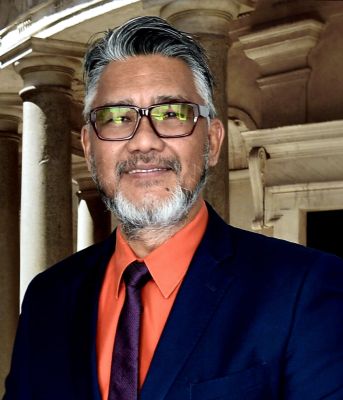
The Next Generation (TNG) School director Riyaz Bakali, who brings experience spanning the petrochemical sector and education, told Gulf Times that Qatar's diversification efforts under the Qatar National Vision 2030 “are world-class and strategically sound.”
He noted that Qatar has built sectors like tourism, finance, technology, economics, and education from the ground up “with remarkable speed and intentionality,” adding that the foundation is “strong” and the “extraordinary progress” made in a relatively short time deserves acknowledgement.
However, Bakali noted that “the pace of global change, technological, geopolitical, and environmental, means that sufficiency today can become obsolescence tomorrow,” emphasising that the need to “always remain ahead of the curve because complacency is the enemy of resilience.”
“The next phase of diversification must focus on the knowledge economy with greater intensity. Specifically, we need to accelerate the shift from being a consumer of research to a producer of research.
“The next frontier is generating our own intellectual capital, research that originates here, solves regional challenges, creates proprietary value, and generates intellectual property that the world seeks to license,” he pointed out.
Bakali described education not merely as a support sector but as the bedrock of economic resilience, adding that producing enough highly skilled innovators, researchers, and entrepreneurs who can launch ventures, lead research and development, and build industries would create a self-sustaining economic cycle that complements rather than depends on LNG revenue.
“That, to me, is the true meaning of diversification: Not replacing one pillar with another, but building an integrated ecosystem where multiple pillars, energy, knowledge, finance, tourism, reinforce and stabilise one another. When one sector faces headwinds, others can carry the momentum forward. That is structural resilience, and it is within our reach,” Bakali noted.
On the impact of the US-Israel-Iran war on Qatar's LNG industry and GCC economies, Bakali pointed to Qatar’s diplomatic posture as a form of resilience in itself.
“Qatar has consistently maintained its international and regional position as a sincere peace negotiator, strategically committed to dialogue and to principles that reject destruction. This diplomatic maturity is, in itself, a profound form of resilience,” he emphasised.
Drawing on his petrochemical background, Bakali emphasised that volatility is not an exception but a constant, adding that geopolitical tensions test the agility of the energy sector, yet “Qatar has proven time and again” that its resilience is not accidental but structural and strategic.
He pointed out that Qatar's LNG infrastructure is among the most robust in the world, and its leadership has wisely diversified trade routes and international partnerships over many years.
Bakali further stated that while temporary market fluctuations may be observed in the short term, Qatar's long-term resilience rests on a deeper foundation, specifically its ability to leverage energy wealth to develop human capital.
“This disruption, while deeply concerning, serves as a stark reminder that we cannot rest on our hydrocarbon laurels. It accelerates the urgency for economic diversification, a journey Qatar is already pursuing with clear vision, deliberate pace, and the wisdom that comes from navigating previous challenges,” Bakali added.