
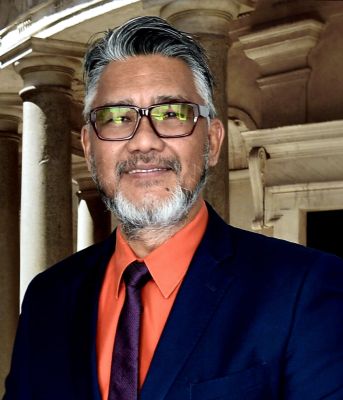



Qatar’s venture capital ecosystem has taken a significant step towards establishing the country as a launch pad for globally ambitious deep-technology companies, according to an official of a Doha-based venture capital firm.
Soumaya Ben Beya, partner at Rasmal Ventures, made the statement after EnergyX, a South Korea-founded building energy technology company, secured the backing from Rasmal and Qatar Development Bank (QDB), among other institutions, to support its global acquisition strategy and deep-technology expansion.
Ben Beya said the firm was drawn to EnergyX’s integrated platform spanning building design, operations, and energy management — combining AI-driven computational energy intelligence, cloud-based optimisation, and energy-generating building envelopes.
“From an investment standpoint, that combination of software, real-world deployment, and manufacturable hardware is pretty interesting. This was the kind of transaction that required technical, commercial, and ecosystem diligence rather than purely financial underwriting,” Ben Beya told Gulf Times.
Ben Beya also noted that EnergyX is growing through acquisitions, with further deals expected to be announced in the near future. Proceeds from the Qatari backing will fund a growth-by-acquisition strategy spanning the GCC and Europe, accelerate project deployments, and expand the company’s engineering and manufacturing capacity.
While the backing amount was not disclosed, Ben Beya said the significance of the transaction goes beyond the size of the cheque. “This is not simply a passive venture round,” she stated, pointing to EnergyX’s establishment of its global command centre and international headquarters in Qatar, planned smart manufacturing activity, and support from multiple Qatari public and private stakeholders.
“In our view, that makes it unusually large in strategic scope for a MENA transaction involving an overseas deep-tech clean-building company relocating core global functions into the region,” she pointed out.
According to Ben Beya, QDB’s involvement in the deal reflects a formalised partnership between the two institutions. In February 2025, QDB and Rasmal Ventures signed a cooperation agreement covering joint investment opportunities, startup support, and broader ecosystem development.
Ben Beya said QDB’s participation in the EnergyX deal was not a condition of closing, but that it “materially strengthened the transaction from an ecosystem and market-entry perspective.”
On QDB’s alignment with Qatar National Vision 2030, Ben Beya emphasised that the bank’s mandate explicitly covers innovation, economic diversification, sustainability, and strategic partnerships, and its investment programmes contemplate supporting international companies where there is a clear Qatar angle.
In EnergyX’s case, she said, that angle is substantial, encompassing a command centre, an international headquarters, advanced manufacturing plans, knowledge transfer with universities, and job creation over five years.
Asked what Qatar offers international deep-tech companies that other regional nations do not, Ben Beya pointed to a coordinated institutional platform: Invest Qatar for setup and stakeholder access, QDB as co-investor and ecosystem enabler, the Qatar Financial Centre (QFC) as a licensing route already used by EnergyX, and a sovereign-backed venture strategy through the Qatar Investment Authority’s (QIA) Fund of Funds programme, which is designed to attract fund managers, founders, and high-growth companies to Doha.
“That degree of policy, capital, and market-entry coordination is a meaningful differentiator,” she emphasised.
EnergyX is targeting more than 140 hires in Qatar alone by 2028, drawing on both Qatari nationals and international specialists. Ben Beya said there is a clear intention over time to deepen the local talent base through training and knowledge transfer.
Rasmal was the first fund to receive QIA backing under its Fund of Funds programme, a relationship Ben Beya said has expanded the firm’s ability to operate as a bridge between Qatar’s institutional capital and globally ambitious technology companies.
“In practice, that gives us better access, and more institutional convening power when working on cross-border opportunities that have both commercial upside and strategic relevance for Qatar,” she stated.
The EnergyX deal may be a sign of things to come, noted Ben Beya, who said Rasmal is seeing increasing inbound interest from international founders and operators who view Qatar as a serious base for scaling into the region and beyond, particularly in sectors where deep technology, AI, advanced industry, and sustainability intersect. Rasmal is also preparing to launch a new fund focused on climate technology and carbon, with a formal announcement expected later this year.
“From our perspective, the significance of this transaction is not only in backing a strong company, but in helping anchor a global deep-tech platform in Qatar with the capacity to scale across multiple markets from here,” she said.
Ben Beya added: “Announcing this at a moment of heightened regional uncertainty also reflects the conviction of all parties involved in Qatar’s long-term stability, institutional strength, and ability to support globally relevant innovation.”