
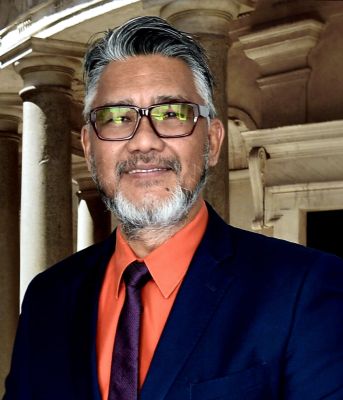



Backed by a commitment to blending innovation with cultural heritage, Qatar is building toward a fully intelligent educational ecosystem that could see it leapfrog traditional learning models, an official of The Next Generation (TNG) School has said.
TNG director Riyaz Ahmed Bakali said Qatar is uniquely positioned to move toward an adaptive curriculum model where artificial intelligence (AI) handles the transmission of foundational knowledge, freeing the human educator to focus on cultivating critical thinking, ethical reasoning, and social-emotional development.
“Technology handles the what; the teacher focuses on the why and the how,” Bakali explained to Gulf Times.
Bakali pointed out that the future of education lies in personalised learning pathways powered by data, adding that the Ministry of Education and Higher Education’s vision aligns seamlessly with this direction.
He noted that the ministry continues to develop academic compliance infrastructure that brings all stakeholders together to build a sustainable and adaptable educational framework, one that balances innovation with the timeless principles of authentic learning.
On teacher retention, which remains a challenge worldwide, Bakali said the issue goes deeper than retention itself. “Before we talk about retention, we must talk about attraction, specifically, the challenge of attracting and retaining talented professionals to teaching as a vocation, not just a job,” he noted.
He explained that TNG has adopted a three-pillar strategy built around well-being, autonomy, and pathways to address this challenge.
On well-being, Bakali stated that beyond competitive compensation, the focus is on cultivating a healthy teaching and learning environment where mental health is prioritised not as a slogan but through tangible policies and a genuinely supportive culture.
Speaking on autonomy, he pointed out that teachers are given genuine ownership of the curriculum and the freedom to innovate. “A teacher who feels like a technician following a script will not stay; a teacher who feels like a co-architect of learning will,” Bakali said.
Asked about pathways, Bakali emphasised that continuous professional development converts teachers into leaders, with a clear career ladder provided for every team member.
“When educators see a clear trajectory for growth and feel their well-being is genuinely valued, they don’t just stay; they grow roots, thrive, and become part of the institutional memory,” he stated.
On the question of balancing high academic standards with holistic development, Bakali said he challenges the premise that these two are in tension with each other.
“High academic standards and holistic development are two sides of the same coin,” he stated, adding that students achieve strong academic results not through drilling but by ensuring they are physically active, mentally resilient, and intellectually engaged through leadership opportunities, research projects, debates, the arts, and community work.
Bakali also said, “The result is a graduate who is not merely exam-ready but life-ready, equipped with both the credentials to open doors and the character to walk through them with purpose.”