



When Iranian missiles began striking Qatar in the early hours of March 1, the country faced one of the most profound tests in its modern history. The irony was bitter: Qatar had spent years building diplomatic bridges between Tehran and the West, only to find itself targeted within an hour of the war's outbreak. Yet rather than be consumed by anger, Doha made a deliberate and consistent choice — to keep talking, keep the shelves stocked, and keep its people calm.
Betrayal that did not break resolve
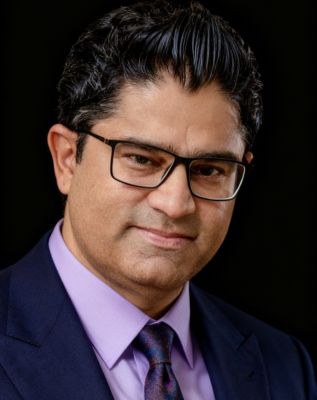
His Excellency Prime Minister and Minister of Foreign Affairs Sheikh Mohammed bin Abdulrahman bin Jassim al-Thani did not mince words in an interview with Sky News. "It is a big sense of betrayal," he said. "Just an hour after the start of the war, Qatar and other Gulf countries were attacked — we made clear that we were not going to take part in any wars against our neighbours."
And yet, in the same breath, he made clear that betrayal would not alter Qatar's fundamental posture. The crisis could not be resolved through further military escalation, he stressed: "We continue to seek de-escalation. They are our neighbours — it's our destiny."
That posture has been consistent throughout. Qatar had played a leading role in the negotiations and joined GCC nations in pushing hard for a diplomatic solution before the war began. When those efforts failed, its diplomatic machinery shifted into higher gear rather than standing down. The prime minister chaired the Qatari delegation at a joint GCC-European Union video summit to discuss pathways back to dialogue, while Qatar received dozens of calls from world leaders expressing solidarity.
His Excellency Minister of State for Foreign Affairs Mohammed bin Abdulaziz al-Khulaifi, speaking to Al Jazeera, urged both Iran and the United States to return to the negotiating table, pointing out that Iran's attacks on its neighbours brought "benefit for no-one." His most pointed observation: Iran had struck the very countries — Qatar and Oman — that had served as its bridges to the West. "We will not be able to fulfil that role under attack, and that's something the Iranians need to understand."
Advisor to the Prime Minister and Ministry of Foreign Affairs spokesperson Dr Majed al-Ansari reinforced the message, recalling that Doha had warned for years that uncontrolled escalation would end disastrously, and that it was still not too late for dialogue to contain the damage.
Defending the skies, protecting the streets
While diplomats worked the phones, the Qatar Amiri Air Force worked the skies. The Ministry of Defence reported shooting down two Iranian Su-24 bombers on March 2 and intercepting multiple drone and missile strikes ever since. The country was under attack but not overwhelmed — a testament to years of defence investment and the readiness built through the national Watan exercise, which the interior minister credits with preparing Qatar for precisely this contingency. "Qatar is operating with a unified front," he said. "No department is working in isolation."
On the ground, the Ministry of Interior became the primary voice of reassurance — visible, consistent and precise. It confirmed that the National Warning System would only be activated when urgent action was genuinely required, a deliberate policy to prevent alert fatigue and unnecessary panic.
Environmental monitoring confirmed that air and marine pollution levels remained stable throughout. Practical public guidance was issued and regularly updated: upon hearing a national warning, residents were advised to move inside, stay away from windows and glass facades, await official instructions and report any unknown objects or remnants by calling 999. Residents evacuated from specified areas were provided safe alternative accommodation.
Crucially, citizens and residents responded. Social media feeds showed widespread sharing of official Ministry of Interior posts, with community leaders and expatriate groups actively amplifying only verified official communications — a collective act that helped contain the spread of misinformation at a moment when false information was circulating aggressively.
Keeping the country fed
Perhaps the most consequential domestic challenge was ensuring supplies. The government moved quickly and on multiple fronts.
Qatar Airways repurposed part of its Boeing 777 freighter fleet to maintain the flow of vital goods, transporting approximately 300 tons of essential supplies since the start of March — medicines, baby milk, fresh food and medical equipment — after obtaining civil aviation authority approval for limited safe air routes. The airline is now delivering more than 200 tons of imports daily from markets across Africa, Asia, Australia, Europe, India and Pakistan.
On the ground, major hypermarket chains including LuLu, Al Meera, Monoprix, Safari and Carrefour continued operating at full capacity with well-stocked shelves. The Ministry of Commerce and Industry extended 24-hour operations to 33 retail branches nationwide to support market stability and deployed daily field inspection teams to prevent price manipulation.
Qatar Chamber Chairman Sheikh Khalifa bin Jassim al-Thani formed a dedicated working team holding continuous meetings to address emerging supply challenges, backed by a joint government-Chamber committee to monitor prices and clamp down on any unjustified increases.
Underpinning all of this was Qatar's long-term strategic reserve of food and essential goods — a foresight investment that has proved its worth. Domestic self-sufficiency in dairy, poultry and key agricultural products further cushioned the disruption.
A nation defined by its response
What has emerged over the past two weeks is a portrait of a state under genuine threat that has refused to be defined by that threat. Qatar did not choose this war. It warned against it, lobbied against it and mediated against it.
Qatar's UN Ambassador Her Excellency Sheikha Alya Ahmed bin Saif al-Thani told the Security Council that targeting uninvolved neighbours was a clear violation of international law — a position the UNSC ultimately endorsed by voting to denounce the Iranian strikes on GCC states.
The prime minister, reflecting on the weeks just passed, praised the resilience of everyone living in Qatar and spoke of the "significance of the moment our country is going through", before adding: "I cannot fail to express my pride, as a Qatari, in the cohesion of our society."
For a country that has navigated a blockade, regional rivalries and now outright missile attacks, that cohesion — between government and governed, between citizen and resident — may prove to be Qatar's most enduring strategic asset.

