



Qatar has declared that Iranian attacks on its territory have crossed clear red lines and will not go unanswered, as its Foreign Ministry revealed the full scale of an assault that saw more than 140 missiles, drones, and fighter jets launched against the country since Saturday — the vast majority of which were intercepted and destroyed by Qatari armed forces.
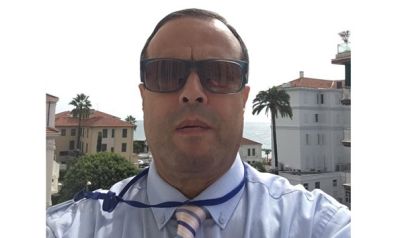
Advisor to the Prime Minister and Official Spokesperson of the Ministry of Foreign Affairs Dr Majed bin Mohammed al-Ansari, speaking at the ministry's weekly media briefing Tuesday, delivered a comprehensive and at times pointed account of events, flatly rejecting Iranian claims that Doha had been forewarned of the attacks. "Completely untrue," he said, stressing that Qatar was taken entirely by surprise by what he described as wholly unjustified aggression.
The scale of the attack
Since the Iranian assault began on Saturday, Qatari territory has been targeted by three cruise missiles — all intercepted — 101 ballistic missiles, 98 of which were shot down, and 39 drones, 24 of which were brought down. Two Iranian SU-24 fighter jets that violated Qatari airspace were also destroyed in accordance with rules of engagement, after the necessary warnings were issued.
A search is under way for the crews of both aircraft. In total, Qatar's air defences have neutralised the overwhelming majority of every category of weapon deployed against it.
Al-Ansari was emphatic that the targeting was not confined to military installations or American interests, but extended deliberately to Qatari lands and vital civilian infrastructure, including sites in Mesaieed and Ras Laffan.
Attempts to strike Hamad International Airport were also made, though every missile and drone aimed at the airport was intercepted before reaching its grounds. The airport, he confirmed, is completely safe and fully operational.
He stressed that a tank struck in Mesaieed belongs to a factory and has no connection to the drinking water supply, adding that Qatar's strategic reserves of water and electricity remain secure and plentiful, with no threat on either front.
‘Missile stockpile not depleted’
Al-Ansari praised the performance of Qatar's armed forces in unequivocal terms, saying they dealt with every threat with high efficiency and without any real losses. He rejected outright the media reports — including a Bloomberg article — suggesting that Qatar's Patriot interceptor missile stockpile had been depleted, calling such claims entirely without foundation. "The missile stockpile has never been depleted," he said, confirming that Qatar maintains full readiness with reserves sufficient to address any further threat. The country is reviewing legal options to have such misinformation corrected.
Recalling that Iran had also attacked Qatar's Al Udeid Air Base in 2025, al-Ansari said Qatar had at that time chosen to prioritise regional stability over retaliation, even though it had every right to respond. That restraint, he made clear, should not be mistaken for weakness. Qatar reserves the right to respond to the current attacks, all options remain on the table, and the Qatari leadership is actively weighing how to proceed whilst simultaneously calling for an immediate halt to the escalation.
Diplomacy under fire
On the diplomatic front, Qatar has moved swiftly and on multiple tracks. The Iranian ambassador was summoned to the Foreign Ministry last Saturday, where Qatar expressed its strong protest and outright rejection of the attacks, describing them as a brazen violation of sovereignty and a flagrant breach of international law and the UN Charter.
Minister of State Mohammed bin Abdulaziz bin Saleh al-Khulaifi warned the ambassador directly that a repetition of such conduct would carry dangerous consequences for the bilateral relationship.
Al-Ansari also dismissed Iranian foreign minister claims of prior notification as a fabrication, clarifying that an earlier contact — made during last year's attack — amounted to nothing more than a vague reference to a reaction directed generally against Gulf states, with no specification of time, place, or targets.
Global support for Qatar
Qatar has since received more than 88 expressions of solidarity from world leaders. His Highness the Amir Sheikh Tamim bin Hamad al-Thani received 34 calls from heads of state, whilst His Excellency Prime Minister and Minister of Foreign Affairs Sheikh Mohammed bin Abdulrahman bin Jassim al-Thani received 27 calls from heads of government and foreign ministers. Senior ministers received a further 18 calls from their counterparts.
The prime minister also participated virtually in the 50th extraordinary meeting of the GCC Ministerial Council Sunday, at which Gulf foreign ministers condemned Iran's attacks in the strongest terms, affirmed their collective solidarity, and reserved the right to respond in line with the UN Charter.
Qatar additionally joined Saudi Arabia, Bahrain, Jordan, Kuwait, the UAE, and the United States in a joint statement condemning Iran's missile and drone campaign as a menacing escalation that violates the sovereignty of multiple states.
On Monday, Qatar dispatched identical formal messages to UN Secretary-General António Guterres and US Permanent Representative to the UN Michael Waltz — current president of the Security Council — calling for urgent international attention to what Doha described as an unacceptable assault imperilling regional security and stability.
Life goes on
Despite the gravity of the situation, al-Ansari was keen to stress that daily life across Qatar continues normally, underpinned by transparent governance and emergency plans that have proved effective at both the military and civilian levels. More than 8,000 transit passengers stranded at Hamad International Airport have been accommodated in hotels at the state's expense, with visas, residencies, and official documents extended for an initial period of one month, or until the crisis concludes. Passengers stranded on cruise ships have similarly been provided for.
Qatar's attention, al-Ansari concluded, is now squarely focused on defending its territory. A nation that consistently chooses peace, dialogue, and de-escalation as the cornerstones of its foreign policy, Qatar will nonetheless never hesitate to defend its sovereignty — and those who have tested that resolve, he made plain, will not find it lacking.

