




The fourth round of the annual Palestine Forum opened in Doha Saturday, with 83 peer-reviewed research papers presented during the event.
Organised by the Arab Centre for Research and Policy Studies, in co-operation with the Institute for Palestine Studies, the forum will run until January 26 and features a wide range of researchers and academics from around the world.
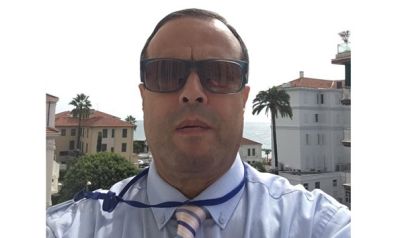
Saturday's lectures concluded with a public address by Arab Centre for Research and Policy Studies director-general Dr Azmi Bishara, titled “The Palestinian National Project: In the Current International/Arab Context”, as part of the proceedings of the annual Palestine Forum – Fourth Session.
In his remarks, Dr Bishara emphasised the difference between the Palestinian national project and a political programme.

He explained that while a political programme is a fundamental element of any national project because it outlines general principles and sets strategic goals, it is insufficient on its own to establish a national project.
Organised political and social forces, Dr Bishara said, are essential to implement this programme, enjoy broad popular support, and are represented by institutions and entities capable of exerting political influence within Palestinian society.
He pointed out that the regional and international context has been pivotal for Palestinians since the Nakba.
The Palestinian struggle, he added, has become intertwined with European colonialism, the Jewish question in Europe, the emergence of independent Arab states, US-Israeli relations, and the Cold War between the two global blocs.

This, Dr Bishara continued, has imbued any Palestinian project with stakes that transcend local boundaries, making it linked to significant regional and international transformations.
He spoke about the Palestinian Nakba of 1948, and pointed out that the Arab defeat in the 1967 war and the occupation of the remaining Palestinian land constituted a decisive turning point in the Palestinian national project.
Dr Bishara discussed the impact of the Arab-Israeli war of October 1973 on the Palestinian national project, saying that this war opened the way for negotiations between Israel and Egypt over the territories occupied in 1967.
He then touched on the Camp David Accords and the failure to confront them in the Arab world, and the application of the "land for peace" model, passing through the popular uprising at the end of 1987, and the Palestinian state programme that enjoyed broad Arab and international support.
Dr Bishara also addressed the 1993 Oslo Accords, noting that they led to the emergence of two parallel Palestinian projects: the first, a state-building project within the framework of a two-state solution led by the Palestine Liberation Organisation (PLO), focusing on negotiations and the establishment of the Palestinian Authority as a step towards statehood; and the second, an armed resistance project led by Hamas.
He then discussed the “Al Aqsa Flood” operation, outlining its background and repercussions for the Palestinian cause.

Dr Bishara explained that the operation erupted as a result of Israel's insistence on continuing to tighten its siege on the Gaza Strip, expanding settlements, and Judaizing Jerusalem, including the Al Aqsa Mosque compound.
He concluded his lecture by emphasising that rebuilding the Palestinian national project requires unifying Palestinian forces within the West Bank, the Gaza Strip, and the diaspora, along with reassessing the policies of the various factions and integrating them into a comprehensive national strategy.
In her opening remarks, researcher Ayat Hamdan, head of the forum's committee, emphasised that the fourth session is being held at a pivotal international and regional juncture, witnessing profound transformations in the structure of the international system and a growing exposure of the issues facing people living under colonialism, foremost among them the Palestinian cause.
She noted that this year's forum will discuss 83 peer-reviewed scholarly papers, distributed across 23 parallel sessions.
These sessions, Hamdan added, will focus primarily on the war of extermination in the Gaza Strip and its tools, Western media bias in covering the aggression, as well as in-depth analyses of the nature of settler colonialism and the apartheid system in Palestine, and the roles and limitations of international law.
The sessions will also address the repercussions of the Palestinian cause on the international stage, and the forms of Arab and international solidarity, particularly popular solidarity, in light of the ongoing war.
Hamdan noted that this session dedicates a special focus to the reconstruction of the Gaza Strip from a Palestinian perspective, presenting local approaches and experiences within a broader discussion on the post-war era.
Institute for Palestine Studies director Dr Majdi al-Maliki affirmed that the Palestine Forum was launched from its inception as an ambitious initiative in partnership with the Arab Centre for Research and Policy Studies.
It serves, he said, as an advanced research and discussion platform addressing all aspects of Palestine, the Palestinians, and the Arab-Israeli conflict, bringing together leading researchers and the younger generation of academics.
Dr al-Maliki stressed that the ongoing conflict is not merely military and political, but also a conflict of narratives, requiring a structured intellectual effort to engage global public opinion, especially popular opinion, which has demonstrated, on numerous occasions, a growing support for Palestinian rights.
The first day's proceedings included the first roundtable discussion within the workshop on “Towards Palestinian Frameworks for Reconstruction in the Gaza Strip”, on the subject of “Gaza after the Ceasefire: The Humanitarian Reality and the Limits of Recovery”, emphasising the priority of the Palestinian vision in any reconstruction process.
