
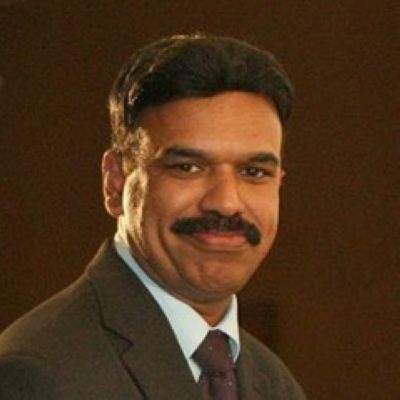



Funding agencies including the Qatar Fund for Development (QFFD) are transitioning from traditional mode of donors to innovative and inclusive financing bodies, QFFD director-general Fahad bin Hamad al-Sulaiti noted Monday.
“I think that not only the QFFD is moving this way, transforming our mandate but most funds are transitioning,” he said. “We are moving from a traditional way to a new way of innovative financing. I think the issue really is scaling, and what we need is how we can have very innovative solutions that have the scaling to move forward.”
Al-Sulaiti was speaking during a panel discussion on “Innovative Financing for Development: Scaling Impact and Driving Inclusive, Sustainable Growth” at the Doha Forum 2025.
He noted that as per the data, the global inequality gap is increasing and not decreasing.
“Education and health, economic empowerment among others, the gap in Africa is increasing,” al-Sulaiti said. “A large number of people in Africa still do not have electricity. This will never bring peace back, will never bring security back, and will never bring a good impact.”
“The GDP always will be very low because they are not utilising their natural resources well,” he added.
To overcome such challenges, the official suggested the involvement of private sector.
“I have been meeting with a number of ministers and presidents during the Doha Forum and everyone is really taking this approach now,” al-Sulaiti said.
“We have seen most of countries are now moving from government schooling,” he continued. “Now we can see a lot of private sectors have big investment on schooling and hospitals and other areas. So what we need is, the new way of supporting the least developed countries.”
Al-Sulaiti was joined by AFD (French Development Agency) chief executive Remy Rioux, United Nations Development Programme (UNDP) administrator Alexander De Croo, and Interpeace president Itonde Kakoma at the session moderated by International Finance Corporation division director Khawaja Aftab Ahmed.
De Croo said in a video message that developing countries face an annual $4.3tn gap to achieve the UN Sustainable Development Goals (SDGs).
“In almost 60 developing countries, more than 10% of government revenues go to debt interest payments, leaving less money for schools, hospitals and sustainable growth,” he said “This is not a story of scarcity. It is a story of misalignment between capital and need.”
Rioux noted that the institutions have become an enabler for the mobilisation of private finance while Kakoma highlighted the need for peace for economic prosperity and how leadership on innovative finance links to or is inextricably linked to peace diplomacy.
“Peace is a de-risking mechanism by reducing the barriers that impede private sector investment and market formation,” Kakoma said. “So, investors are looking for predictability, enforceable contracts, functioning institutions and social cohesions, the very things that I see investing.”
“However, conflict erodes all of these basic things, making capital more expensive, short-term and extractive, rather than productive and sustained,” he added. “We look at peace as risk mitigating rather than a parallel sector, enabling economic transformation.”

