
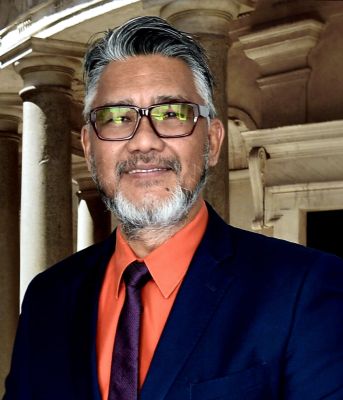


A top official of the International Committee of the Red Cross (ICRC) has lauded the role of Qatar in fostering dialogue and its leadership in facilitating in regional and international conflict resolution.
Speaking at the seventh edition of the Global Security Forum (GSF 2025) being held in Doha until April 30, ICRC director general Pierre Krähenbühl praised the Gulf state’s key role in mediation efforts, highlighting Qatar’s collaboration with the ICRC in addressing major humanitarian issues.
“The leadership shown by the State of Qatar when it comes to mediation and the search for dialogue deserves the highest recognition,” said Krähenbühl, who acknowledged Qatar’s role in securing the release of hostages by Hamas in Gaza and prisoners detained by Israel.
Krähenbühl said, “The combination of political action, mediation by a state, and the ICRC’s neutral intermediary role, which gives us access and trust with parties needed to solve delicate challenges, represents a strong added value. We appreciate the cooperation with Qatar in this respect.”
He also lamented the “growing polarisation” worldwide that is leading to “a proliferation of conflicts and conflict risks,” citing “a resurgence of conflicts between states and a large number of conflicts involving non-state armed groups.”
“It also involves the increasing use of new technologies, artificial intelligence, and cyber on the battlefield. Today, wars are long-lasting, causing endless loss of life and the destruction of the institutional backbone of entire societies. The more devastation we allow, the longer and more arduous the path to dialogue and reconciliation will be,” Krähenbühl continued.
Further, the ICRC official emphasised the importance of respecting international humanitarian law: “We are also confronted with permissive interpretations of international humanitarian law, the rules that bind all parties to a conflict and should protect civilians, prisoners and the sick and wounded on the battlefield.”
He continued, “We witness daily the catastrophic human consequences of these wars in which even humanitarian organisations and staff are more and more frequently attacked, whether physically through harmful information campaigns or the criminalisation of humanitarian action...the rules are often violated, yet when applied, they save lives, and their respect makes the path to dialogue and reconciliation easier.”
On the suffering of civilians in conflict zones, particularly in Gaza, Krähenbühl described this as “the very incarnation of hell.” Aside from the suffering, displacement, injury, and loss of women and children, he said the ongoing war has taken a heavy toll on humanitarian and healthcare workers: “Over 400 aid workers and 1,000 healthcare workers have been killed in Gaza, including 36 from the Red Cross and Red Crescent movement.”
Emphasising the need to respect the rules of international humanitarian law, Krähenbühl said the ICRC launched a global initiative to galvanise political support for international humanitarian law in September 2024. The initiative, he continued, generated “great interest” among states and other actors.
He said, “Indeed, every process that leads to resolving conflicts starts with small humanitarian steps. The ICRC does not have a political role, nor do we have a position on the political dimensions of the conflicts we work in. But we do have the experience, and we experience every day the horrors and human consequences of war, and their security implications for countries far and wide.
“Therefore, it is not enough, Excellencies, ladies and gentlemen, to say after every major conflict, and I quote, never again, unquote. We must act together decisively to rediscover the humanity in the other.”
Ends

ICRC director general Pierre Krähenbühl addressing Global Security Forum 2025 on Monday in Doha. PICTURES: Thajudheen

A view of the audience at the opening session of Global Security Forum 2025 on Monday.