
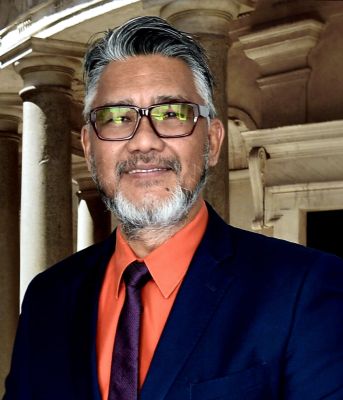


A senior expert at the Centre for International Policy Research (CIPR) has underscored the importance of building strong and stable states in the fight against terrorism during a panel discussion held on the sidelines of the Global Security Forum (GSF 2025) in Doha Monday.
Fragmented states provide fertile ground for radical ideologies to flourish, according to Dr Khalid Abdulaziz al-Khulaifi during the discussion titled ‘Conflict Resolution and Mediation in an Age of Non-State Actors and Fragmented Power’.
He was joined by the US former ambassador Ryan Crocker, Distinguished Chair in Diplomacy and Security, RAND Corporation; Fawzia Koofi, Afghanistan’s former Deputy Speaker of Parliament; and Pekka Haavisto, Finland’s former Minister of Foreign Affairs. The discussion was moderated by Steve Clemons, host of ‘The Bottom Line’ at Al-Jazeera.
Al-Khulaifi said, “I think the only way that you can counter terrorism is to build a strong state. The issue is that the idea of a fragmented state has been spreading around, so to help and foster states, such as what's going on in Syria at the moment.
“If you keep imposing sanctions on Syria, how could you help Syria rebuild? If you’re not there to assist Syria...then you’re allowing the spread of radical ideologies...I think the essence of building a strong fundamental state is the responsibility of, sometimes, even the international community to assess and help that state to build, for it to counter such radical groups, which results in terrorism.”
Al-Khulaifi also highlighted Qatar’s unique role as a mediator in global conflicts. “In a fragmented conflict, the party that can speak to everyone holds the real power, and Qatar has made this very clear in its path of being a mediator,” he emphasised, citing the Gulf state’s mediation efforts in regions like Chad and Ukraine as examples of Qatar’s ability to foster dialogue among conflicting parties.
He also outlined four key characteristics that define Qatar’s successful mediation strategies: neutrality, access, legitimacy, and quiet diplomacy. He explained that it can be challenging for certain countries or individuals acting as mediators to effectively fulfill the role of a mediator.
Al-Khulaifi further pointed out that it is critical to be “physically and diplomatically embedded within the key conflict zones,” as well as “to be trusted by the international community to play the role of the mediator.”
He said, “I believe that, to some extent, this applies to the scenario, but a more discreet diplomacy approach is necessary. Discretion needs to be an important pillar, and I think Qatar applies it very well.”

CIPR senior expert Dr Khalid Abdulaziz al-Khulaifi at Global Security Forum 2025 Monday. PICTURES: Thajudheen

A view of the audience