
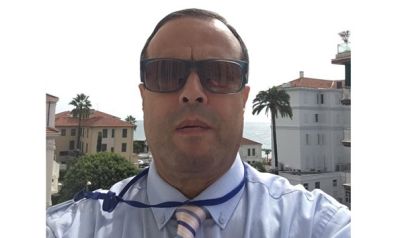


Speaking to Gulf Times on the sidelines of the Annual Palestine Forum in Doha Monday, Dr Sahera Bleibleh, an associate professor at United Arab Emirates University (UAEU) in Al Ain, UAE, commented on the needs for Gaza reconstruction. “It is really very critical at this point, people need homes, and they should be housed. They require fundamental needs, like food, shelter and security or safety. Providing this, requires very quick emergency plans. We need to think on how to provide the temporary hubs and shelters, with decent temporary infrastructure, that provide a hygienic environment, decent living and basics for them to feel that they are gaining back their dignity, their well-being and they can start somewhere,” said Dr. Bleibleh who specialises in architecture, urban design, and planning.
In her presentation at the forum titled “Healing urbanism:Sustainable planning towards recovery and resilience in the Gaza Strip”, which Bleibleh co-authored with Dr Maha Samman where they focused on the Gaza strip under prolonged siege and urbicidal attacks, employing a qualitative approach, proposing a theoretical framework integrating post-war reconstruction and healing mechanisms. It suggests a three-layered process emphasising community well-being, spatial recovery, and collaborative governance involving stakeholders, grassroots participation, and socio-economic challenges. This framework guides urban policies and strategies, prioritising interventions based on community needs, securing resources, and ensuring sustainable recovery. By engaging people in the post-war reconstruction process, healing urbanism promotes empowerment, ownership, and long-term resilience, rebuilding both the physical and social fabric for a sustainable urban future.
____________________________________
Read also:____________________________________
Dr. Bleibleh was also recently nominated as an international fellow by Stanford Humanities Center. Her research examines colonial contexts, urbicide, and socio-spatial resilience. Supported by grants from prominent institutions, her work on urban violence and community resilience has been published internationally and presented at global conferences.
Dr. Bleibleh added: “So far the people of Gaza have been taking care of themselves, they have been left alone. Building on the lessons that they have been teaching us, and learning themselves as well as surprising themselves actually, “the need is the mother of invention”. There is no ready recipe for this, but working hand in hand with the community, acknowledging what they have been going through, and taking all the psychological aspects in consideration will help them feel that they are a big community, that they are taken care of. We want them to stay, nobody wants to leave home, for home is the essence of our identity. This home needs to resemble also the sense of identity, sense of culture, and all the memories. All this will not come immediately, but it needs to be acknowledged. The acknowledgement is what makes people feel that they are not left alone. What about the people who are left without families and without homes, are not we supposed to take care of them as well. We have in our culture and practices, the communal habits, we make “Takia” (charity home), Zakat, we make food for all, we saw amazing examples during what has been happening. This will continue to happen because it is embodied with us,” Bleibleh said.

Dr Sahera Bleibleh