desktophome23Nov2022

Wednesday, December 31, 2025 | Daily Newspaper published by GPPC Doha, Qatar.

Top Stories


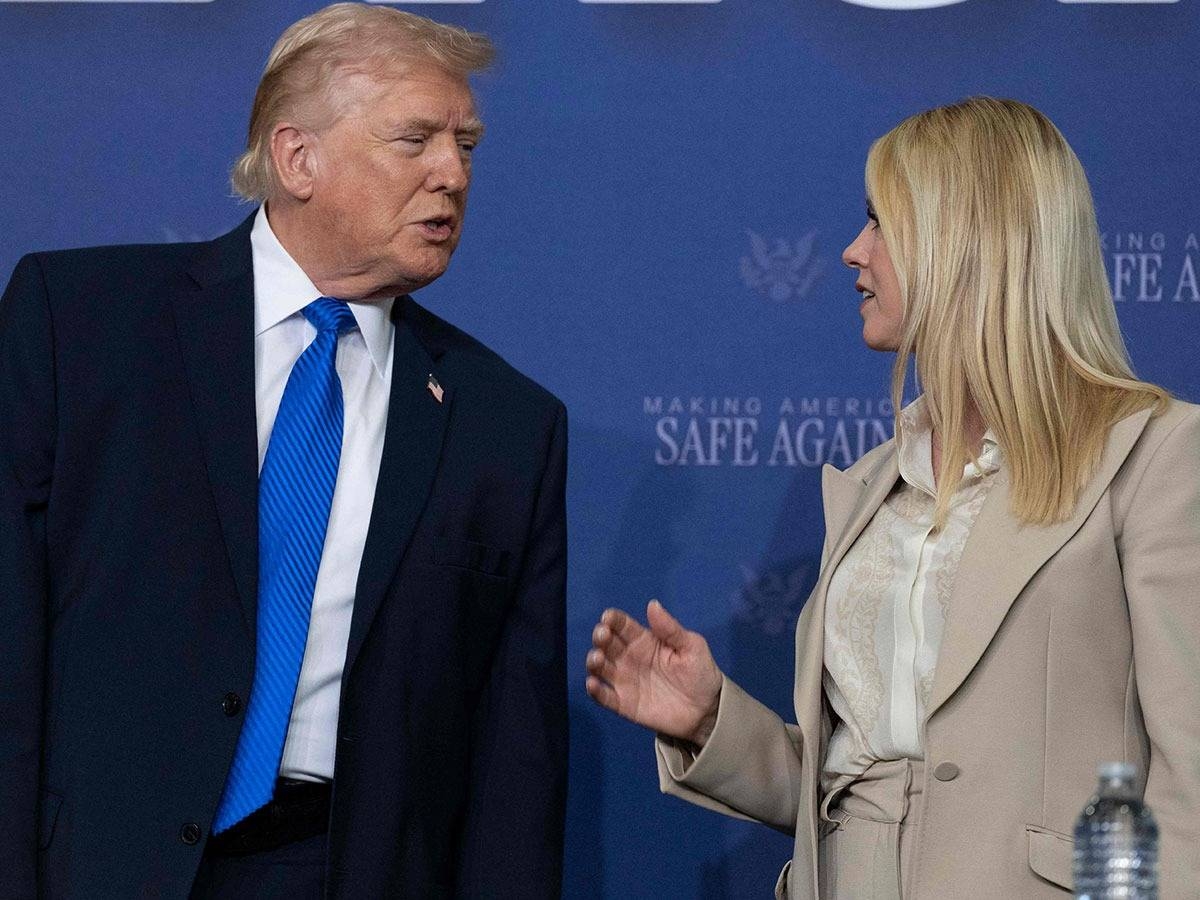
The CFPB now faces extinction under President Donald Trump’s second administration, which says the agency is a political weapon for Democrats and a burden on free enterprise.
Trump’s funding cuts put America’s consumer body on brink of collapse

When Bianca Jones, a 33-year-old special education teacher in Memphis, Tennessee, decided a couple of years ago that she wanted to buy a house, she started digging into her Experian credit report. She was shocked by what she found. Her student debt had been double-counted, making it look as though she owed a quarter of a million dollars and putting home ownership out of reach. Jones disputed ‌the items with Experian, one of the major credit reporting agencies, multiple times in writing and over the phone, but got nowhere. “They kept saying it’s been verified, it’s been verified...They never investigated. They never tried ‌to remove it,” Jones said in an interview. Eventually, Jones complained to the Consumer ‍Financial Protection Bureau (CFBP), a federal watchdog created by Congress in 2010 to protect consumers in their financial dealings, helping her lawyers show a judge the lengths she’d gone to mitigate damage to her credit, according to her attorneys, legal papers and a copy of the complaint. That paper trail eventually helped Jones successfully sue Experian to correct her record. Jones closed on a house purchase in the Memphis suburb of Millington for $300,000 in January. “If I didn’t have this agency to go to, I don’t think I’d be in the house right now,” said Jones. “It actually changed my life.” Experian and the CFPB did not respond to a request for comment on Jones’ ‍case. Agency facing shutdownIn interviews, consumers who had fallen on hard times or known difficulty, lawyers who work with the poor and credit counsellors told Reuters the CFPB had been a lifeline for people facing hardship and they feared that, without it, many consumers would be left unprotected from financial predators. Conceived by Senator Elizabeth Warren to police the type of lending that fuelled the 2008 financial crisis, the CFPB has long been a target of conservatives and industry. Congress created the agency as part of post-crash reforms in 2010 as the sole federal body primarily charged with protecting consumers’ rights in the financial marketplace. The CFPB now faces extinction under President Donald Trump’s second administration, which says the agency is a political weapon for Democrats and a burden on free enterprise. Speaking to reporters at the White House in February, Trump said it was “very important to get rid of the agency”, claiming, without spelling out evidence, that Warren had “used that as her little personal agency to go around and destroy people”. In an interview, Warren dismissed the criticism as a sign the CFPB was doing its job. “This is not about vendettas. This is about enforcing the law as it is written, ‌so that billionaires and billionaire corporations don’t cheat American families. I think that’s a pretty good thing,” she said. White House Budget Director Russell Vought, a staunch CFPB critic and the agency’s acting head, told ‘The Charlie Kirk Show’ podcast in October he plans to shutter the CFPB. The administration is fighting in court to fire up to 90% of its workers, while planning to move pending investigations and litigation to the Justice Department. The agency says it is due to run out of money in early 2026 and Vought says he cannot legally ‍seek more until the Federal Reserve returns to what the administration deems “profitability,” a position a federal judge flatly rejected on Tuesday, finding it ‌without legal merit. Congressional Republicans also slashed the CFPB’s maximum allowable funding in July. Together, the administration, congressional Republicans and industry-backed lawsuits have undone a decade’s worth of CFPB rules on matters ranging from medical debt and student loans to credit card late fees, overdraft charges and mortgage lending. The agency has also dropped or paused its probes and enforcement actions, and stopped supervising the consumer finance industries, leading to a string of resignations. The CFPB and the White House did not respond to requests for comment.Warren said that as a law professor studying bankruptcy she saw that consumer protections were weak and fragmented, and that America needed a single federal agency dedicated to protecting consumers from unfair, deceptive and abusive practices. “I was stunned by the number of people in financial trouble who had lost a job or got sick but who had also been cheated by one or more of their creditors,” she told Reuters. “For no agency was consumer protection a first priority, it was somewhere between fifth and tenth, which meant there was just no cop on the beat. If the CFPB is not there, people have nowhere to turn when they get cheated.” Critics complain of overreachRepublicans said the agency was redundant, with federal bank watchdogs, like the Office of the Comptroller of the Currency and Federal Deposit Insurance Corporation, and state regulators already looking out for consumers, and that its funding and leadership structure were unconstitutional. Like other banking regulators, the CFPB’s funding is not set annually by Congress and does not come directly from taxpayers. Rather, the agency draws on the Federal Reserve and its director was until recently protected from removal at will by the president. Republicans accused the CFPB’s first director Richard Cordray, a Democrat, of using those powers to crush small banks and businesses via overzealous enforcement and complex regulations, and of overstepping the agency’s legal authority ​by trying to regulate companies Congress had exempted from its oversight, such as auto dealerships. Conservative ‌and industry groups tried several times to curb its powers or extinguish it altogether via the courts. In 2020 the Supreme Court handed the president the power to fire the director, which he has since used. Critics on the political right accused former director Rohit Chopra, a Democrat, of exceeding his authority, flouting the federal rule-making process, and harming consumers with an ill-conceived crackdown on financial firm fees. Thomas Hoenig, who served as vice chair of the FDIC from 2012 ‍to 2018, said he was sceptical of some of the CFPB’s work under prior administrations, but that it still served an important purpose. “If you take them out of the picture altogether, you’re going to get more abuse, not less,” he said. “I’m disappointed to see the CFPB just go away.” ‘Very important for me’For some, though, the agency has been a lifeline. Millions of Americans like Jones who are struggling with credit reporting errors, predatory lenders, debt collectors, fraud, discrimination or other challenges, are now filing complaints every year with the agency, which prompts companies to fix the issues, sometimes by paying the complainants, or explain themselves. When companies repeatedly break the rules, the CFPB punishes them and tries to make their customers whole. To date, it has returned $21bn to consumers, according to CFPB data. Morgan Smith, a 31-year-old single mother and social services worker in Issaquah, Washington, turned to those resources when she realised she had been a victim of identity theft. After her wallet and ID were stolen from her car, she ​learned that someone had opened up a string of accounts in her name, she said: a rental car that ended up in a crash, an unpaid storage unit and a hotel room at an amusement park. Reuters was unable to confirm Smith’s account independently. “I went straight to the CFPB and I was navigated there to their consumer education tab where I was able to find out how to deal with fraud and scams. It gave me all the information I needed to know... my rights,” she said. “That was very important for me to have this resource.” Without the CFPB, borrowers would once again rely on a hodgepodge of federal, state and other local agencies which lack the CFPB’s resources, expertise and legal powers, say consumer groups. “Prior to the CFPB coming around, we’d have to say, ‘write your attorney general, write to the FTC,’ whoever it was, and it became this sort of letter-writing campaign,” said Sam Hohman, who runs the Nebraska nonprofit Credit Advisors Foundation, which helps people get out of debt and offers consumer education services. As a result, people like Virginia resident Michael Johnson, 49, may have fewer options in future when they fall into trouble. After a kidney transplant and leg amputation several years ago left Johnson unable to work, he racked up credit card debt paying for basic expenses, he said. This summer he received court summonses from creditors seeking to collect on that old debt, according to court records. “I got in over my head unintentionally,” Johnson said in an interview. Using a CFPB database of credit card terms and conditions, Johnson learned that his creditors were required to use arbitration rather than sue in court, which could cost more than the underlying debts. Johnson represented himself in court and says so far one creditor has dropped its complaint while the other is considering its options. “It adds credibility to your defence that you understand your rights,” Johnson said. “Life happens to everybody.”


Editor's Picks

A person gestures towards smoke rising in the aftermath of the airstrike in Yemen's southern port of Mukalla, in this screengrab from a handout video obtained by Reuters Tuesday.

UAE 'to voluntarily pull remaining forces from Yemen'

The United Arab Emirates said Tuesday it was pulling its remaining forces out ‌of Yemen after Saudi Arabia backed a call for UAE forces to leave within 24 hours, in a major crisis ‌between the two Gulf powers and oil producers.Hours ‍earlier, Saudi-led coalition forces had attacked the southern Yemeni port of Mukalla. The airstrike on what Riyadh said was a UAE-linked weapons shipment was the most significant escalation to date in ⁠a widening rift.The UAE defence ministry ‍said it had voluntarily ended the mission of its counterterrorism units in Yemen, its only forces still there after it "concluded" its military presence in 2019.The ministry said its remaining mission was limited to "specialised personnel as part of counterterrorism efforts, in coordination with relevant international partners".In a statement, it said recent developments had prompted a comprehensive assessment, the state news agency WAM reported.Saudi Arabia had accused the UAE of pressuring Yemen's separatist Southern Transitional Council (STC) to push towards the kingdom's borders, and declaring its national security a "red line".It was Riyadh's strongest reaction yet in the falling-out between the neighbours, who once cooperated in ‌a coalition against Yemen’s Houthis but have seen their interests there steadily diverge.The UAE withdrawal of the few forces it had kept in Yemen may ease tensions for now. But the real issue is whether it will keep supporting the STC.Riyadh for its part has continued, through the coalition it heads, to ‍back Yemen's internationally recognised government and the cabinet said ⁠it hoped the UAE would ‌end all military or financial assistance to the STC.The coalition bombed what it said was a dock used to provide foreign military support to the separatists. Rashad al-Alimi, head of Yemen's presidential council, gave Emirati forces 24 hours to leave.The UAE said it had been surprised by the airstrike, and that the shipments in question did not contain weapons and were destined for the Emirati forces. But it said it sought a solution "that prevents escalation, based on reliable facts and existing coordination".In a televised speech, Alimi said it had been "definitively confirmed that the United Arab Emirates pressured and directed the STC to undermine and rebel against the authority of the state through military escalation", according to the Yemeni state news agency.US Secretary of ‌State Marco Rubio ‌spoke ‍with his ⁠Saudi counterpart, ⁠Foreign Minister Prince Faisal ‍bin Farhan al-Saud, about ongoing tensions in Yemen and ‌regional security, the State Department ‍said Tuesday.Saudi Arabia and the UAE are both major players in the OPEC oil exporters' group, and any disagreements could hamper consensus on oil output.They and six other OPEC+ members meet online next Sunday, and OPEC+ delegates say they will extend a policy of maintaining first-quarter production unchanged.Major stock indexes in the ​Gulf fell.Tuesday's airstrike followed the weekend arrival of two ships from the UAE port of Fujairah on Saturday and Sunday without coalition authorisation, the coalition said.The Saudi state news agency published a video showing a ship it identified as "Greenland", from which it said arms and combat vehicles were unloaded. The registered owner and operator of the Greenland, a roll-on/roll-off cargo vessel, is Salem Al Makrani Cargo Company, headquartered in Dubai, with ​a branch in Fujairah, the company website indicates.The coalition said the strike caused no casualties or collateral damage, according to Saudi state media. Two sources told Reuters that it targeted the dock where the cargoes were unloaded.Reuters could not immediately verify what had been hit or the nature or origin of any cargoes that may have been attacked.Yemeni state TV showed what it said was black smoke rising from the port in the early morning, with burned vehicles. Alimi declared a no-fly zone, and a sea and ground blockade on all ports and crossings for 72 hours.Aidarous al-Zubaidi, head of the STC and deputy head of the presidential council, said in a joint statement with three other members of the council that the UAE remained a main partner in the fight against the Houthis. ⁠It rejected Alimi's orders and said they lacked consensus.

TODAY'S NEWSPAPER
Epaper
PDF
31 December 2025
Gulf Times
Region
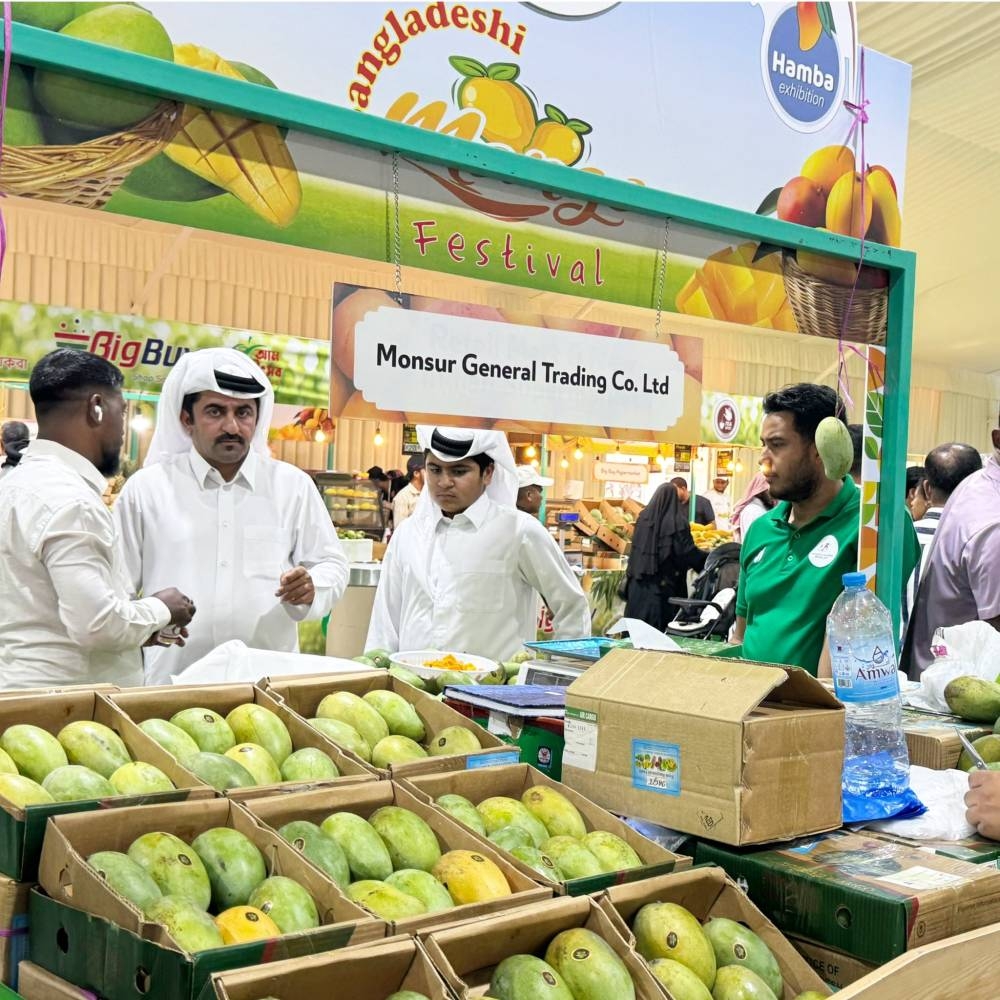
Bangladeshi Mangoes Festival: 29 tonnes mangoes sold in first three days

The first edition of the ongoing Bangladeshi Mangoes Festival (Al Hamba Exhibition) at Souq Waqif is evoking a good response while recording good sales. The sales crossed 29 tonnes on the first three days of the festival while the festival drew 31700 visitors, who thronged Souq Waqif to relish the Bangladeshi mangoes.As per the figures, released by Souq Waqif Management, the first day recorded sales of 87,00 kg mangoes while the sales on the second and third days stood at 11,300 kg and 9,700 kg reaching a total sale of 29,700 kg. The festival on the first day received a total of 7,000 visitors while the second and third days witnessed 12,200 and 12,500 respectively.To run until July 1, the festival at the Eastern Square of Souq Waqif features 20 varieties of Bangladeshi mangoes. Organised by the Private Engineering Office (PEO) in cooperation with the Embassy of Bangladesh, it sells an array of mango products and fresh fruits from Bangladesh.The expo showcases a distinguished selection of renowned Bangladeshi mango varieties such as Amrapali, Langra, Katimon, Khirsapat, Fazli, Gopalbhog, Haribhanga, Lame Mango, Banana Mango, Himashagor and Lakshmanbhog. Also, litchi, jackfruit, dragon fruit, guava, Baccaurea motleyana and pineapple are on sale. The exhibition is open daily from 4 pm to 9 pm except during official holidays when the opening hours are extended to 10 pm.Most of the exhibitors have come all the way from Bangladesh exclusively for the expo where high quality fruits that are flown from Bangladesh in special flights are sold. The festival is held for the first time in conjunction with the peak mango harvest season in Bangladesh with the goal of enhancing healthy competition among participating companies and offering high-quality products at accessible prices. It is the result of collaborative planning between the Celebrations Committee and the Embassy of Bangladesh to provide a platform for both Bangladeshi and local companies to showcase their offerings in a distinguished commercial setting.The exhibition tent is equipped with proper cooling systems to ensure the freshness of the products and visitors’ comfort.

Gulf Times
Qatar
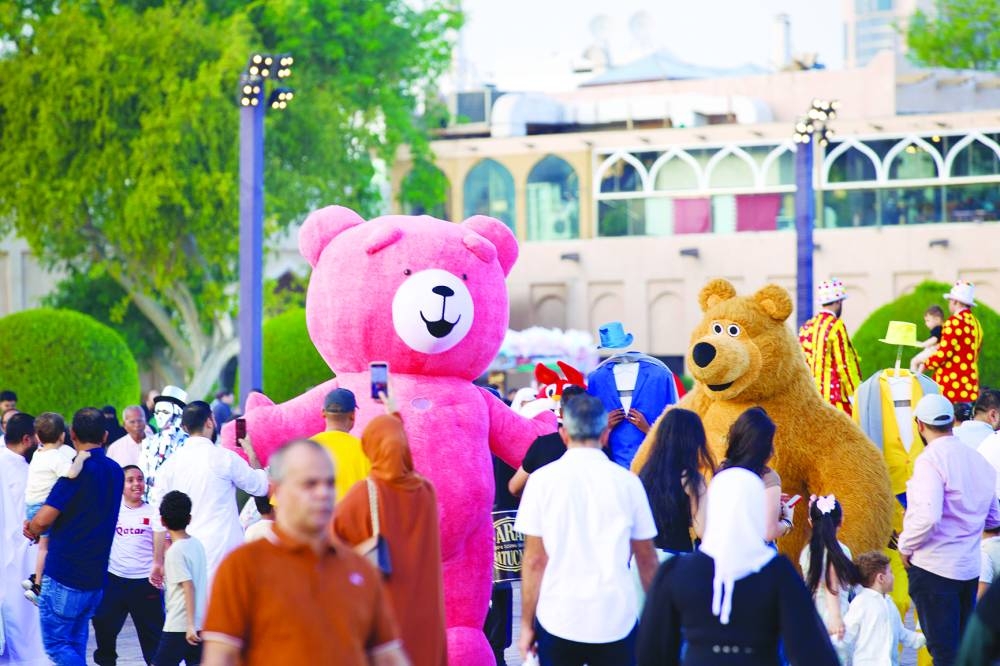
Katara's vibrant Eid festivities draw crowds

On the second day of the Eid al-Fitr celebrations, the Cultural Village Katara continued to offer its impressive events, attracting large numbers of visitors who immensely enjoyed the festive atmosphere.Katara Corniche hosted a variety of activities and events that added a special joy to the Eid celebrations. Among the standout events was the street play "The Adventures of Adnan the Pirate – The Mind is a Blessing." This children’s play was written by Dr Hanan Sadiq, directed by artist Ali al-Khalaf, and performed by a group of Qatari actors, including Ali al-Sharshani, Shahd al-Jassem, and Faisal al-Jassem, alongside young talents and a team of performance artists. The music was composed by the Qatari group Neymar Music.Dr Hanan Sadiq explained that the play continues Katara's tradition of presenting theatrical performances during Eid, aiming to reinforce the cherished values and principles in a creative and engaging way for children, while introducing them to the expressive power of theatre.She noted that the performances have drawn large audiences of children and families, receiving enthusiastic interaction, which indicates the play’s success. The first show takes place at 6.15pm on the Katara Corniche, while the second show starts at 8.45pm.Another major attraction during Eid is Fereej Katara, which draws large crowds of visitors.Saeed al-Kuwari from the beach management team explained that Fereej Katara is a traditional heritage village that recreates the authentic atmosphere of the past, both in architecture and in the variety of activities it offers. These include children’s workshops, competitions with prizes, and the participation of family-run businesses and craftsmen specialising in traditional arts, all designed to highlight Qatari culture and heritage.The spectacular fireworks displays continue to captivate large audiences, with the final show scheduled for the third day of Eid at 8.30pm on the Katara Corniche. The sky will be lit up with vibrant colours, spreading joy and delight among attendees.Another highlight is the Qatari Ardha (traditional sword dance), which attracts spectators from various nationalities. Participants form opposing rows and chant patriotic songs expressing pride in the country's leadership and heritage. The Ardha is a fundamental part of Qatari culture, combining poetry with synchronised movements in a powerful display of tradition.Among the prominent activities in Katara’s Eid celebrations was the performance by the Police Music Band, where musicians delivered a captivating show blending rhythm and choreography, making it one of the most admired events.Further, visitors enjoyed a range of Asian and African folkloric performances, featuring traditional dances and music from various African countries, along with vibrant showcases from Egypt and Syria. These performances provided audiences with a rich cultural experience, forming a colourful and diverse artistic spectacle that was met with great enthusiasm. Visitors expressed their appreciation for the cultural diversity presented by Katara.Katara’s Eid celebrations will continue until the fourth day of Eid, offering a rich and diverse programme that appeals to all age groups and social backgrounds.

Gulf Times
Qatar
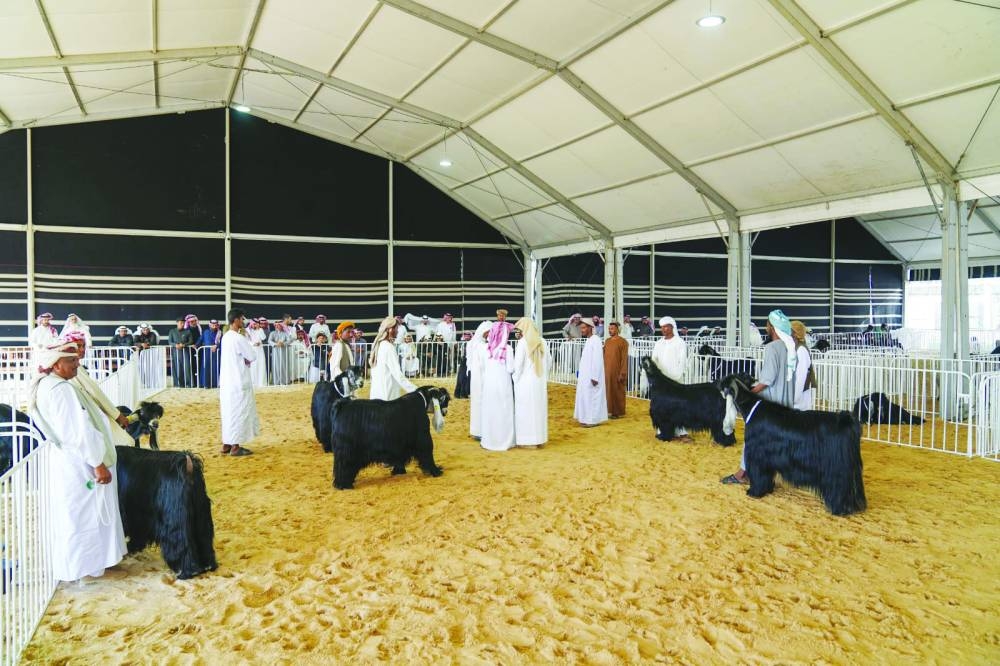
13th edition of Halal Qatar Festival kicks off at Katara

Katara Cultural Village on Wednesday inaugurated the 13th edition of the Halal Qatar Festival. The festival features prominent participation from livestock breeders in Qatar, Saudi Arabia, the UAE and Kuwait, attracting a large audience of heritage enthusiasts and lovers of traditional culture.Chairman of the Festival's Organising Committee Salman Mohammed al-Nuaimi told Qatar News Agency that the festival aims to attract all interested parties and livestock breeders in Qatar and the region, adding that since its inception and after 13 years, the festival has become one of the largest and most influential events in establishing the concept of genetic improvement among breeders to enhance animal production efficiency.He highlighted the committee's commitment to involving and supporting productive families in the festival, in addition to organising various activities and events for school students and festival visitors.Al-Nuaimi explained that the festival has established its prestigious position among breeders from Qatar and the GCC countries, thanks to its unique economic platform for displaying and acquiring the best types of livestock, including sheep and goats, and highlighting their features and specifications.Al-Nuaimi added that this year's edition includes several new additions and developments to enrich the experience of participants and visitors. The festival features a variety of competitions, including the "Mazayen" competition for selecting the most beautiful livestock, bidding on rare breeds, and direct sales exhibitions.The festival got underway Wednesday with the Mazayen competitions, where breeders showcased the best types of livestock in different categories in the presence of a judging panel and livestock experts.The first day also witnessed auctions for some distinguished breeds of goats and sheep, adding excitement to the event.In addition to the competitions, the festival includes a range of accompanying activities and events, such as a comprehensive market featuring veterinary pharmacies, date stores, honey and sweets shops, traditional foods, and handicrafts, along with drawing and crafts workshops for children and a traditional tent (Beit Al Shaar) to introduce children and visitors to traditional lifestyles.A dedicated area for children has been set up, allowing them to experience horse and camel riding in a fun and safe environment, helping to introduce new generations to the heritage of horsemanship and desert transportation.The festival also saw the opening of an art exhibition in collaboration with Gallery 38, featuring the works of nine artists from Qatar and various nationalities.The artworks are inspired by the desert heritage and its authentic elements, adding a new cultural dimension to the festival.The festival will continue until February 24, blending authenticity and heritage. It serves as an outstanding platform to promote the Gulf heritage related to livestock breeding (sheep and goats) and includes a variety of competitions and traditional shows that attract heritage and folklore enthusiasts. It also offers visitors the opportunity to learn about rare livestock breeds and their breeding methods in an environment that simulates desert life.Katara has been organising the Halal Qatar Festival annually, recognising it as one of the most prominent heritage festivals that contribute to preserving the Bedouin heritage and traditional customs, fostering a deep-rooted legacy in the hearts of the younger generation, and providing them with a realistic portrayal of various aspects of desert and wilderness life. (QNA)

Gulf Times
Qatar
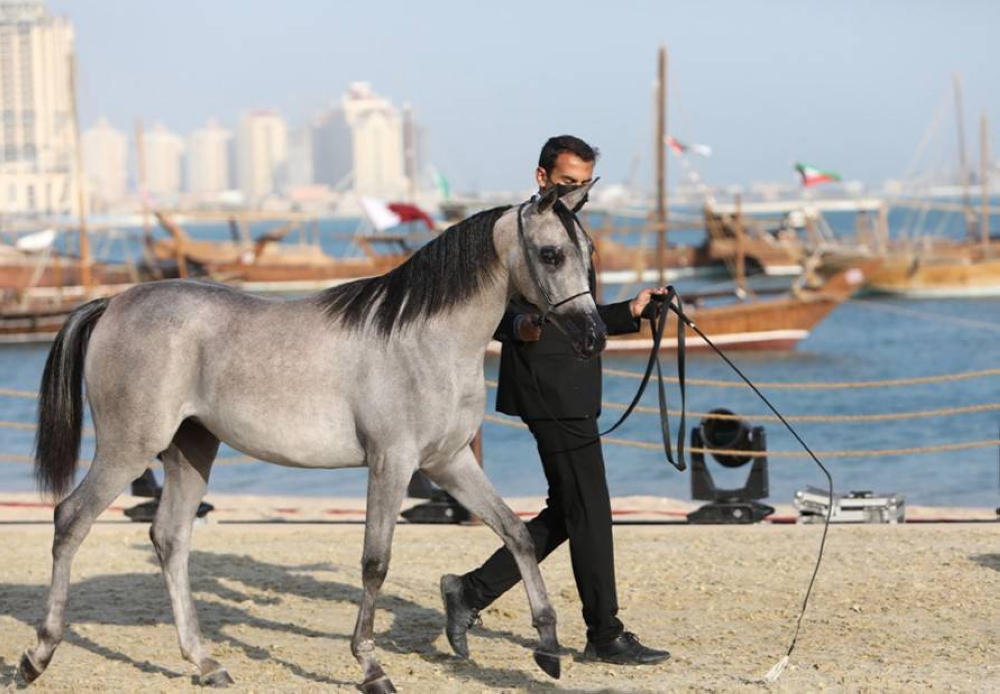
Katara International Arabian Horse Festival kicks off Wednesday

The fifth Katara International Arabian Horse Festival (KIAHF) will kick off on Wednesday at the Cultural Village Foundation (Katara).Organised by the institution and in cooperation with the Qatar Racing and Equestrian Club (QREC) and the Qatar Equestrian Federation (QEF), the festival aims to enhance the legacy of the State of Qatar in equestrian sports, that has been loved by Qataris since ancient times and their interest in the ancient breeds of Arabian horses.The festival will run from January 29 to February 8. The first edition of the festival was launched in February 2021.This year's edition includes three main events, namely the Al Jazira Horse Championship, which starts on January 29 and concludes on February 1, followed by the horse auction on February 3, then the Arabian Peninsula Horse Show during the period from February 5 to 8.KIAHF is one of the largest sporting events in the field of equestrianism and is held as part of a series of events hosted by Katara annually and is witnessing great development in various organizational and artistic aspects in addition to its accompanying events.The idea of the festival is inspired by the large cultural and historical stock of the Qatari society, as Katara has taken the responsibility of caring for this heritage and love for Arabian horses and highlighting it globally, which falls within its continuous and persistent efforts to balance between the duality of heritage and authenticity on the one hand, and promoting the culture of modernization on the other hand, in line with Qatar Vision 2030.The festival's message is based on supporting the rich Qatari heritage in the field of equestrianism to spread it globally, as the festival aims to enhance the position of purebred and unique Arabian horses at various local, regional and international levels.The festival has a vision and objectives that features making the State of Qatar a global center for horse and equestrian sports, taking the lead in caring for purebred Arabian horses and enhancing its position in this sport, in addition to contributing to the pride of purebred Arabian horse owners by holding an international championship with a high level of organization and coordination by giving them the opportunity to participate with their best productions, in addition to spreading the culture of "modernity and authenticity", which is in line with Qatar National Vision 2030.

SIGN UP FOR THE GULF TIMES NEWSLETTER
Our biggest stories, delivered to your inbox every day.
See all newsletters.

By signing up you agree to our User Agreement (including the class action waiver and arbitration provisions), our Privacy Policy & Cookie Statement and to receive marketing and account-related emails from GULF TIMES. You can unsubscribe at any time.