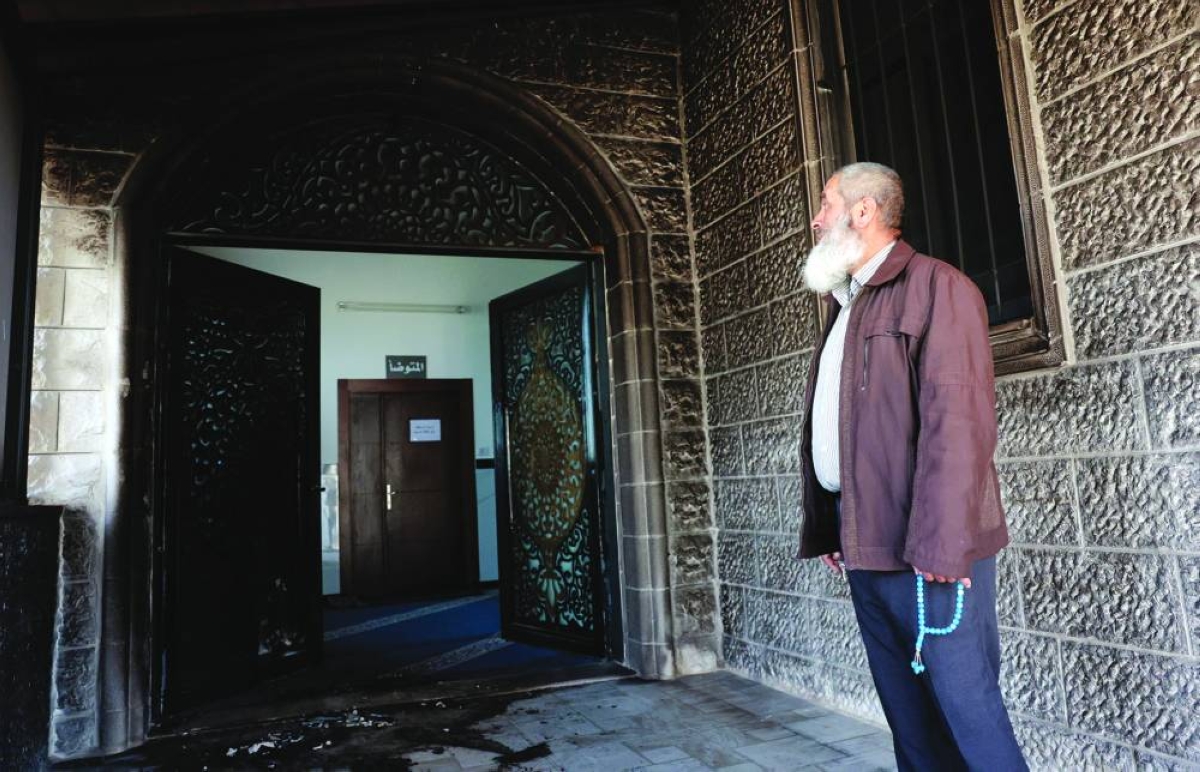
Israeli settlers attempted to set fire to a mosque in the occupied West Bank village of Tell early Monday, the Palestinian Authority's ministry of religious affairs said."The Ministry of Endowments and Religious Affairs condemned the attempt by a group of settlers to set fire to a part of the Abu Bakr al-Siddiq Mosque in the village of Tell, near Nablus, and the writing of racist slogans on its walls", the ministry said in a statement.The ministry noted an increase in attacks on mosques in the West Bank, totalling 45 in 2025."The burning of part of the mosque clearly demonstrates the barbarity reached by the Israeli racist incitement machine toward Islamic and Christian holy sites in Palestine", the ministry said.An AFP journalist on the ground reported burnt carpets, broken front doors, walls and windows blackened by fire. However there was no structural damage as the fire did not catch and spread throughout the whole building.Israel's military said in a statement to AFP that army and police forces "were dispatched to the area of Tell following a report and footage that was received after the fact regarding suspects who set fire to a mosque and sprayed graffiti.""No injuries were reported", and the forces are searching for the suspects, the statement added.Ghassan Daghlas, governor of the Nablus region which includes Tell, condemned the attack in a video posted on social media."They burned the mosque, and we are the ones rebuilding it. This is our land -- the land of Palestine", he said, a garden hose in hand to wash off debris at the site.Excluding Israeli-annexed east Jerusalem, more than 500,000 Israelis live in West Bank settlements and outposts, which are illegal under international law.Around 3mn Palestinians live in the territory, which Israel has occupied since 1967.While most Israeli settlers do not engage in violence, a small but militant fringe has been linked to attacks on Palestinians.The current Israeli government, considered one of the most right-wing in the country's history, has fast-tracked settlement expansion and recognised some outposts.
Region

Palestinian Prisoner's Society documents worsening conditions at Israel's Ofer prison
Wednesday, February 25, 2026

Wednesday, February 25, 2026

Wednesday, February 25, 2026
Thursday, February 26, 2026

Thursday, February 26, 2026

Wednesday, February 25, 2026


UAE reaffirms full solidarity with Kuwait, support for its sovereignty over maritime areas
Monday, February 23, 2026