tag

Monday, October 26, 2026 | Daily Newspaper published by GPPC Doha, Qatar.

Tag Results for "World Investment Forum" (12 articles)

Gulf Times
Qatar

Al-Misnad meets Lebanese minister of economy and trade

Her Excellency the Minister of State for International Co-operation Dr Maryam bint Ali bin Nasser al-Misnad met Sunday with Minister of Economy and Trade of the Republic of Lebanon Dr Amer Bisat on the sidelines of the World Investment Forum in Doha. During the meeting, both sides discussed bilateral co-operation and ways to strengthen and expand it, as well as a range of matters of mutual interest.  

His Excellency Saad bin Ali al-Kharji and Shaikha al-Nuwais at World Investment Forum 2026 Sunday.
Qatar

Jobs, service quality at heart of sustainable tourism investment

Qatar is focusing on restoring tourism demand, protecting jobs, and extending investment benefits to local businesses as it strengthens Doha’s position as an international destination, officials said Sunday. Speaking at the Sustainable Investment in Tourism session at the ninth World Investment Forum (WIF) in Doha, Qatar Tourism Chairman His Excellency Saad bin Ali al-Kharji said that recent regional challenges had made supporting tourism businesses and retaining skilled employees a priority. “The biggest challenge was for me to keep business running and keep that employment,” he said, recalling the difficulties of supporting the private sector amid disruptions in the region since March. HE al-Kharji said he was particularly concerned about businesses losing experienced staff during difficult periods, warning that dismissing trained employees could make recovery more challenging when demand returned. “The last thing I want to see is that they will dismiss some employees or staff,” he said, stressing the importance of retaining skilled workers who would be needed to help the sector return to normal operations. Qatar has responded by stepping up international promotional campaigns, strengthening partnerships with airlines and travel trade partners, and announcing the return of major events and new experiences to its tourism calendar. “These are about restoring demand, strengthening the tourism sector’s resilience, and generating sustained economic activity across the hospitality sector,” HE al-Kharji said. The approach builds on investments made under Qatar National Vision 2030 and the legacy of the FIFA World Cup Qatar 2022, which expanded the country’s infrastructure, hospitality capacity, transport networks and event-hosting capabilities. However, UN Tourism secretary-general Shaikha al-Nuwais said the real measure of tourism investment should be what destinations and communities gain after projects are completed. “World-class infrastructure can bring someone to a destination. But it’s people who make them want to return,” she said, highlighting the importance of service delivery and recognition across the industry. Al-Nuwais pointed to the role of Qatar Tourism’s awards in recognising exceptional service, arguing that the visitor experience is central to encouraging repeat travel and building a destination’s long-term competitiveness. She also called for investment to connect with local economies, create opportunities for workers, and protect the natural and cultural assets tourism depends on. 

Gulf Times
Qatar

PM meets secretary-general of Asean

His Excellency the Prime Minister and Minister of Foreign Affairs Sheikh Mohammed bin Abdulrahman bin Jassim al-Thani met Sunday with Secretary-General of the Association of Southeast Asian Nations (Asean), Dr Kao Kim Hourn on the sidelines of the World Investment Forum (WIF) being held in Doha.  The two sides discussed co-operation relations between Qatar and Asean, in addition to topics of mutual interest.

No Image
Qatar

Doha takes centre stage in the global investment landscape as the 9th World Investment Forum 2026

Featuring 113 sessions, more than 400 speakers and eight thematic tracks, the three-day forum explores emerging investment opportunities, international partnerships and pathways to sustainable economic growth under the theme “Investing in the Future”

Gulf Times
Qatar

MOCI outlines key themes and priorities of World Investment Forum 2026

Qatar's Ministry of Commerce and Industry (MOCI) outlined the priorities of the ninth World Investment Forum at an opening press conference on Sunday, ahead of the event in Doha from October 25 to 27 under the theme "Investing in the Future."The press conference highlighted the forum's key themes, agenda and expected outcomes, while giving media representatives an opportunity to engage with the issues shaping global investment and sustainable development.Hosted by the State of Qatar in partnership with UN Trade and Development (UNCTAD), the World Investment Forum 2026 will bring together governments, investors and business leaders to address a central challenge: how to channel investment towards the economies and sectors that need it most and ensure it translates into meaningful development.HE Hamad Al Nasr, Director of Trade Development and Investment Promotion at MOCI, said Qatar's hosting of the World Investment Forum reflects its commitment to advancing international cooperation and mobilizing investment as a catalyst for economic diversification and sustainable growth, in line with Qatar National Vision 2030 and the Third National Development Strategy.He noted that Doha is hosting the forum for the second time, following the third edition in 2012, which coincided with the 13th session of the United Nations Conference on Trade and Development (UNCTAD). The forum's return, he said, reinforces Qatar's role in shaping international dialogue on investment and its contribution to development.Al Nasr said the forum comes amid far-reaching shifts in the global economy, as mounting challenges reshape international investment, trade and supply chains, while technological advances and changes in energy markets add to the complexity of the global outlook.Citing UN Trade and Development's World Investment Report 2026, he noted that global foreign direct investment (FDI) flows rose 6% to around $1.6 trillion in 2025. Yet more than 80% of these flows went to the world's 20 largest economies, underscoring the need for stronger multilateral cooperation and investment policies that channel more capital into developing countries and foster greater economic resilience and sustainability.Al Nasr said the forum will bring together policymakers, investors and business leaders to tackle investment challenges, explore emerging opportunities and exchange insights on sectors shaping the future of global investment, from artificial intelligence and energy to critical minerals, infrastructure, sustainable finance, tourism and culture.The program features more than 80 sessions and high-level dialogues across seven thematic tracks, with more than 5,000 participants and 400 speakers expected. A dedicated high-level session will also examine the outlook for investment across the Gulf region.Al Nasr said the Ministry of Commerce and Industry's participation underscores its role in advancing economic diversification, strengthening the business and investment climate, empowering the private sector and attracting high-value investment to reinforce Qatar's position as a regional and international hub for business and investment.He said Qatar continues to enhance its competitive, investor-friendly environment, with legislation allowing foreign investors to own up to 100% of businesses in most economic sectors. A $1 billion incentive program further supports domestic and foreign investment, he added.Al Nasr called on forum participants to explore the investment opportunities Qatar offers, expressing hope that the forum would translate discussions into practical proposals, strategic partnerships and tangible agreements. Such outcomes, he said, would help advance productive and sustainable investment, bolster confidence in the global business environment and broaden cooperation among governments, the private sector and relevant institutions.Al Nasr praised the media's role in communicating the forum's key messages to the public, expressing hope that its outcomes would help advance investment and sustainable development across the region and internationally. 

No Image
Qatar

World Investment Forum 2026 has officially begun in Doha

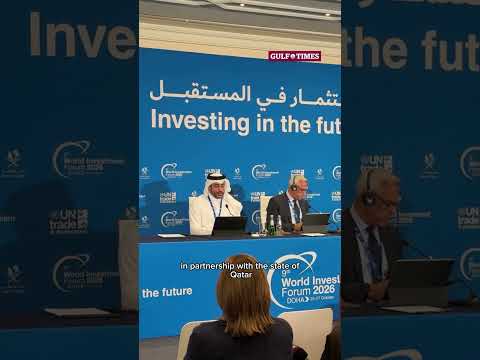
The opening ceremony of the 9th World Investment Forum 2026 has officially begun in Doha, bringing together high-level government representatives, international organisations and business leaders to discuss the future of global investment and sustainable development.  

Gulf Times
Qatar

WIF 2026 begins in Doha today

Being held in partnership with UNCTAD, the forum will address the key shifts and issues reshaping the future of global investmentA leading platform for investment and development, the event will see participation of heads of state, ministers, CEOs, business leaders, sovereign wealth fund executives and representatives of international organisations from around the world The 9th World Investment Forum (WIF) 2026, hosted by Qatar in partnership with UN Trade and Development (UNCTAD), begins today under the theme 'Investing in the Future' and will run until October 27.Doha held a ceremony yesterday to raise the flags of the State of Qatar and the United Nations, marking the start of the forum. The ceremony was attended by His Excellency Minister of State for Foreign Trade at the Ministry of Commerce and Industry Dr Ahmed bin Mohammed al-Sayed and Acting Secretary-General of UNCTAD Pedro Manuel Moreno ahead of the forum's official opening, which brings together ministers, senior officials, policymakers, business leaders, investors, representatives of international organisations, and experts from around the world.**media[508543]**The ceremony carries symbolic significance, underscoring the importance of Doha's hosting of this international event and reflecting Qatar's standing and its role in fostering international dialogue and co-operation on the future of investment and development.In 2012, Doha hosted the 13th session of the UNCTAD conference, the first time the conference had been held in an Arab country. The event marked a milestone that strengthened Qatar's presence in global dialogue on trade, development, and investment.Over three days, the forum will address the key shifts and issues reshaping the future of global investment. Its program features 108 high-level sessions and dialogues with 406 speakers across eight thematic tracks: investment in artificial intelligence; entrepreneurship and small and medium-sized enterprises; investment policies; sustainable finance and business; tourism and culture; climate and the environment; and investment promotion and special economic zones.The forum is expected to generate practical insights and initiatives that boost investment flows and foster cross-border partnerships, keeping pace with rapid changes in the global economy and paving the way for turning promising opportunities into tangible projects and investments. 

Gulf Times
Qatar

PM attends opening of World Investment Forum

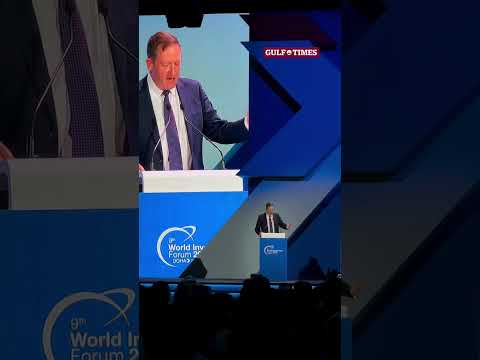
The World Investment Forum 2026 got underway Sunday in the presence of the Prime Minister and Minister of Foreign Affairs His Excellency Sheikh Mohammed bin Abdulrahman bin Jassim al-Thani at Sheraton Hotel. Hosted by Qatar in partnership with UN Trade and Development (UNCTAD) under the theme 'Investing in the Future', the 9th edition of the forum is being attended by over 5,000 participants, including heads of government, ministers, senior executives, leaders of international organisations, entrepreneurs, academics and experts, alongside 406 speakers.Speaking at the opening of the forum, the Minister of State for Foreign Trade Affairs at the Ministry of Commerce and Industry, His Excellency Dr Ahmed bin Mohammed al-Sayed, said that Qatar has chosen openness, flexibility and partnership as a crystal-clear approach to navigating the transformation of the global economy, pointing out that Qatar has invested over decades in human capital, infrastructure, institutions, technology, and innovation, and in building partnerships based on mutual benefit and shared interests.The minister said: “The global economy is witnessing profound transformations due to geopolitical tensions, disruptions in supply chains, accelerated technological developments, artificial intelligence, and the transition toward a more sustainable economy. All of these are factors reshaping the landscape of global trade and investment.”“To face these transformations and the associated uncertainty, Qatar has chosen a clear approach: openness, flexibility, and partnership. As an experienced nation, we in Qatar believe that trade and investment are not two separate paths, but rather two complementary engines for economic growth and diversification,” explained the minister.“From this standpoint, and through our National Strategy for External Trade, we are working to enhance the security and sustainability of supply chains and the resilience of our imports, open new markets for our goods and services, diversify our economic partnerships, and strengthen our integration with global markets,” he continued.Pedro Manuel Moreno, acting secretary-general of UNCTAD, said the world has entered a new age of investment, the age of strategy. He said: “We are seeing profound changes that demand our attention. For decades, capital followed costs and efficiency. Countries competed on price. And many developing economies built their first industries that way. That era produced real gains.”Moreno noted that those assumptions no longer hold and the market’s hand is no longer so invisible. “Governments in every region now use subsidies, investment screening and trade policy to secure the industries they consider critical, like artificial intelligence, semiconductors, clean energy, critical minerals.“According to our data, these sectors now draw nearly half of all new greenfield investments worldwide, up from one-sixth just five years ago. We are saying, actually, that markets are no longer discovered; they are designed. We have entered a new age of investment -- the age of strategy,” he explained.In a message read out at the opening session on his behalf, Antonio Guterres, secretary-general of the United Nations, said that in a year of profound global challenge, the theme, ‘Investing in the Future’, affirms a critical truth, investment is an expression of confidence that tomorrow can be better than today.He highlighted: “Your theme is also a call to action. Artificial intelligence, semiconductors, clean energy, advanced technologies and critical mineral sectors account for almost half of new global greenfield investment. These sectors are expected to reshape economies and global production, creating significant opportunities to drive sustainable development.”Rebeca Grynspan, secretary-general, UN Trade and Development, UNCTAD (on special leave), said investment is one of the most consequential acts in international life.“To invest is to trust that a contract will be honoured across a border, to believe that another country's workforce, another country's institutions, another country's future are worth building alongside your own. One of the central paradoxes of today is that the world is producing record levels of investment alongside record levels of distrust. That a boom of capital expenditure is coinciding with a proliferation of risk,” said Grynspan.The three-day forum agenda includes 108 sessions and high-level dialogues across eight main tracks, covering investment in artificial intelligence, entrepreneurship and small and medium-sized enterprises, investment policies, sustainable finance and business, tourism and culture, climate and the environment, investment promotion, and special economic zones. 

Gulf Times
Qatar

Qatar building digital economy based on knowledge, innovation

His Excellency the Minister of Communications and Information Technology Mohammed bin Ali bin Mohammed al-Mannai has said that Qatar is moving forward with building a digital economy rooted in knowledge and innovation. This is being achieved through investments in digital infrastructure, the development of national talent, the promotion of artificial intelligence adoption, and the establishment of trust and responsible governance, all of which support the realisation of the goals set out in the Qatar National Vision 2030 and the Digital Agenda 2030.This came during his remarks at the opening of the session titled 'Investing in AI for an Inclusive Digital Future' held as part of the 9th World Investment Forum 2026, hosted by Qatar in partnership with UNCTAD from Oct 25-27 under the theme 'Investing in the Future'. He commended the partnership with UNCTAD and underscored the importance of directing investments toward future technologies to foster sustainable development and shared prosperity.HE the Minister pointed out that AI has become one of the key factors influencing the direction of global capital, in light of the rapid growth of investments in digital infrastructure and data centres. He noted that the primary challenge facing governments is to transform these investments into sustainable national capabilities, economic opportunities, and services that contribute to improving the quality of people's lives.He indicated that Qatar is adopting an integrated approach to strengthen its position in the digital economy, anchored by four key pillars. The first of these is investment in sovereign, scalable digital infrastructure. In this context, he pointed to the $20bn partnership announced between "Qai" and Brookfield to develop comprehensive AI infrastructure, which will enhance high-performance computing capabilities in the region. He added that the second pillar focuses on investing in people and developing digital skills. Qatar aims to provide over 50,000 training opportunities in digital fields and artificial intelligence by 2030, thereby helping to prepare national talent for the requirements of the future economy.HE al-Mannai underscored that the third pillar focuses on accelerating the adoption of technology and entrepreneurship by developing AI use cases within the government sector, and by supporting both established companies and startups in this field through an incentive package valued at QR6bn, thereby fostering innovation and enhancing the competitiveness of the national economy.Regarding the fourth pillar, HE the Minister emphasised the importance of building trust through the responsible governance of AI. He noted that, during the Global Dialogue on AI Governance held by the United Nations in July, Qatar stressed that human rights and meaningful human oversight must remain at the core of the development and use of these technologies.He also pointed to Qatar's support for the development of AI governance frameworks that account for global linguistic and cultural diversity, including the Arabic language, to ensure that various societies can benefit from modern technologies in a fair and inclusive manner.HE the Minister concluded his remarks by emphasising that the future of AI will be built upon international partnerships and collaboration among governments, investors, and innovators. He underscored Qatar's readiness to continue its role as a bridge for co-operation between various regions, and to transform current investments into sustainable opportunities that contribute to development and prosperity for all. 

Gulf Times
Business

Qatar, UNCTAD to host World Investment Forum on October 25

Doha is set to host the ninth edition of the World Investment Forum, organised in partnership between the State of Qatar and the UN Conference on Trade and Development (UNCTAD), from October 25 to 27 under the theme "Investing in the Future."The Ministry of Commerce and Industry (MoCI) announced on Monday that the forum will bring together high-level participants, including ministers, senior government officials, CEOs, business leaders, investors, sovereign wealth fund officials, representatives of international organisations, investment bodies, financial and development institutions, and entrepreneurs from around the world.MoCI said its participation as an official partner of the forum is in line with its mandate to support economic diversification, enhance national economic competitiveness, improve the business and investment environment, and foster private sector growth. It also aims to attract high-quality investments and expand partnerships with the business community and international institutions, further strengthening Qatar's position as a regional and global hub for business and investment.MoCI noted that the forum will examine the impact of economic fragmentation and technological advances on capital flows and investment decisions, as well as ways to maximize the benefits of investment and strengthen its contribution to sustainable development and economic resilience.The forum's programme features more than 70 high-level sessions and dialogues involving 211 speakers across seven thematic tracks. The tracks address sectors and issues shaping the future of global investment, foremost among them artificial intelligence, critical minerals, energy, infrastructure, sustainable finance, tourism, and culture, as well as emerging investment opportunities, including the space economy.The programme also includes high-level plenary sessions, ministerial roundtables, and dialogues bringing together governments, investors, and business leaders. It will also feature the Global Dialogue on Sustainable Stock Exchanges, the World Investment Promotion Conference, and specialised sessions on investment policies, entrepreneurship, finance, and development.A key highlight of the agenda is a high-level session on The Future of Investment in the Gulf Region, held in collaboration with the Gulf Cooperation Council (GCC). The session will bring together ministers and investment officials from GCC states to discuss promising investment opportunities, policies and initiatives to attract investment, prospects for strengthening Gulf economic integration, and the region's role in consolidating its position as a global investment hub.The forum comes against the backdrop of the rapid impact of recent regional developments on global trade, particularly disruptions to shipping in the Strait of Hormuz. These developments have affected energy flows and shipping operations, driven up transport and insurance costs, and increased pressure on supply chains and international markets, bringing the challenges of trade route security and the continuity of goods and energy supplies back to the forefront.They also highlight the importance of diversifying supply routes and trade destinations and strengthening international coordination and cooperation to mitigate the spillover effects of regional disruptions on global trade and the economy, issues that are becoming increasingly significant amid growing challenges and risks facing the international economic landscape.Doha's hosting of the ninth edition is particularly significant as the World Investment Forum returns to Qatar 14 years after the country hosted its third edition in 2012.

From left: UN Trade and Development (UNCTAD) officials, Dr Vincent Beyer, legal officer, Investment Policy and Agreements; Nan Li Collins, chair, UN Sustainable Stock Exchange Division director; and Amalia Navarro, chief of Communications and External Relations. PICTURE: Shaji Kayamkulam
Business

UNCTAD eyes wider space economy participation ahead of WIF 2026 in Doha

Investing in the space economy, a brand-new focus area on the 2026 edition of the World Investment Forum (WIF) agenda, aims to help Qatar and the wider Middle East position themselves as pivotal players in an emerging frontier long dominated by traditional superpowers.“We are also adding new topics that are pertinent to Qatar’s unique development trajectory, from investing in culture to the new topic of investing in the space economy,” stated Nan Li Collins, chair, UN Sustainable Stock Exchange Division director, when she recently announced the staging of WIF 2026 on October 25-27 at the Sheraton Grand Doha Resort & Convention Hotel.The forum is hosted by the UN Trade and Development's (UNCTAD), in partnership with the State of Qatar. The UN agency has dubbed the track ‘Investing in Space: The Final Frontier’, according to Collins, who told Gulf Times that it is being organised alongside the UN Office for Outer Space Affairs (UNOOSA). Collins explained that UNOOSA is a specialised agency looking at outer space governance, collaboration, and investment partnerships. “We are working with them to look at how countries can develop the space economy and identify the latest trends, opportunities, and challenges facing this sector. During the forum, more advanced companies will share their experiences on how they are investing in the space economy.“And in the Middle East, I think many countries have established dedicated programmes and plans for space investments. In the previous forum, it was not featured, so this is a new topic we chose for this year’s edition,” Collins explained.Collins emphasised that the new focus area aims to map how developing nations can enter the space supply chain without being left behind by an increasingly exclusive global space race. She further explained that the agenda must deliberately address entry barriers and prevent capital from pooling among a select few. “Rather than having a handful of countries that are in the space race, we also want to have these discussions among other policymakers and investors to see what the opportunities are, what the entry barriers are for them, and how we can collaborate to move this agenda forward,” Collins pointed out.The push to widen participation comes as global foreign direct investment (FDI) becomes increasingly concentrated, Gulf Times reported earlier. Data from UNCTAD’s World Investment Report 2026 shows that while global FDI rose 6% to $1.6tn in 2025, flows are concentrating heavily into strategic sectors like advanced technologies, AI infrastructure, and critical minerals. Among these strategic high-tech areas, the top three source nations generate nearly three-quarters of all outward investment. The top three destination markets receive more than half. UNCTAD wants to ensure space technology does not follow this same hyper-concentrated trajectory, according to Dr Vincent Beyer, legal officer, Investment Policy and Agreements at UNCTAD. Beyer noted that this shift matches broader investment trends across the Gulf Cooperation Council (GCC). Over the past decade, the GCC’s global share of attracted FDI surged sixfold, rising from 1% in 2015 to 6% in 2025. While energy and gas remain primary drivers, information and communication technology (ICT) investments have surged to near parity, Beyer also noted, adding that this broader foundation gives the region the technical and digital footing needed to back satellite infrastructure and spatial data services. Qatar’s local market reflects this trend, Beyer pointed out. Recent figures show Qatari inward FDI surged 559% to $3bn in 2025, driven largely by chemicals, energy, and ICT. On a per capita basis, Qatar ranks among the top three FDI destinations in the region, Beyer added.

Nan Li Collins, chair, UN Sustainable Stock Exchange Division Director at the UNCTAD Division on Investment and Enterprise. PICTURE: Shaji Kayamkulam
Business

Doha to host ‘World Investment Forum 2026’ in October

The UN Trade and Development (UNCTAD) will hold its ninth World Investment Forum (WIF) in Doha on October 25-27, aimed at facilitating dialogue and fostering partnerships among governments, investors, and businesses on investment and development. Held in partnership with the State of Qatar, the forum, to be held at the Sheraton Grand Doha Resort & Convention Hotel, will focus on how investment can support sustainable development and build resilience at a time of heightened uncertainty and shape the future of development. The WIF is the UN’s flagship event for the global investment community. Under the theme ‘Investing in the Future’, WIF 2026 will bring together those who shape investment policy with those who allocate capital, with discussions spanning AI, critical minerals, energy, infrastructure, sustainable finance, tourism and culture, and emerging investment opportunities, including in the space economy. The forum will feature ‘Global Leaders Plenaries’, ‘Ministerial Roundtables’ on investment and entrepreneurship, the ‘Sustainable Stock Exchanges Dialogue’, a high-level session on investment in the Gulf region, and a global investment promotion conference, showcasing investment opportunities from around the world. The forum is expected to attract senior government officials, heads of international organisations, investment authorities, multinational corporations, investors, entrepreneurs and financial institutions. Day one will prioritise supply chain security, economic recovery, and regional integration, featuring a session organised alongside the Gulf Cooperation Council (GCC) Secretariat, stated Nan Li Collins, chair, UN Sustainable Stock Exchange Division director at the UNCTAD Division on Investment and Enterprise, during a media briefing held in Doha recently. She said day two will examine technology, capital, and societal progress, including an AI transition track co-chaired by the International Telecommunication Union (ITU). Collins also stated that the organisation actively engaged key Qatari stakeholders over recent days, including the Qatar Investment Authority (QIA), Qatar Development Bank (QDB), the Qatar Stock Exchange (QSE), Qatar Foundation, and Qatar Museums.  “Invest Qatar will play an important role in positioning Doha and Qatar as an investment destination and its role in the region globally. QIA, one of the leading sovereign wealth funds, will also be a partner for the forum, because they are making a very important strategic investment globally,” Collins noted. According to Collins, the 2026 agenda introduces dedicated discussions covering investments in the space economy and culture. Highlighting the cultural track, Collins pointed to Qatar’s established footprint in the field. “Investing culture is also new this year. So this is exactly where Qatar is playing a leading role globally. So we are featuring this important, unique agenda where Qatar is taking leadership globally also in this forum,” she said. UNCTAD expects delegation arrivals from over 100 countries, Collins noted, adding that more than 20 ministers and heads of international agencies have confirmed attendance, including UN Tourism leadership co-chairing the tourism investment track. The media briefing also included updates on the UNCTAD’s World Investment Report 2026, which shows that global foreign direct investment (FDI) recovered in 2025, but that the recovery remains uneven. Global FDI rose 6% to $1.6tn in 2025, ending two years of decline. Investment in developed economies increased by 11%, while flows to developing economies rose by 2%, according to the report.More than 80% of global FDI went to the 20 largest host economies. At the same time, a small number of strategic sectors accounted for 44% of the value of global greenfield investment projects in 2025, up from 16% in 2020, the report noted. The figures underscore a central challenge for policymakers: while investment is recovering, it is increasingly concentrated in particular economies and sectors, the report pointed out.Registration to attend the World Investment Forum 2026 is open. Information and the full programme are available here: https://worldinvestmentforum.unctad.org/