tag

Tuesday, February 24, 2026 | Daily Newspaper published by GPPC Doha, Qatar.
Tag Results for "Qiyada" (4 articles)

Gulf Times
Qatar

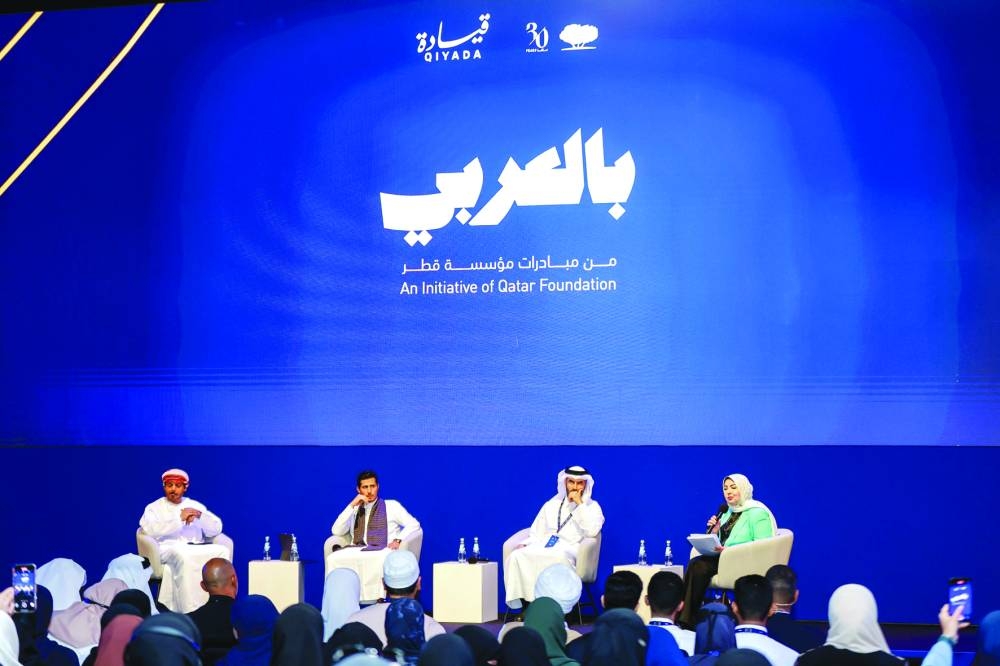
BilAraby initiative participates in Qiyada conference

As part of the Qiyada Conference, Qatar Foundation (QF)’s BilAraby Initiative hosted two dialogue sessions on September 19 and 20 at Multaqa.The first session, moderated by Buthaina Abdul Jalil, was titled “How to Revive and Maintain a Strong Muslim Identity that Contributes to Modern, Pluralistic Societies".It featured educational expert, consultant, and media professional Dr Abdulrahman al-Harmi, Omani thinker and media professional Muthanna Amer al-Shanfari, and engineer Fida al-Din Yahya, media professional and content creator.The second session, moderated by Nadia Darwich, was titled “Equipping Muslim Youth with the Tools, Knowledge, Network, and Confidence to Embody the Ideals of Prophetic Leadership, Positively Influencing their Communities and the Wider World".Speakers included Ajyal Educational Centre founder and president Dr Abu Bakr Mousa Abdullah, leadership consultant and trainer Hussein Habib al-Sayed, and Sozan Zaghmout, consultant at the Office of the Minister of Education and Higher Education.QF Strategic Initiatives and Programmes executive director Hisham Nourin said that the sessions aimed to create spaces for youth to articulate the challenges they face in diverse societies, while equipping them with the intellectual and practical tools needed to positively impact their communities, both locally and globally.“By promoting values of responsibility, initiative, and meaningful engagement, the initiative seeks to strike a balance between authenticity and modernity, nurturing a generation that remains true to its identity while actively contributing to a changing world,” he said.

Scholars speaking at the conference Saturday
Qatar

Qiyada forum stresses role of Islamic tenets in shaping youth

The importance of human-centred, values-driven leadership that is focused on improving lives and societies has been emphasised to young people from across Qatar, as the inaugural Qiyada conference by Qatar Foundation (QF) came to a close Saturday.The two-day event at Education City brought together leading scholars, thinkers, influencers, and role models from around the world to engage and support the nation’s youth in becoming leaders and drivers of positive social change while strengthening their Islamic identity.Over 1,000 students from Qatar’s schools and universities attended the conference, joining discussions exploring solutions to the challenges of the modern world that have their grounding in faith and knowledge.On the second day of the conference, HE Sheikha Dr Hessa bint Hamad bin Khalifa al-Thani, chairperson and founder of the Wellbeing and Career Development Training Centre in Doha and an assistant professor in the Department of Educational Sciences at Qatar University, presented a model of leadership from the perspective of wellbeing, based on five fundamental pillars that shape the character of Muslim leaders: spiritual, emotional, intellectual, physical, and social wellbeing.“In Islam, and the teachings of Allah, leadership has a wider and a deeper significance, and a sense of being guided by what is right and following the path of truth and righteousness,” she explained.She urged the young people attending the Qiyada conference to be nothing but good and give nothing but good while emphasising the importance of combining knowledge and action: “Knowledge calls for action, so either you respond to it, or it departs from you,” she said.Dr Mutlaq Aljasser, preacher and scholar at the Ministry of Awqaf and Islamic Affairs of Kuwait, spoke of how, in the modern world, materialism has assumed dominance over moral values.“We must correct our view of success in life and adopt it as our compass. Once that is achieved, leadership and progress will follow,” he added.In the conference’s closing session, Sheikh Salem al-Ahbabi, director of Ibn Al-Zubair Scientific Centre, spoke about three fundamental pillars that shape identity and to which young people should return: religion, language and history."Through our meetings with young people, both in the Gulf region and abroad, we have noticed a significant lack of basic information related to Islamic culture. However, filling this gap does not require great effort or a long period of study,” he said.“When non-Arabs convert to Islam, they eagerly embrace learning Arabic, experiencing its beauty because it is the language of the Holy Qur’an, even if native Arabic speakers themselves abandon it. Today's advanced nations take pride in their history. However, we possess a great, extended history, and we must treat history fairly: benefiting from its positive aspects, and learning from its mistakes," he added.Dr Omar Suleiman, founder and president of the Yaqeen Institute for Islamic Research, said: “Excellence is a lifestyle – good deeds are never isolated; each good action has other good deeds that flow from it, just as every bad deed points to others like it."“When you see someone striving for excellence in one area of life, know that they carry a mindset of excellence that extends to other areas as well. Excellence requires balance, and it also demands discipline – approaching every aspect of life with the same mindset of precision and commitment,” he added.

Local Athletes at Qiyada
Qatar

Local athletes highlight the power of faith at Qiyada

The inaugural Qiyada conference by Qatar Foundation (QF) has seen athletes from Qatar reveal how faith has guided their journeys in sport – teaching them discipline, resilience and purpose, and helping to make it about more than just winning.The conference took place from September 19-20 at Multaqa, bringing together Muslim youth from schools and universities across Qatar to engage, share challenges, and explore faith-driven solutions.Athletic Edge founder Rabaah al-Musleh spoke about her journey as a runner – from struggling to run more than a minute when she started in 2018, to completing marathons.“Faith has shaped me a lot as an athlete – faith has added a deeper purpose to my running,” she said.“For every runner, the purpose of running and participating in marathons is to achieve personal bests,” al-Musleh said. “But because of faith, my purpose is to show gratitude for the things Allah has given me – health, physical strength, and mental strength.”“Truly believing in Allah, and the support that Allah will give you during this journey, will make the journey easier, more enjoyable, and more spiritual,” she added. “It gives running a deeper purpose, beyond just achieving personal goals.”Ahmed al-Shahrani, an adaptive athlete and Guinness World Record holder as the first and fastest para-athlete to cross Qatar by wheelchair, encouraged attendees to embrace their identity.“A part of being human is to be an ambassador for your culture: who you are, what you are,” he said.“You also have to know that you're going to play multiple roles in your life,” al-Shahrani continued. “You have to know that your identity has to be more than just what you do and what you enjoy – it has to be rooted in something deeper. And I find nothing deeper than faith.”He also spoke about the role of discipline, particularly during Ramadan.“It's just amazing how much you can achieve when you put your mind to it, and when you're disciplined,” al-Shahrani added. “And discipline is a big part of Ramadan."Amal Mohammed Saleh, captain of Qatar’s women’s national basketball team and an internationally licensed basketball referee, shared her experience of advocating for Muslim women athletes.In 2014, her team attended a tournament, but could not compete because players were not allowed to wear the hijab on court.“But we had faith,” Saleh said. “In 2017, basketball’s rules were changed, allowing Muslim women to fully participate while wearing the hijab.”

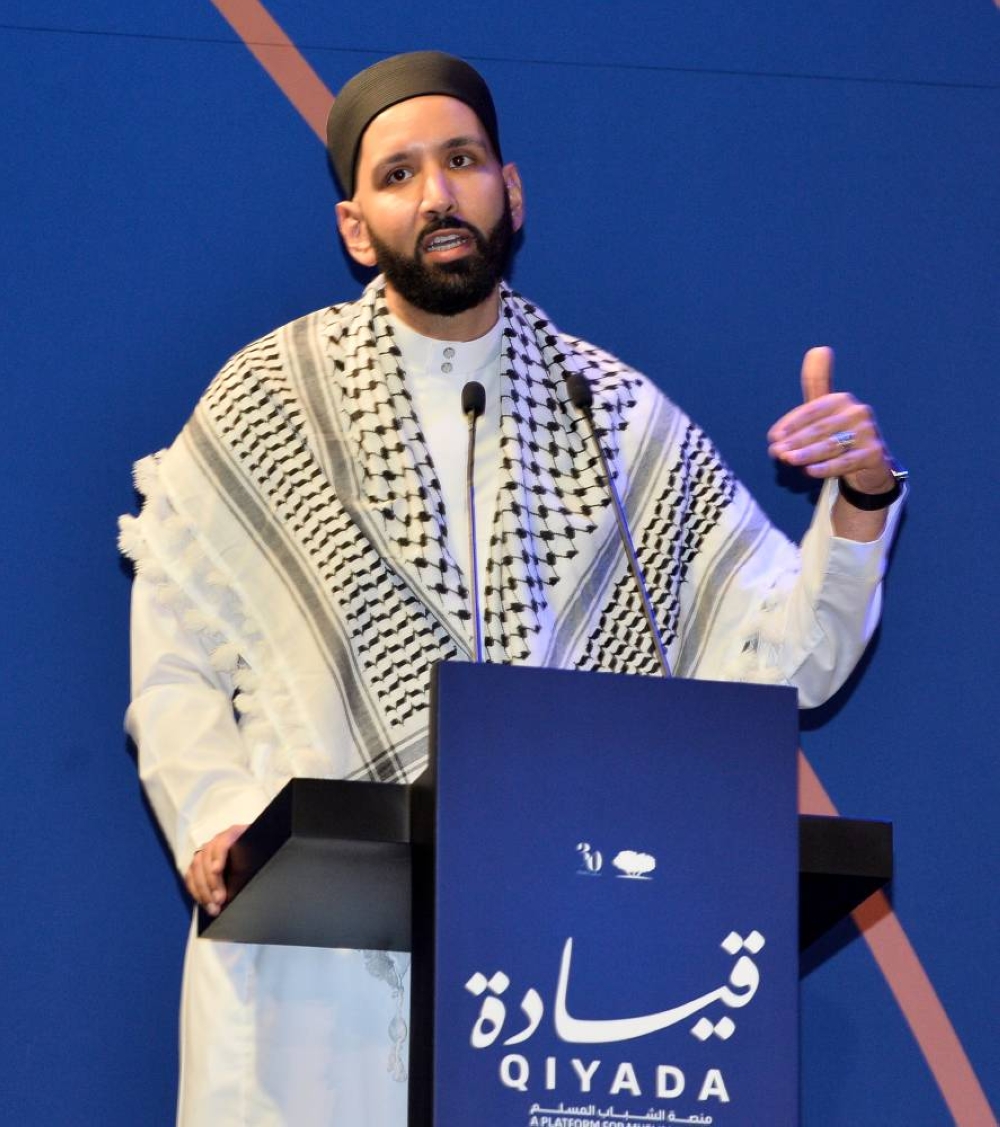
Dr Omar Suleiman addressing the opening session of Qiyada on Friday. PICTURE: Shaji Kayamkulam
Qatar

Qiyada inspires youth to become leaders, changemakers

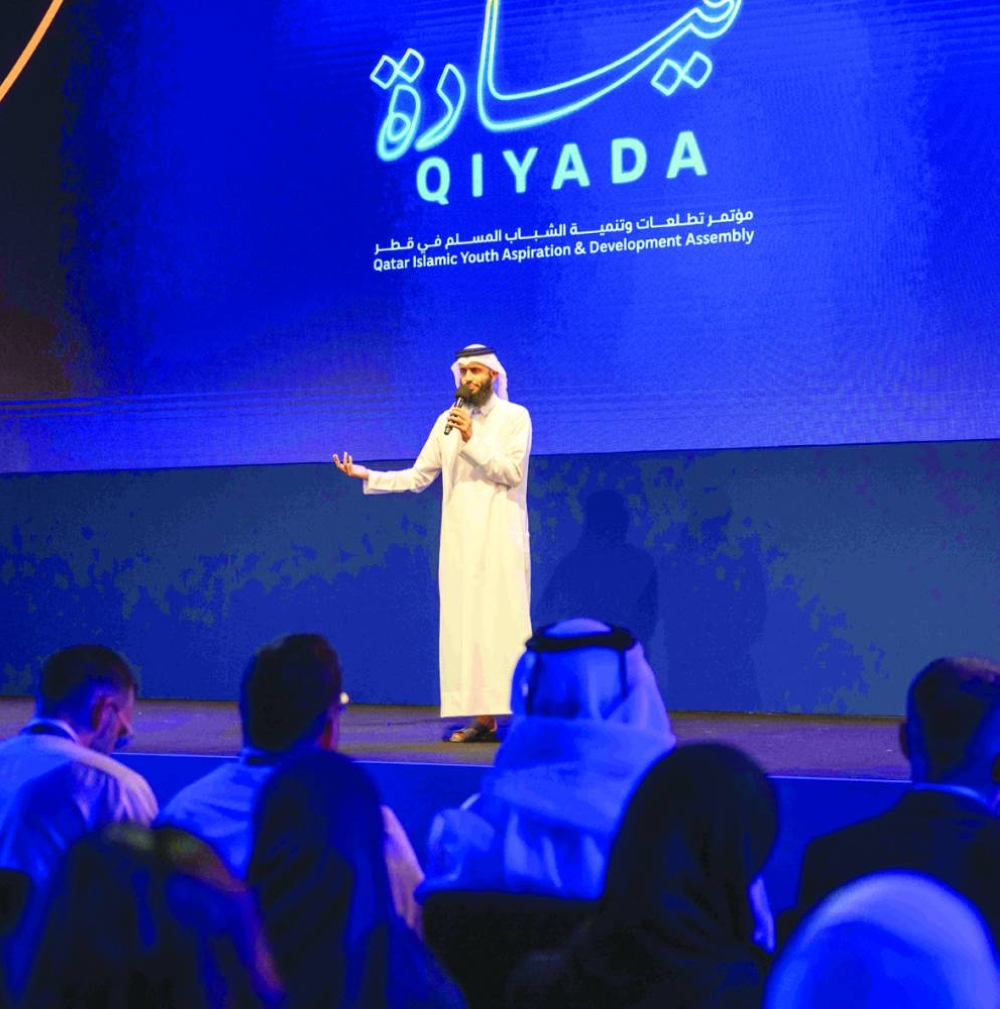
The Qatar Islamic Youth Aspiration and Development Assembly (Qiyada) Conference Friday inspired the youth to become leaders and changmakers while exploring the challenges and collective solutions to change the world.While addressing the opening ceremony, renowned Islamic scholar Dr Omar Suleiman urged the youth: “You have to change every single element of your existence to inform your intention to change the world and to liberate the world from its place of superficiality,” the founder and president of the Yaqeen Institute for Islamic Research said.Organised by the Higher Education division at Qatar Foundation (QF), the two-day conference is held at Multaqa (Education City Student Centre) where it reflects QF’s commitment to empowering young people to become agents of change in their communities, open to the world, yet rooted in their identity and culture.The sessions engage the young participants in meaningful discussions on current global challenges and exploring innovative solutions that stem from their awareness and sense of belonging.Dr Suleiman called on the youth to become leaders by instilling values and get surrounded by inspiring people. “Don't accompany people who don't inspire you by their state and don't guide you with their words. Surround yourself with great people. Not just people that don't corrupt you, but people that actually move you to the next level,” he said.The Islamic scholar urged the young audience to embrace life’s trials as opportunities for spiritual growth, aligning themselves with the teachings of Allah. “There are people who turn pain into punishment and turn pain into perspective. The injustices in the world can either make you hard and can make you an excuse of that injustice or they can forge you into the leadership that is necessary to root out those injustices,” he said, asking the youth to turn the pain and hardships into ease for somebody else. “You take a blessing and you turn it into being a blessing for someone else,” he said and asked the youth to uphold the highest level of patience in crises.“Great leaders are formed in crisis. The greatest militaries have artificial drills constantly where they simulate a crisis for themselves. If you're in comfort, you force a crisis on yourself, not through harm, but through acts of worship,” he explained.The opening ceremony featured a welcome address by journalist Amjad al-Nour, followed by a poetic performance reflecting the aspirations and identity of Muslim youth in today’s world.Hend Zainal, executive director, strategy, management and partnerships within QF’s Higher Education division, said QF has been working to build an educational environment that encourages research, reflection and dialogue, grounded in openness of spirit and rooted in the values of our faith for three decades.Qatari academic and thinker Dr Nayef bin Nahar emphasised the need to engage the youth on major issues and not to succumb to social perceptions that they lack the maturity to address them while explaining how engaging with young people must be based on their intellectual capacity, rather than their age.“When seeking to be leaders, Muslim youth should adhere to the Qur’anic approach, which encompasses a system of values ​​and success criteria based on morals, a sense of responsibility, and a sound personality,” he said."We have a real challenge in our societies, which is the gap between the teachings of the Holy Qur’an and what we practice on the ground,” he said. “This gap appears between the true Islamic value system, such as the concepts of gratitude, piety, a pure heart, and commitment to work, and what we practice in our daily lives, upon which we build our societies,” he added.Qiyada’s first day also featured workshops aimed at developing youth skills, enhancing spiritual and intellectual awareness and providing opportunities for networking and exploration, as well as exhibitions from QF entities.