tag

Sunday, February 08, 2026 | Daily Newspaper published by GPPC Doha, Qatar.

Tag Results for "Iran FM" (8 articles)

Gulf Times
Business

Oil prices climb on worries of possible Iran-US conflict

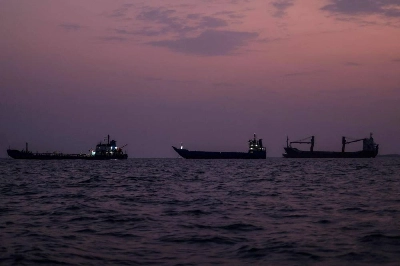
OilOil prices settled higher on Friday, reversing earlier losses, as traders worried that last week's talks between the US and Iran had failed to reduce the risk of a military conflict between the two countries.Brent crude futures settled at $68.05, and US West Texas Intermediate crude (WTI) finished at $63.55. For the week, Brent fell 3.7%, while WTI dropped 2.5%.Iran and the US held negotiations via Omani mediation to try to overcome sharp differences over Tehran's nuclear program.Any escalation of tension between the two nations could disrupt oil flows, since about a fifth of the world's total consumption passes through the Strait of Hormuz between Oman and Iran.Saudi Arabia, the United Arab Emirates, Kuwait and Iraq export most of their crude via the strait, as does fellow Opec member Iran. GasAsia spot liquefied natural gas fell last week from a nine-week high as mild weather and healthy storage weighed on demand.**media[413865]**The average LNG price for March delivery into north-east Asia was $10.70 per million British thermal units (mmBtu), down from $11.35 per mmBtu the week before.Prices are expected to trade slightly bearish as the near-term demand outlook remains soft, weighed down by warmer February temperatures in India, weaker-than-expected January inventory draws in China, and LNG stocks in Japan and South Korea sitting above five-year averages, analysts said.In Europe, the Dutch TTF gas price settled at $12.07 per mmBtu, posting a weekly loss of 15.1%, as expectations of milder temperatures curbed demand and as tensions in the Middle East have eased. 

Pedestrians stand in front of an electronic quotation board displaying numbers of the Nikkei Stock Average on the Tokyo Stock Exchange in Tokyo. The Nikkei 225 closed up 3.9% to 54,720.66 points Tuesday.
Business

Asia equities and precious metals rebound after rout

Stocks rallied and precious metals rebounded as some stability returned to markets Tuesday after US-Iran diplomacy, a Fed chief nominee, and a partial shutdown in Washington brought volatility to trading floors.In Tokyo, the Nikkei 225 closed up 3.9% to 54,720.66 points; Hong Kong - Hang Seng Index ended up 0.2% to 26,834.77 points and Shanghai - Composite closed up 1.3% to 4,067.74 points Tuesday.Hopes for the US economy, boosted by forecast-beating manufacturing data, provided investors a much-needed catalyst for a rally on Wall Street.Healthy gains chalked up through January appeared to be in danger at the start of the week as the dollar soared on news that Donald Trump had tapped Kevin Warsh - considered the most hawkish of his candidates - to head the Federal Reserve.Analysts said the choice of Warsh, a former Fed governor and Morgan Stanley investment banker, raised the prospect that central bank policy could be more supportive of the greenback.The US currency had been taking a battering from its peers last week on concerns that the US president was happy to see it weaken, which would support exporters. Trump's choice also eased concerns about the Fed's independence.The dollar's sharp recovery sent precious metals plunging at an eye-watering pace, with gold hitting a low of $4,402 and silver $71 - having enjoyed equally blistering gains in recent weeks to record highs above $5,595 and $121.The rush out of the safe-haven metals was also driven by easing US-Iran tensions after Trump voiced optimism over a deal with Tehran, having warned of possible strikes on the Islamic republic.That, combined with the stronger dollar, also sent oil prices plunging at breakneck speed.However, some calm returned to markets Tuesday following a rally in New York, which came thanks to figures showing US manufacturing activity grew in January at its fastest pace since 2022. It also marked the first expansion in 12 months.A return into all things AI provided a huge boost after trader concerns about a bubble in the tech sector saw them offload big-name firms. However, they remain on edge about the vast sums pumped into the AI arena as questions swirl about when they will see profits.Seoul's Kospi stock index was the best performer, piling on 6.7 percent and wiping out Monday's losses. The tech-rich market has climbed around 25 percent already this year.Tuesday's gains were led by titan Samsung's 11 percent surge and chip maker SK hynix's 9.3% advance.Monday's "decline wasn't about the fundamentals of the AI and semiconductor sectors. It happened because liquidity?sensitive assets such as gold and silver plunged sharply", wrote Chung Hae-chang, analyst at Daishin Securities.Tokyo, which is also home to big-name tech firms, also enjoyed a bounce, adding nearly 4%, while Hong Kong, Shanghai, Sydney, Singapore, Taipei, Bangkok, Wellington and Manila also advanced.Mumbai's Nifty index soared almost five percent as investors welcomed Trump's announcement of a US-India trade deal. He also pledged to cut tariffs on the country's goods after after Prime Minister Narendra Modi promised to stop buying Russian oil over the war in Ukraine.Jakarta rose more than one percent, having been battered since Thursday, when index compiler MSCI raised concerns about ownership issues with Indonesian regulators and said it would hold off adding the nation's stocks to its indexes or increasing their weighting.London extended gains at the open, having ended at a record Monday, while Paris and Frankfurt also rose."It's been a more orderly and calmer affair across markets, with growing signs that traders are ready to re-engage with pro-risk positions and sell equity index volatility," said Pepperstone's Chris Weston.Oil prices edged down but tempered the sharp losses suffered Monday.Traders are keeping tabs on Washington after Trump urged the House of Representatives to swiftly adopt a spending bill and end the three-day government shutdown."I hope all Republicans and Democrats will join me in supporting this Bill, and send it to my desk WITHOUT DELAY," Trump said in a post on Truth Social.The shutdown followed a breakdown in negotiations because of Democratic anger over the killing of two protesters in Minneapolis by federal immigration agents, which derailed talks over new money for the Department of Homeland Security.Mike Johnson, speaker of the Republican-controlled House, has expressed optimism that an agreement is imminent. 

Gulf Times
Qatar

Prime Minister and Minister of Foreign Affairs receives phone call from Iranian Foreign Minister

His Excellency Prime Minister and Minister of Foreign Affairs Sheikh Mohammed bin Abdulrahman bin Jassim Al-Thani received on Monday a phone call from Foreign Minister of the Islamic Republic of Iran Dr. Abbas Araghchi.During the call, they discussed cooperation relations between the two countries and ways to support and develop them. They also discussed developments in the Gaza Strip, the occupied Palestinian territories, and Lebanon, in addition to topics of mutual interest. His Excellency Prime Minister and Minister of Foreign Affairs stressed the need for concerted regional and international efforts to ensure the full implementation of the ceasefire agreement in the Gaza Strip and Lebanon, paving the way for achieving sustainable peace and the aspired stability in the region.

Gulf Times
Region

Iran FM, EU Official discuss nuclear program, regional developments

Iranian Foreign Minister Abbas Araghchi held a phone call with Kaja Kallas, who serves as the European Commission's High Representative for Foreign Affairs and Security Policy relations. The call dealt with bilateral relations between Iran and the EU, as well as current regional and international developments.During the call, the two sides discussed the Iranian nuclear program, where they emphasized the importance of continuing contacts and consultations between Iran and the European parties regarding the issue.Regarding other developments, Araghchi pointed to Israel’s ongoing violations of international law, and its practices of violations, crimes, and assaults in the West Asia region, particularly in the occupied Palestinian territories and Lebanon, stressing the responsibility of the international community to put an end to them.

In this photo taken from video, an Iranian commando rappels from a helicopter in a raid on the MSC Aries in the Strait of Hormuz on April 13, 2024. REUTERS
Region

Iran demands $170mn from owner of seized Israel-linked ship

Iran has demanded a $170 million fine from the owner of a cargo ship that it seized in Gulf waters last year and accused of having ties to Israel, a judicial official said Tuesday.The Revolutionary Guards, the ideological arm of Iran's military, intercepted the MSC Aries in April of 2024 and detained its 25 international crew members.At the time, the official IRNA news agency said the Portuguese-flagged vessel was "managed by Zodiac, which belongs to the Zionist capitalist Eyal Ofer".On Tuesday, Iranian judiciary spokesperson Asghar Jahangir said charges had been filed and the case was before the courts, though no date had been set for a trial."A fine of $170 million has been demanded against its owner, of Israeli origin, accused of financing terrorism," Jahangir said.At the time, the United States denounced the seizure of the ship as an act of piracy and called for its crew to be released.Israel's foreign minister called on the European Union to designate the Revolutionary Guards a "terrorist organisation" in response.At least some of the crew were later freed.Jahangir said the ship, excluding its cargo, was valued at $170 million and claimed that Ofer -- an Israeli billionaire and shipping magnate -- was an "influential figure" within the Israeli government.The ship's seizure came months into the war in Gaza, where Israel was fighting Iran-backed Palestinian militants Hamas, whose October 7, 2023 attack on southern Israel sparked the conflict.

Gulf Times
Qatar

Iranian President arrives in Doha

The President of the Islamic Republic of Iran Masoud Pezeshkian arrived in Doha on Monday to take part in the Emergency Arab-Islamic Summit, scheduled to be held today. President Masoud Pezeshkian and his accompanying delegation were welcomed upon arrival at Hamad International Airport by His Excellency Deputy Prime Minister and Minister of State for Defense Affairs Sheikh Saoud bin Abdulrahman bin Hassan Al-Thani and Ambassador of the Islamic Republic of Iran to the State of Qatar Ali Salehabadi.

Gulf Times
Qatar

PM, Iranian FM discuss bilateral cooperation, regional developments

HE the Prime Minister and Minister of Foreign Affairs Sheikh Mohammed bin Abdulrahman bin Jassim Al-Thani met Sunday with the Minister of Foreign Affairs of the Islamic Republic of Iran Dr. Abbas Araghchi, on the sidelines of the preparatory ministerial meeting for the Emergency Arab-Islamic Summit, scheduled for Monday in Doha.Both sides discussed ways to strengthen bilateral cooperation, as well as regional developments - particularly the recent treacherous Israeli attack targeting Doha.HE Sheikh Mohammed affirmed that Qatar will take all necessary measures to safeguard its security and uphold its sovereignty in response to the brazen Israeli assault.For his part, the Iranian Foreign Minister reiterated his country's solidarity with Qatar, strongly condemning the attack as a blatant violation of international law and norms and a serious threat to the security of Qatar and the wider region.

The panelists at the discussion organised by the Middle East Council on Global Affairs. PICTURE: Shaji Kayamkulam.
Qatar

Middle East countries are going through 'extraordinary times'

The Gulf countries and the entire Middle East region are going through extraordinary times since the outbreak of open war between Iran and Israel in last June, noted several experts at a panel discussion.Organised by the Middle East Council on Global Affairs earlier this week, the discussion ‘ Rethinking Gulf Security Following the Iran- Israel War' brought four experts on the topic who delved deep into current developments and their implications. They felt that the outbreak of an open war between Iran and Israel in June has considerably intensified challenges to Gulf security.Sanam Vakil, director, Middle East and North Africa Programme, Chatham House said that the countries in the region are going through a period very much defined by geopolitical competition. She noted that there are a lot of questions about consistency in these countries' relationship with the United States and the reliability of US as a security partner.“Conflicts have doubled across the world, and we are, of course, seeing that in the region, but we don't have to look too far from the Middle East itself to see the devastating impact of a conflict. And multilateralism and the investment of the international community is not just stabilising conflicts. Settling conflicts is also proving to be ineffective. We see this very visibly in Gaza,” said Vakil.The panelists also noted that the region is confronting complicated questions including charting the future of Iran’s nuclear programme and Israel’s increasing incursions on Gaza, the West Bank, and the wider region.Hasan Alhasan, senior fellow for Middle East Policy, International Institute for Strategic Studies noted that Israel represents and presents an objective threat to the security of the Arab countries.“There are multiple reasons why that is the case. Most certainly, Israel started a war that I would be fairly confident in saying that probably most or at least perhaps all of the Gulf States did not want to be at war. I think Israel actually presents more of a direct threat because of the fact that it seems to have embraced the view of the region as an open battleground. This has direct security destabilising spillover effects for the Arab and the Gulf States,” explained Alhasan.The panel also noted that diplomatic efforts to revive a nuclear deal with Iran have been significantly undermined by the “12-day war.”According to Yasmine Farouk, director, Gulf and Arabian Peninsula Project, International Crisis Group, the picture is much more complex and difficult to manage. “It is very clear that there is a gap in how the US sees the conflicts and this conflict in this region and how the Gulf countries see them. The Gulf countries see the conflicts of the region as interconnected,” she pointed out.Shahram Akbarzadeh, nonresident senior fellow, Middle East Council said that there is a deep distrust, especially among the leadership of the international system, and how the United States manages to utilise the system to its full advantage. The session was moderated by Adel Abdel Ghafar, senior fellow, Foreign Policy Programme director, Middle East Council.