tag

Thursday, July 16, 2026 | Daily Newspaper published by GPPC Doha, Qatar.

Tag Results for "national" (260 articles)

A robot arm serves coffee at an unmanned cafe in Seoul, South Korea. (Reuters)
International

Korean shops turn to robots, self-service to escape labour woes

Unstaffed coffee shops, ramen eateries and flower outlets are ‌spreading across Republic of Korea as owners turn to robots and self-service to overcome ​rising labour costs in a business ‌model that relies on the widespread honesty of users.Such stores, usually open 24 hours, ‌were estimated to ⁠number 9,000 nationwide by ‌the end of 2024, the National Fire ‌Agency said, while payments provider Samsung Card said their number probably grew four times by 2025 from ⁠2020."The population of baristas in their early twenties is drastically declining," said Kim Dongjin, chief executive of Lounge X, where a robot arm named "Baris" serves paper cups of Americanos and matcha lattes to fill orders from on-site kiosks.His company runs eight such 24-hour coffee shops, entirely unstaffed, across Korea, most of them in Seoul, the capital, although human employees prepare coffee drinks in four more.Stores with no staff are not uncommon globally, with cashier-free grocers in countries such ​as Britain and the United States, but the concept has spread wider in Korea to encompass even pet supply stores and clothing boutiques.Owners of such stores cite difficulties in finding suitable staff and rising wage ‌costs as reasons for adopting the ⁠model, particularly as rates of ​petty crime are low in Korea, where customers are generally rule-abiding.Korea ​has a rapidly ageing population, with one of the world's lowest birth rates leading to a labour crunch. The government expects the population of 51.8 million to shrink by almost a third to 36.2 million by 2072.Hiring expert baristas has become increasingly harder, said Kim, a 20-year-veteran of the coffee industry who joined Lounge X's parent, Korean XYZ Robotics, seven years ago to launch the unstaffed coffee shops in 2024.They first tested the waters with a hybrid model employing one or two baristas in each store. Now each requires just one hour-long morning visit by a human worker to top up inventory such as coffee beans ‌and bakery goods, and run clean-ups.While ‌sales at a human-staffed coffee shop ⁠still tend to be higher, Kim said, the savings on labour boost the profitability of each unstaffed ⁠store to more than 40%, from ⁠roughly 10% to 15% at the conventional equivalent."Although there has been an incident of theft, the vast majority of customers use the store conscientiously," said Hyun Sun-Joo, who took over an unstaffed ramen eatery last year to bring in some income after years spent as a stay-at-home mother.Hyung said the self-service format, in which customers pick their choice of instant ramen off wall shelves to add hot water and ​preferred toppings, lets her juggle her children's schedules and housework, freeing her up from managing staff.One customer, student Kim Hee-yeon, said she ate there at least once a week, as the operating hours suited her irregular eating habits."I like to eat quietly while looking at my phone, so I do feel psychologically more comfortable when there isn't anyone around," she said, adding that a hiccup with the shop systems she once faced had taken just minutes to resolve."It is slightly inconvenient that they aren't right next to me when I have a problem," she said. "But last time... ‌they came and resolved it ​within about three minutes, so I don't think that was a major inconvenience." 

Traffic moves along a highway amidst air pollution in New Delhi. (Reuters/File picture)
International

India's capital announces permanent anti-pollution curbs for toxic winter months

The government of India's national capital territory of Delhi has announced a ‌spate of measures to curb air ​pollution during ‌winter, months ahead of the annual ‌season ⁠when the ‌city often becomes ‌the world's most polluted.Government data from ⁠the last three years indicates that Delhi's air quality deteriorates from November 1 to February 15, when the average air quality index (AQI) generally ranges from 312 to 342. An AQI of 0-50 ​is considered to be "good".Authorities earlier imposed anti-pollution measures during this period according to a ‌graded action plan ⁠when ​air quality dropped below a certain level.Under the new curbs announced on Wednesday, they will now be in place continuously from November 1 to February 28, irrespective of AQI.These include doubling of parking charges to discourage use of private vehicles, staggered timings at all government offices, and ‌a ban on ‌all outdoor civil ⁠construction activity except essential public infrastructure projects.Between ⁠November 1 and January 31, all government and private offices will also be mandated to operate with half their staff physically present and the rest working from ​home.Violators will face penal action, including prosecution, the announcement said.The government this week also announced a cash incentive of over $1,000 to car owners willing to scrap their old vehicles for EVs as part of a new policy aimed ‌at reducing ​pollution. 

Gulf Times
Qatar

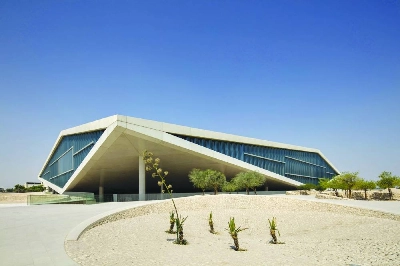
QNL marks summer season with discovery, creativity, professional development

The Qatar National Library (QNL) has announced the launch of its summer programme, starting from the beginning of July, for heritage professionals, children, families, and career-minded adults. The programme covers cultural conservation, STEM exploration, creative arts, literacy, and professional development. The month opens with a specialsed gathering for the heritage community. On July 1, Qatar National Library, in its capacity as the IFLA PAC Regional Center for the Arab Region, presents the webinar “Emergency Grants for Cultural Heritage: Opportunities and Application Process,” delivered by Romana Delaporte, Project Co-ordinator at Cultural Emergency Response, an international NGO that provides first-aid support to cultural heritage threatened by conflict, climate change, or natural disaster. The session will explore the scope and objectives of available grants, the types of projects eligible for funding, application requirements and selection criteria, and practical guidance drawn from previously supported emergency response initiatives. The first of July also marks the start of the 2026 Summer Reading Challenge, offered in partnership with the Kutubee interactive reading platform. Running for six weeks until 15 August, the challenge encourages children aged 6 to 14 to keep reading through the summer months and to guard against the seasonal learning loss commonly known as the “summer slide.” Participants work toward reading goals scaled to their age group, building language skills, broadening their knowledge, and strengthening critical thinking and creativity along the way. The winners will be announced in September 2026. On 15 July, the Seventh Summer Camp opens, with each track designed to engage and inspire a different age group. The tracks run on a weekly basis. The Library welcomes its youngest visitors with the Fun Summer Camp for Toddlers, a bilingual two-hour play camp for children aged 1 to 4. Featuring sensory toys, building toys, art activities, and storytelling sessions, it offers a nurturing and imaginative environment for children and their families. Storytime for Children offers an equally enriching experience for children aged 7 to 12, combining expressive storytelling with puppetry to take young audiences on imaginative journeys through carefully chosen stories. The programme aims to foster a love of reading, stimulate imagination, and strengthen listening and communication skills in a joyful and nurturing setting. For children aged 7 to 10, a dedicated STEM activity blends science, technology, engineering, and mathematics through hands-on experimentation, inviting young participants to test ideas, solve problems, and explore how the world works in a spirit of curiosity and discovery. Teenagers aged 13 to 17 are invited to “Make with Me,” a craft and art-making session that draws older participants into a world of colour and imagination, encouraging creative expression in a lively and inspiring environment. Career development takes centre stage later in the month with “Skills Hub: Your 2026 Career Launchpad,” a three-part series running on July 21, 22, and 23. Led by Adrian Wallwork, author of more than 50 textbooks for publishers including Springer Nature, Cambridge University Press, and Oxford University Press, the series examines both how and how not to use AI tools at every stage of the job search. The first session, on July 21, addresses writing CVs, LinkedIn profiles, and cover letters that stand out to human recruiters and automated screening systems alike. The second session, on July 22 , prepares attendees for every stage of the interview process, from initial online assessments to in-person meetings. The third session, on July 23, examines the human skills most likely to endure in a rapidly changing job market and explores how to identify and develop them. Each session may be attended individually or as part of the full series. 


Director-General of the Australian Security Intelligence Organisation Mike Burgess prepares to speak at the ASIO headquarters in Canberra. (AFP)
International

Australia’s security environment degrading, spy chief warns

Australia faces multi-faceted threats from autocratic regimes, hackers and antisemitic extremists that present a systemic challenge to national security and are degrading the security environment, the country’s spy chief said. While ‌Australia’s terrorism threat level remains at “probable”, Australian Security Intelligence Organisation (ASIO) Director-General ​Mike Burgess said the ‌designation does not accurately capture the “concurrent, cascading and compounding threats.” ASIO’s annual assessment followed a year in ‌which Australia confronted threats on multiple ‌fronts, from online radicalisation, state-sponsored cyberattacks to arson against Jewish businesses and a mass shooting in Sydney. “’Probable’ does not tell the full story. The next level on the scale is ‘expected’, which applies when we have intelligence about a specific attack. We do not,” Burgess said in the annual threat assessment speech on Wednesday night. “But we do know the environment is degrading and acts of politically motivated violence are becoming more likely than ‘probable’ ​suggests.” Despite the challenges, Australia is well-placed to meet security threats, Burgess said. ASIO has foiled 31 major terror plots since 2014 and resolved more than a dozen major terror-related ‌cases since the Bondi Beach mass shooting in December ​at a Jewish Hanukkah celebration that killed 15 people. Police ​said the two alleged gunmen appeared to be inspired by the Islamic State militant group. Burgess defended ASIO’s resource allocation leading up to the Bondi attack, saying the agency was countering multiple threats simultaneously and it was extremely difficult to “simplistically pivot” from one threat to another. “We cannot stop every terrorist, just as we cannot catch every spy. But we continue to work around the clock to keep Australians safe,” Burgess said. Encrypted chat platforms are radicalising people, including minors, within weeks, while social ‌media is amplifying grievance narratives, ‌eroding trust in institutions, promoting discord and inflammatory rhetoric, and exacerbating polarisation, he said. Foreign spies are targeting classified information on Australia’s AUKUS nuclear submarine partnership with the United States and Britain. An official with security clearance was contacted by someone pretending to be from a consulting firm, Burgess said. 

Gulf Times
Qatar

Kahramaa awards QR2.2bn deals

Qatar General Electricity and Water Corporation (Kahramaa) has signed a series of contracts worth more than QR2.2bn to develop and strengthen the electricity network in the western region, as it moves to connect the Dukhan Solar Power Project to the national grid.  The deals were awarded to several qualified local and international companies, including Voltage Engineering LTD, the Best & Betas Consortium, Larsen & Toubro, and LS Cable.  The contracts fall within Kahramaa’s strategic initiatives to link the Dukhan solar plant to the network in the country’s west.  The scope of work covers engineering, procurement, and construction (EPC) for building and upgrading substations, as well as installing underground cables and overhead lines.  The projects support Kahramaa’s efforts to ensure secure and efficient integration of renewable energy into the grid, boost its capacity to absorb rising solar power generation, and improve overall network flexibility and performance.  The total value of the contracts reflects the scale of investment dedicated to strengthening network readiness and ensuring long-term system stability.  President of Qatar General Electricity and Water Corporation Engineer Abdulla bin Ali al-Theyab said the expansion of the network in the western region would have a positive impact on service reliability and quality for customers, meeting current and future electricity needs.   “This step further strengthens Qatar’s regional position in adopting advanced clean energy solutions. At Kahramaa, we continue to advance a more resilient and efficient electricity network capable of integrating renewable energy sources and supporting supply security,” he said.  Through these projects, Kahramaa reaffirmed its commitment to developing high-efficiency electrical infrastructure, continuing to implement strategic plans that enhance network reliability and service quality while keeping pace with rapidly rising demand and the development needs of all regions across the country.

Gulf Times
Qatar

Qatar to host Building Information Modeling Summit 2026 in October

Qatar will host the Building Information Modeling (BIM) Summit 2026 on October 4, bringing together engineers, policymakers, industry experts and representatives from government, private sector and academic institutions.Organized by the Qatar Society of Engineers, the event comes amid growing global adoption of digital technologies in construction and infrastructure. BIM is increasingly being used to improve project planning, design, construction and asset management, helping to boost efficiency, reduce costs and support sustainability.The summit aims to reinforce Qatar's position as a regional leader in digital transformation within the construction sector by providing a platform for local and international experts to share best practices and emerging innovations.Chairperson of the Qatar Society of Engineers, Amna Al Naama, said BIM has become a key tool that connects all project stakeholders within a unified digital environment, supporting decision-making throughout a project's life cycle.Discussions will focus on the future of BIM in Qatar, as well as the role of artificial intelligence and other advanced technologies in project and asset management.Held under the patronage of the Ministry of Municipality, the summit supports Qatar National Vision 2030 and the country's efforts to advance sustainable, technology-driven development.

Gulf Times
Qatar

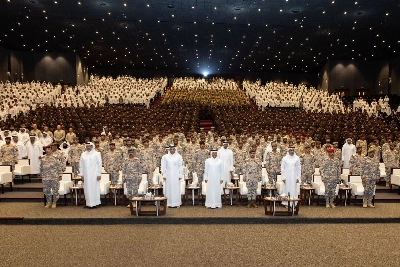
Deputy PM and State Minister for Defence attends graduation of 26th National Service Cohort

His Excellency Deputy Prime Minister and Minister of State for Defence Affairs Sheikh Saoud bin Abdulrahman bin Hassan Al-Thani attended on Tuesday a graduation ceremony for the 26th cohort of national service recruits at the National Service Academy. The graduates completed a year-long training program that combined practical and theoretical instruction, achieving a range of objectives designed to prepare them for service and leadership responsibilities. During the ceremony, HE Sheikh Saoud launched the Muqdam Al Ghad (Tomorrow's Pioneer) summer training program, which will run from June 28 to July 23. The initiative is aimed at developing leadership skills and strengthening national identity among participants aged between 11 and 15, helping equip them to meet future challenges with a strong sense of patriotism. At the conclusion of the event, His Excellency honored the top-performing graduates from the 26th cohort in recognition of their achievements during the training program. The ceremony was also attended by HE Minister of Transport Sheikh Mohammed bin Abdullah bin Mohammed Al-Thani, HE Minister of State for Interior Affairs Sheikh Abdulaziz bin Faisal bin Mohammed Al-Thani, and Chief of Staff of Qatar Armed Forces Lt Gen (Pilot) Jassim bin Mohammed Al Mannai, alongside senior military officers of the Qatari Armed Forces and families of the graduates.

Gulf Times
Qatar

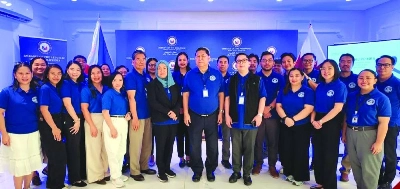
Philippine embassy lights up chancery for Refugee Day

The Philippine embassy in Doha illuminated its chancery in blue on Sunday (June 21) and held a commemorative flag-raising ceremony the following day as part of its observance of National Refugee Day and World Refugee Day. The event highlighted the Philippines’ longstanding commitment to protecting refugees, stateless persons, and asylum seekers, the embassy noted. The initiative, dubbed “Blue Monday”, coincided with global efforts to raise awareness of the plight of people displaced by conflict, violence, and persecution. Blue is the official colour of the Office of the United Nations High Commissioner for Refugees (UNHCR), symbolising calm, dignity, and hope for a safer future for refugees worldwide. In a statement shared by the embassy on its social media pages, Philippine President Ferdinand R Marcos Jr underlined the country’s tradition of extending protection and compassion to those forced to flee their homes. “The Philippines has long upheld a proud tradition of extending compassion and protection to those forced to flee conflict, violence, and persecution. “As a nation founded on the values of humanity and fairness, we recognise that safeguarding the worth of every individual is not merely an act of goodwill but a responsibility of a just and civilised society,” Marcos said. The president also cited the efforts of the Philippine Department of Justice’s Refugees and Stateless Persons Protection Unit and the Inter-Agency Steering Committee on Refugee Protection, Stateless Persons and Asylum Seekers in strengthening mechanisms that help refugees and stateless persons rebuild their lives. The embassy noted that the Philippines has provided refuge to people fleeing conflict, persecution, and hardship since 1923. It said the country’s approach is rooted in its commitment to international agreements, including the 1951 Convention Relating to the Status of Refugees and its 1967 Protocol, the 1964 Convention Relating to the Status of Stateless Persons, and the 1961 Convention on the Reduction of Statelessness. Recognising the need to promote awareness and uphold the rights of refugees, stateless persons, and asylum seekers, the Philippine government institutionalised the annual observance of National Refugee Day every June 20 through Proclamation No. 265, signed in 2023. This year’s observance carries added significance as it coincides with the 75th anniversary of the 1951 Refugee Convention and the 45th anniversary of the Philippines’ accession to the treaty. 

Ola Mostafa
Qatar

Accessibility researcher explores inclusion in media and entertainment

Conversations around accessibility in Qatar have largely focused on essential sectors such as education, employment and public services. From inclusive classrooms to workplace accommodations, the country remains committed to developing accessibility solutions in accordance with the Qatar National Vision 2030. However, for accessibility researcher and recent Hamad bin Khalifa University (HBKU) graduate Ola Mostafa, inclusion should also involve media and entertainment. “Persons with disabilities deserve some kind of entertainment too,” she told Gulf Times. “That’s why I personally work on media accessibility.” With a master’s degree in audiovisual translation, Mostafa has dedicated her research to making TV shows, games and other forms of media more accessible. Her master’s thesis, in which she co-designed audio descriptions for Tom and Jerry with blind participants, along with her startup initiative, PlayAble, which redesigns traditional games in accessible formats, reflects her commitment to ensuring that accessibility is not a mere afterthought but a fundamental part of design. “I’ve been an advocate for accessibility ever since I was 11,” Mostafa said. Growing up, one of her closest friends was blind, giving her an early understanding of the barriers many people with disabilities face. “She was very smart,” Mostafa recalled. “But because she couldn’t see the board in class, she used to ask a lot of questions, and other students would make fun of her for it. I used to fight for her all the time.” Long before she encountered the field of media accessibility through her graduate studies, Mostafa was already volunteering for initiatives that supported persons with disabilities. Looking back, she does not view these experiences as the starting point of her interest in accessibility, as it was a passion that had always been present. “I’ve always wanted to do something with persons with disabilities,” Mostafa said. “I just didn’t know exactly what until I joined the HBKU.” That passion eventually led her to pursue a Master’s degree in audiovisual translation, a field that includes subtitling, dubbing and audio description, which are commonly seen as translation work, but also serve as crucial accessibility supports for deaf and hard-of-hearing audiences. For her master’s thesis, Mostafa explored these tools further by co-designing audio descriptions for episodes of Tom and Jerry alongside blind participants. “The show is a staple in all our childhood memories, and it’s like a single collective memory that every kid has,” she said. “But blind children cannot watch or understand Tom and Jerry, so they are basically excluded from this collective memory.” Much of Mostafa’s work is now inspired by moments that many people might overlook. “When you start working in accessibility, you see the world differently,” she said. Whether noticing the absence of a wheelchair ramp outside a café or questioning how accessible a public attraction is for visitors with disabilities, she would frequently find herself identifying barriers that can limit participation. These observations often bring her frustration but also spark ideas for future projects. This led to the creation of PlayAble, a simple classroom project that has since evolved into an aspiring startup geared toward rethinking game design through inclusion. “I got the idea after playing a Connect 4 game with my sister, because I was so frustrated realising that being able to play depends on colour,” Mostafa said, beginning to wonder how someone who is blind or colour-blind would experience the game, a question that led her to redesign the game using textures instead of colours. She later applied similar concepts to other games, including a tactile Rubik’s Cube produced via 3D printing, which preserves the original rules while making it accessible to more players. “By that, we are not changing the gameplay, we’re just including more people in it,” Mostafa said, “because everyone deserves a seat on the table, especially the game table.” She hopes her work will push industries to rethink how accessibility is approached: “Stakeholders think it costs a lot, but in fact, it only costs more when it’s treated as an add-on.” From a business perspective, Mostafa argued that when accessibility is built into the design process from the beginning, it is neither a loss nor an added burden but an opportunity to include more people from the very start.

Gulf Times
Qatar

Consultative sessions on National Human Rights Action Plan continue

The consultative sessions on the National Human Rights Action Plan 2026-2030 - organized by the committee designated to prepare the National Human Rights Action Plan, continued on Sunday.The consultative session was hosted by HE Speaker of the Shura Council Hassan bin Abdullah Al Ghanim, and chaired by HE Minister of State for International Cooperation Dr. Maryam bint Ali bin Nasser Al Misnad.During the session, several topics related to the Shura Council's specializations and competencies were discussed, in addition to proposals and guidelines that support the preparation of the plan in a way that enhances its alignment with national policies and legislation.At the end of the session, the importance of the National Human Rights Action Plan was emphasized as a national framework that promotes the protection of human rights.

Members of the Students’ Federation of India (SFI) shout slogans and hold posters during a protest against alleged mismanagement and scams linked to the National Eligibility-cum-Entrance Test and Central Board of Secondary Education examinations, at a demonstration organised by the SFI near a college in New Delhi, Friday. (Reuters)
International

Anxiety grips India med applicants ahead of NEET retake

If sitting one of India’s most difficult exams ​wasn’t trying enough, more than ‌2 million medical school candidates are now experiencing severe stress ‌as they have to do it ‌again Sunday through no fault ‌of their own.They initially sat the exam on May 3 but authorities ended up scrapping the results after allegations on social media that there had been leaks of the question paper in advance. Only 5% to 6% of students taking the exam, known as the National Eligibility cum Entrance Test, secure seats at medical schools. “This examination drains us mentally. We put in years of hard work, and then the paper gets leaked and ​results are cancelled,” said Alima Javed, a 20-year-old student from Srinagar who plans to resit the test. The controversy has triggered a slew of student protests in New Delhi and ‌other cities, with hundreds of students turning out ​per demonstration, becoming a political headache for Prime Minister Narendra Modi’s ​administration. Some media and opposition politicians have also asserted that the debacle has led to some student suicides, though such claims are difficult to verify. Education Minister Dharmendra Pradhan has said authorities will ensure a “fair and transparent” re-test. To that end, the government has ordered a temporary block on the messaging app Telegram until the exam is over, though that move has drawn criticism from free speech activists. Friday, Telegram lost its bid to overturn ‌the ban, with an Indian ‌court ruling that the government’s actions were legal and reasonable. The block only affected Telegram, with the government arguing that the app represented a unique case, citing its anonymity features and its easy recreation of blocked channels. Authorities have launched a multi-agency probe into the alleged leak, with investigators seeking to pin down its origin and examining financial transactions linked to suspected cheating networks. Arrests have been made in several states, Indian government officials have said, and they warn ​of tougher penalties for those involved in exam malpractice. The government has also announced steps to tighten exam security, including enhanced monitoring at centres, stricter controls over question paper handling and the use of digital tracking systems. But many students say the measures have done little to ease the pressure. “I was very happy with my last attempt,” said Aliya Jalaal, 20, adding that the retest has left her so anxious that she has sought psychiatric help. 

Gulf Times
Qatar

QPO’s CineMoon Ensemble brings cartoons to life through Oldies Goldies II

The Qatar Philharmonic Orchestra’s (QPO) CineMoon Ensemble brought audiences into the colourful world of animation with a concert programme that combined beloved cartoon characters and classical music at the Qatar National Library. Every musical phrase, cue and movement was carefully synchronised with the animated films projected on screen, creating a multisensory experience in which the music and visuals unfolded together. From the mischievous antics of Tom and Jerry to the unmistakable stride of the Pink Panther, audiences witnessed cartoons come to life through live performance, with each note precisely aligned to the action on screen. The concert marked the second edition of CineMoon Ensemble’s animation-focused programme, the first one was during their 10th anniversary three years ago. While the inaugural edition combined Charlie Chaplin clips, films from the black-and-white era and cartoons, and was presented in several countries, including Turkiye and Italy, the latest production was dedicated entirely to animation. “The world has changed, yet the timeless world of animation continues to endure. Animation is not solely for children—it is a meaningful part of who we are, preserving our childhood experiences, memories, and imagination,” Merve Kenet Bulun, founder and artistic director of CineMoon Ensemble, said. “At CineMoon Ensemble, we have always been inspired by the great musicians and artists who brought joy and beauty into the world despite its challenges. Through their creativity, they created moments of wonder, poetry, and inspiration, reminding us that imagination remains one of the most powerful ways to connect with one another,” she added. About the inspiration behind the programme, Bulun said that it “came a long time ago, when I first encountered the work of Emanuele Luzzati. His world of illustration had a kind of simple, almost poor magic—created through colour, imagination, and his unique visual language. I was especially fascinated by the way he translated classical music, particularly Gioachino Rossini, into images. His universe of colours and imagination stayed with me ever since.” The programme featured a selection of classical and popular works paired with animated films, including Gioachino Rossini’s The Thieving Magpie and Cat Duett accompanied by cartoons by renowned Italian artist Emanuele Luzzati; Johann Strauss II’s I Can’t Stop Conducting from Tom and Jerry; Leroy Anderson’s The Waltzing Cat; Louis Jordan’s Is You or Is You Ain’t My Baby; and Henry Mancini’s The Pink Panther. The production was conceived by Bulun and conducted by Giovanni Pasini, with specially created visual content by Suleyman Hakan Bulun. Moreover, it is notable that there’s a good dynamic between the musicians and the audience during the Wednesday concert, Bulun said “what makes this experience so special is the sincere and interactive atmosphere it creates, allowing the audience to feel closer and truly connected with us.” Adding to the atmosphere, the performance extended beyond the stage. During the concert, the Pink Panther character moved through the audience alongside Maestro Pasini, greeting guests and creating moments of interaction that were well received by children and adults. Bulun noted that presenting the performance at QNL highlighted the programme’s educational dimension. “Libraries are another world of imagination, wisdom, and human history—and for us, the perfect place to connect more closely with our audience. The Qatar Philharmonic Orchestra is not only a musical institution; as part of Qatar Foundation, we also carry a responsibility for music education. Science shows that music helps children think more creatively, develop broader perspectives, improve concentration, and become more engaged learners. In this sense, the library is a perfect match for us.” The concert, which was a full house, featured vocalists Anna Dieterich and Maria Klimenko, alongside Matteo Gaspari, who performed as a double bass soloist and vocalist. The ensemble was led by co-founder and concertmaster Lorena Manescu and featured musicians from the Qatar Philharmonic Orchestra across strings, woodwinds, brass and percussion. Following strong audience demand and a lengthy waiting list, CineMoon Ensemble is considering opportunities to present the production again. The ensemble’s next community engagement performance will take place on June 26 at Mall of Qatar. The free programme will feature well-known music from film and television, audience sing-alongs and performances by additional QPO ensembles, offering a day of music for audiences of all ages.