tag

Sunday, November 29, 2026 | Daily Newspaper published by GPPC Doha, Qatar.

Tag Results for "UN conference" (111 articles)

Syria's Foreign Minister Asaad Shaibani speaks during a plenary session of the International Institute for Strategic Studies (IISS) Manama Dialogue 2026 in Manama on October 31, 2026. Syria's top diplomat on October 31 said Damascus was considering whether to join the NATO-style Mecca defence alliance that binds Turkey, Saudi Arabia and Pakistan. Saudi Arabia, under heavy fire from Yemen's Houthis, is a key backer of Syria's government that came to power after the fall of former strongman Bashar al-Assad in December 2024. (AFP)
Region

Syria weighing whether to join Mecca pact: foreign minister

Syria's top diplomat on Saturday said Damascus was considering whether to join the NATO-style Mecca defence alliance that binds Turkiye, Saudi Arabia and Pakistan.Saudi Arabia, under heavy fire from Yemen's Houthis, is a key backer of Syria's government that came to power after the fall of former strongman Bashar al-Assad in December 2024."Discussions are currently underway to evaluate Syria's entry into the Mecca alliance," Foreign Minister Asaad al-Shaibani said at the Manama Dialogue conference in Bahrain.Saudi Arabia has been rallying support against escalating Houthi attacks, including a major strike that closed Riyadh's international airport for two weeks this month.In August, Saudi Arabia, Pakistan and Turkey signed the defence pact in Mecca, Islam's holiest city, that states an attack on one country is to be considered an attack on all three.Pakistan and Turkey have not announced any attacks on the Iran-backed Houthis.Earlier this month, French President Emmanuel Macron made a surprise visit to Riyadh and said France had sent troops to help shield a key Saudi oil terminal from Houthi attacks.Also in October, the UK government announced it would deploy British fighter planes to help Saudi Arabia against the attacks. 

Gulf Times
Qatar

Qatar Participates in COP17 High-Level Segment on Biodiversity in Armenia

Qatar participated in the High-Level Segment of the 17th meeting of the Conference of the Parties to the Convention on Biological Diversity (CBD COP17), held in Yerevan, Armenia, on October 27-28.The segment was held as part of the 2026 UN Biodiversity Conference, hosted by Armenia from October 19 to 30.Qatar was represented at the meeting by HE Minister of Environment and Climate Change Dr. Abdullah bin Abdulaziz bin Turki Al Subaie. In his address, HE the Minister said biodiversity conservation and the protection of terrestrial and marine ecosystems are key national priorities, in line with Qatar National Vision 2030 and the Third National Development Strategy 2024-2030. He noted that terrestrial protected areas cover around 27% of Qatar's land area. By 2030, the country aims to protect 30% of its terrestrial and marine areas and restore 30% of natural habitats. HE the Minister underscored the significance of the current conference, which marks the first global review of collective progress in implementing the Kunming-Montreal Global Biodiversity Framework (GBF). Qatar hopes the discussions will yield concrete measures to accelerate the fulfillment of international commitments and deliver measurable national results, he said. He added that Qatar had aligned its national priorities with the framework’s goals and targets, integrated biodiversity objectives into its development plans, and translated its international commitments into specific national programs subject to monitoring and evaluation. Qatar had also recently updated its national biodiversity targets and prepared the general framework for its National Biodiversity Strategy, he said. Work is underway to finalize the strategy and its accompanying national action plan, which will define national priorities, establish implementation programs and set measurable indicators to track progress. HE the Minister outlined the Ministry of Environment and Climate Change's efforts, in cooperation with national entities, research institutions, universities and the private sector, to conserve ecosystems and protect wildlife. These initiatives include monitoring whale sharks, protecting dugongs, and safeguarding and rehabilitating meadows and other natural sites. He said these efforts covered 76 meadows and natural sites between 2019 and 2026, noting that Qatar aims to protect and rehabilitate 500 sites by 2030. At the international level, HE the Minister called for increased funding for biodiversity conservation, stronger support for capacity-building and the transfer of appropriate technologies, and greater consideration of the specific needs of developing countries, particularly those with arid and hyper-arid climates. He also called for closer international cooperation in sharing scientific and technical data and expertise, as well as for biodiversity considerations to be integrated into development policies and plans. He stressed that concerted global action is essential to achieving the targets set out in the Kunming-Montreal Global Biodiversity Framework. HE the Minister reaffirmed Qatar's commitment to strengthening national biodiversity conservation efforts, supporting international action to accelerate implementation of the global framework, and preserving natural resources for future generations. 

Gulf Times
Qatar

MoT sponsors 4th Supply Chain Management Conference

 Ministry of Transport (MoT) Undersecretary HE Mohammed Abdullah al-Maadeed inaugurated the 4th Qatar Supply Chain Management Conference (SCMC), highlighting the need for resilient logistics networks to protect the country against future disruptions.  Organised by Dar Al Sharq Media Group and sponsored by MoT, the conference offers an ideal platform to exchange expertise and discuss key supply chain challenges. It also explores modern solutions and technologies to improve logistics efficiency, enhance supply chain resilience, and ensure the continued flow of goods and services amid current economic and geopolitical shifts.  The MoT’s sponsorship reflects Qatar’s commitment to developing transportation infrastructure—including ports and airports—and fostering cross-industry integration, in line with the directives of His Highness the Amir Sheikh Tamim bin Hamad al-Thani, which aim to strengthen economic security and achieve sustainable development.  Addressing the conference, al-Maadeed said supply chains are no longer merely an economic and commercial system; they are now a cornerstone of national security and a state’s capacity to withstand crises.He suggested that the classical view of supply chains had always focused on maximising operational efficiency; however, a succession of geopolitical, economic, and health-related crises has reshaped priorities, revealing that efficiency alone is insufficient, and today the critical benchmark is supply chain resilience—that is, the capacity to withstand, adapt to, and recover from disruptions.  Therefore, building resilience, he explained, is no longer an option to defer; it has become a national imperative that requires a comprehensive vision and clear, actionable resolve.  The robustness of supply chains, he said, cannot be achieved through isolated measures or temporary responses; rather, it requires an integrated national framework that unites the efforts of both public and private sectors, and such a framework ensures the continuity of the economy and essential services, while strengthening their capacity to adapt and endure—regardless of how circumstances may shift or how intense crises may become.Al-Maadeed also warned that successive crises have shown that relying on a single route, source, or gateway is not just an operational risk, but a strategic vulnerability that can threaten supply security at the first sign of disruption.  He also said supply chain resilience is a shared responsibility and that the private sector is not merely a supporting partner but a fundamental pillar of the national economic security ecosystem.Former secretary general of the GCC, Abdulrahman bin Hamad al-Attiyah and first vice-chairman of Qatar Chamber, Mohammed bin Twar al-Kuwari, also addressed the conference.  The event featured three sessions attended by representatives from the MOT and from various government entities and academia, including Mwani Qatar, the Ministry of Municipality, the Qatar Red Crescent, QU, UDST, and CCQ. 

Gulf Times
Qatar

Qatar brings investors together to shape the future of investment

The UN Conference on Trade and Development (UNCTAD) warns that 80% of foreign direct investment went to just 20 economies in 2025, as Doha hosts a global forum seeking more inclusive and sustainable investment. Global foreign direct investment (FDI) rose 6% to $1.6tn in 2025, but 80% flowed to just 20 economies, highlighting the growing challenge of directing capital to developing countries. The figures took centre stage at the opening press conference of the ninth World Investment Forum (WIF) in Doha yesterday, where officials called for stronger international co-operation to ensure investment generates broader economic opportunities. Organised by UNCTAD in partnership with Qatar, the forum brings together governments, investors, and business leaders to discuss investment priorities amid geopolitical tensions, shifting supply chains, and rapid technological advances. The UNCTAD’s latest Global Investment Trends Monitor, released to coincide with the forum, showed that although international investment increased, new investment projects and cross-border transactions continued to decline worldwide. Investment in critical development sectors, including infrastructure, energy, health and food systems, fell by more than 25% in developing countries. “The central question is where investment goes, what it builds, and who benefits,” a UNCTAD representative said, describing the unequal distribution of capital as a central development challenge. The forum will examine how countries can attract investment while ensuring it strengthens productive capacity, creates jobs and delivers lasting benefits to local economies. Qatar’s director of the Trade and Development and Investment Promotion Department at the Ministry of Commerce and Industry (MoCI), Hammad Mohamed al-Nasser, said hosting the forum reflected the country’s commitment to investment as a pillar of economic diversification, in line with Qatar National Vision 2030 and the Third National Development Strategy. He highlighted Qatar’s investment framework, which allows 100% foreign ownership in most sectors, along with incentive programmes worth $100mn to support local and foreign investment. Al-Nasser urged international participants to explore investment opportunities in Qatar, hoping the forum would lead to practical proposals, agreements, and memoranda of understanding that support sustainable economic growth. More than 5,000 participants and 400 speakers are expected to take part in over 80 sessions across seven thematic tracks, covering investment policy, finance, technology, entrepreneurship and emerging opportunities. A high-level panel will examine the future of investment in the Gulf Co-operation Council region. 

Gulf Times
Business

Vodafone Qatar platinum sponsor of Doha International Conference on AI & Security

 Vodafone Qatar participated as a Platinum Sponsor of the Doha International Conference on AI and Security, held during Milipol Qatar 2026 at the Doha Exhibition and Convention Centre (DECC).  Under the theme, “Trusted AI. Connected operations.”, Vodafone Qatar highlighted its AI governance and adoption capabilities, emphasising the importance of responsible AI adoption, data protection and secure connectivity for government, security and enterprise organisations. Its participation highlighted the importance of clear governance frameworks that enable organisations to maintain control over their data and AI environments.  Alongside its participation in the conference, Vodafone Qatar showcased a range of smart technology and connectivity solutions at Milipol Qatar 2026, highlighting their role in strengthening operational readiness, enhancing situational awareness and enabling secure, reliable communications for the security sector. The showcased solutions demonstrated how integrated technologies can improve co-ordination, provide greater operational visibility and support more informed decision-making.  Visitors to Vodafone Qatar’s booth had the opportunity to explore five live demonstrations covering key areas of security and operational technology.  These included Secure Command Communications, demonstrating mission-critical push-to-talk and push-to-video capabilities; Secure Operations Twin, highlighting real-time operational monitoring through digital twin technology; Secure Horizon Connectivity, showcasing enterprise-grade satellite connectivity for remote and maritime environments; Secure Forward 5G, featuring deployable private 5G, tactical connectivity and drone-enabled operations; and Secure Safety Communication, presenting advanced body-worn video solutions with live streaming and secure evidence management.  Mohamed Mohsin Alyafei, enterprise business unit director at Vodafone Qatar, said: “At Vodafone Qatar, we remain committed to supporting the evolving needs of Qatar’s security sector through advanced connectivity and innovative digital solutions. Our platinum sponsorship of the Doha International Conference on AI and Security reflects our commitment to enabling organisations to adopt emerging technologies responsibly. 

Gulf Times
Qatar

Participants at Doha-AIS urge leveraging smart technologies to enhance internal security

 Participants at the Doha International Conference on Artificial Intelligence and Security (Doha-AIS) 2026 have called for the integration of artificial intelligence (AI) technologies into internal security systems.  During a panel discussion, titled “A Global Approach to Ethics, Governance, and Responsible AI”, speakers emphasised the need to improve the ability to predict and respond to cyber threats, in order to keep pace with the rapidly evolving security risks worldwide.  Aisha al-Asmakh, a researcher at Hamad Bin Khalifa University, presented a vision for strengthening the security of maritime infrastructure in the State of Qatar, through integrating renewable energy sources with AI technologies to protect offshore gas platforms, pipelines, and subsea communication networks.  Al-Asmakh presented a model for a wind-powered offshore platform designed to supply energy to unmanned maritime vehicles, incorporating intelligent monitoring systems powered by clean energy. The model is intended to enable the early detection of security threats and improve response times.  She said the study’s findings showed that integrating renewable energy with AI could improve maritime operations, energy management and real-time decision-making. She also called for the development of a national AI platform capable of supporting both civilian and security applications.  For his part, Sami Salem, Government and Public Sector associate at PwC, emphasised that adopting an AI-driven approach to national security offers strategic advantages. These include the ability to anticipate crises early, accelerate the transition from threat detection to decisive action, enhance co-ordination among relevant national entities, and build institutional capacity to address future challenges.  Meanwhile, Shawq al-Qahtani, Senior Information Security Assurance Engineer at beIN Media Group, discussed the challenges of maintaining control over AI systems and the importance of technological sovereignty as these systems become increasingly capable of moving beyond providing answers to executing actions.  Al-Qahtani stressed the need for robust governance of intelligent technologies, effective data controls, clearly defined access rights and privileges, decision traceability, and mechanisms to ensure data recoverability. Such measures, she said, are essential to strengthening the security and reliability of AI systems.  

Gulf Times
Qatar

HBKU concludes international conference on industrial electronics, emerging tech

 Hamad Bin Khalifa University (HBKU) hosted the 52nd Annual Conference of the IEEE Industrial Electronics Society (IES), IECON 2026, in Doha, which concluded yesterday. Held at the Sheraton Grand Doha Resort & Convention Hotel, the milestone event marked the first time the conference was held in the Middle East.  The four-day international conference brought together nearly 2,000 research submissions from global experts, practising engineers, and industrial pioneers. Attendees convened to explore transformative breakthroughs across power electronics, smart grids, artificial intelligence, robotics, cybersecurity, and Industry 5.0. These fields are key to developing more efficient industrial processes, integrating renewable energy, and strengthening the critical infrastructure.  The conference’s focus on applied engineering research and industrial engagement aligns with Qatar’s priorities in sustainability, digital transformation, and economic diversification. It also reflects HBKU’s role as a research university connecting scientific inquiry with national needs and opportunities for technological development.  HBKU Vice President for Research Dr Eyad Masad highlighted the importance of connecting scientific advances with real-world applications, emphasising the role of research universities in bringing together academic expertise and industrial capabilities. He underscored HBKU’s role in advancing research and innovation through cross-sector partnerships to support Qatar’s transition to a sustainable, knowledge-based economy, in line with the Qatar National Vision 2030.  The opening ceremony also featured leaders from academia and industry. The hybrid programme included international keynote speakers, technical sessions, industry panels, tutorials, workshops, enabling exchange research findings and explore practical applications.  Dr Mounir Hamdi, dean, College of Science and Engineering, HBKU, stated: “Hosting IECON 2026 underlines HBKU’s commitment to connecting research excellence with the challenges and opportunities shaping Qatar’s future. Advances in emerging technologies and intelligent systems have important implications for national development. Bringing this international research community to Doha creates opportunities to exchange expertise, strengthen connections between academia and industry, and support the development of solutions to shared challenges.” 

No Image
Qatar

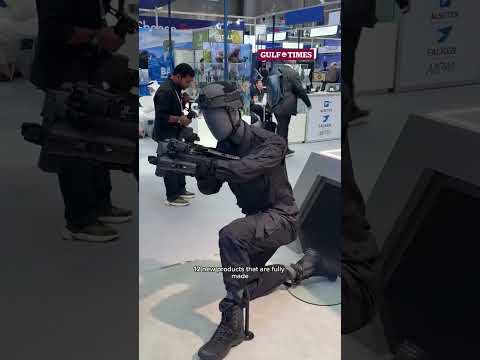
Barzan Holdings at Milipol Qatar 2026

Barzan Holdings at Milipol Qatar 2026, showcasing 12 new Made-in-Qatar innovations and advancing the future of defence

Gulf Times
Qatar

Minister tours Milipol Qatar 2026

 Following the opening of the 16th edition of the Milipol Qatar exhibition and conference, HE the Minister of State for Interior Affairs Sheikh Abdulaziz bin Faisal bin Mohammed al-Thani toured the event’s pavilions to view the latest technologies, innovations, and advanced solutions in the fields of internal security and safety.  He received briefings from representatives of participating companies and organisations regarding the key security products and technologies on display, as well as their role in advancing security and safety systems and enhancing their efficiency.  

Qatar Chamber chairman Sheikh Khalifa bin Jassim al-Thani and Federation of GCC Chambers secretary general Saleh bin Hamad al-Sharqi during a tour of Milipol 2026.
Qatar

Milipol Qatar is a vital ‘platform for security’

 Qatar Chamber chairman Sheikh Khalifa bin Jassim al-Thani has stated that the ongoing Milipol Qatar 2026 provides an important international platform for showcasing cutting-edge security technologies and innovations, further reinforcing Qatar’s position as a regional and international hub for specialised security exhibitions.  Qatar Chamber is participating in the 16th edition of Milipol Qatar 2026, which will run until October 22 at the Doha Exhibition and Convention Centre (DECC).  Sheikh Khalifa also highlighted the significant progress Milipol Qatar has made over successive editions, noting that it has established itself as one of the world’s leading exhibitions for homeland security technologies. Furthermore, he emphasised that Milipol Qatar offers promising economic and investment opportunities by fostering partnerships between Qatari private-sector companies and leading international firms, facilitating technology transfer, and developing national expertise.  He also highlighted the strategic importance of holding the exhibition alongside the Doha International Conference on Artificial Intelligence and Security, noting the growing role of artificial intelligence (AI) in strengthening security systems, analysing data, and anticipating risks.  Sheikh Khalifa reaffirmed Qatar Chamber’s commitment to encouraging private-sector companies to benefit from such events, build strategic partnerships, and contribute to economic diversification in line with Qatar National Vision 2030.  Saleh bin Hamad al-Sharqi, secretary-general of the Federation of GCC Chambers, lauded the exhibition’s organisation and the number of participating exhibitors, commending its role in strengthening co-operation between Gulf Co-operation Council (GCC) companies and participating businesses, while opening new avenues for knowledge and expertise exchange and exploring trade and investment partnerships.  Qatar Chamber is showcasing its services for business owners, companies, and members at its pavilion, while answering visitors’ enquiries about Qatar’s investment climate, business establishment procedures, commercial activities, and the services it provides to the private sector. 

Gulf Times
Qatar

Qatar joins UN biodiversity conference in Armenia

 Qatar is participating in the 17th Conference of the Parties to the Convention on Biological Diversity (COP17), being held in Armenia’s capital, Yerevan, from October 19-30.  The Qatari delegation, represented by the Ministry of Environment and Climate Change, is joining representatives of countries, international organisations and environmental experts to discuss key challenges and priorities in biodiversity conservation. The conference coincides with the 12th meeting of the parties to the Cartagena Protocol on Biosafety and the sixth meeting of the parties to the Nagoya Protocol on access to genetic resources and the fair and equitable sharing of benefits arising from their use.  Discussions at COP17 cover the protection of endangered wildlife, the restoration of degraded ecosystems, improved management of protected areas and the development of monitoring mechanisms. Participants are also examining ways to mobilise financial resources and strengthen international co-operation to support biodiversity conservation.Qatar’s environment ministry said the country’s participation reflected its continued commitment to protecting biodiversity and preserving natural resources through national programmes and projects.  These initiatives include protecting and breeding native wildlife, rehabilitating rawdas - natural depressions that support vegetation in Qatar’s arid landscape - expanding plant cover, conserving endangered species and safeguarding mangrove forests and coral reefs. The country is also working to strengthen the sustainable management of its nature reserves.The ministry said the conference provided an opportunity to learn from international initiatives, exchange scientific and technical expertise and explore partnerships with relevant international organisations to improve national conservation programs.  

Gulf Times
Qatar

MoI undersecretary meets Interpol official, Egyptian assistant minister of interior

His Excellency the Undersecretary of the Ministry of Interior (MoI), Abdullah bin Khalaf bin Hattab al-Kaabi, met separately Tuesday with the Secretary-General of the International Criminal Police Organisation (Interpol), Valdecy Urquiza, and Assistant Minister of Interior for the Security Sector, Major General Sherif Raouf, during their visit to the country to participate in the Milipol Qatar 2026 Exhibition and Conference.  During the meeting, they discussed prospects of joint co-operation in security-related fields, and ways to support and develop them, in addition to several topics of mutual interest.