tag

Thursday, September 24, 2026 | Daily Newspaper published by GPPC Doha, Qatar.

Tag Results for "US sanctions" (41 articles)

An Iranian passenger carrying luggage leaves Najaf International Airport after arriving on an AVA Airlines flight, in Najaf, Iraq, September 23, 2026. REUTERS
International

New US sanctions shut down Iranian flights

Iranian airlines were barred from neighbouring countries including the UAE and Oman ‌on Thursday in response to new US sanctions, the first big impact of a shift in US policy to target ​companies in third countries that do business with ‌Iran.The General Civil Aviation Authority of the United Arab Emirates, the Middle East's biggest travel hub, said that as ‌a result of the new US ⁠policy it was suspending all ‌flights by Iranian airlines until further notice.Iran's Tasnim news agency reported ‌that flights had also been shut down to Oman, Georgia and Azerbaijan, and to the Iraqi capital Baghdad. It said authorities were working ⁠to route flights to another Iraqi airport, in Najaf, a major Shi'ite Muslim religious pilgrimage site.Washington had announced it would put sanctions on any global companies doing business with Iranian airlines after September 23, with the aim of grounding Iran's entire civil fleet worldwide.Other countries in the Gulf region also appeared to have restricted flights.Tehran's Imam Khomeini Airport listed scheduled arrivals and departures on Thursday to and from countries including Afghanistan, Armenia, China, Iraq, Pakistan, Tajikistan and Turkey. But no flights appeared to be listed to or from the nearby Gulf states, with which Iran has long had some of its most important business and travel ties.Iran has suggested that enforcement of a US-mandated air blockade would ​lead to potential escalation. On Wednesday, a senior Iranian official threatened to make airports "unusable" in any regional country that abides by the US ban.Separately on Thursday, authorities in Saudi Arabia said they had intercepted intercepted six ballistic missiles fired by Yemen's Houthi fighters. The Houthis said they had fired dozens of missiles and ‌drones at Saudi targets. An escalating conflict between Saudi ⁠Arabia and the Houthis has ​emerged this month as the combat zone in the wider Middle East war.With the US-Israeli war against ​Iran largely stalemated for months on the battlefield, Washington has announced a shift in tactics to extend the reach of its financial sanctions by targeting companies from third countries that do business with Iranian firms, a practice known as "secondary sanctions".Trump referred to the new strategy last month as "economic D-Day", comparing it to the assault on Nazi-controlled France in World War Two by the United States and its allies.A flight ban, if sustained, could deepen Iran's isolation and worsen an economic crisis in the country, which is already facing a US blockade of its ports at sea."We are living in an open-air prison," a retired teacher in Tehran told Reuters by text message on condition her name not be used.

Aircraft at the parking area of the Mehrabad airport in Tehran (file picture). In early September, the US imposed sanctions on Iran's aviation sector and vowed to come down hard on companies that work with it.
Business

UAE bars flights by Iran's airlines: Iranian media

Iranian media said on Thursday that the United Arab Emirates had suspended flights operated by Iran's airlines, to comply with US sanctions over the Middle East war."All flights by Iranian airlines to the United Arab Emirates have been cancelled since midnight," the ISNA news agency said.No comment was immediately available from officials in the UAE.An Iran Airtour flight from Tehran to Dubai was cancelled shortly before its scheduled departure in the morning, after tickets had been issued, one passenger told AFP.Dubai, the UAE's commercial hub, is one of the most important destinations for Iranian airlines, with several daily flights from Iran.Dubai airport, which offers connections to Europe, Asia and Africa, often serves as a transit point for Iranian travellers, and is a common destination for business trips.Turkey, another major destination, remains open to Iranian travellers.In early September, the US imposed sanctions on Iran's aviation sector and vowed to come down hard on companies that work with it.Those companies had until Wednesday to accede — by stopping refuelling Iranian plans, for example — or face the possibility of being cut off from the dollar-based financial system.Starting on Wednesday, the main Iranian airlines were forced to cancel their international flights as neighbouring countries adopted restrictive measures.On Thursday, Turkmenistan joined the list."Since Turkmenistan did not authorise Iranian airlines to fly over its airspace, the Tehran-Dushanbe flight was unable to land at its destination and had to return to Imam Khomeini Airport in Tehran," Civil Aviation Organisation spokesman Majid Akhavan told ISNA.Despite the sanctions, several small Iranian carriers continue to fly abroad, notably to China, which refuses to bow to US pressure, as well as to Armenia.Iran has nearly 30 airlines, most operating domestic regional routes.Iran Air, the national carrier, and Mahan, a private company, are the largest for international travel.

Employees work at the office of Iran's Mahan Air in Erbil, Iraq, on Tuesday. Iranian airlines were forced to cancel some international flights on Wednesday after the US tightened sanctions on Iran's aviation industry in a new effort to cripple its economy.
Business

Iran airlines cancel flights as US sanctions hit

Iranian airlines were forced to cancel some international flights on Wednesday after the US tightened sanctions on Iran's aviation industry in a new effort to cripple its economy.A travel agent in Tehran told AFP that flights to Baghdad, Muscat, Georgia and Azerbaijan had all been suspended, but routes to multiple other destinations remained available, including China.US Treasury Secretary Scott Bessent announced the new measures on Monday as part of an earlier threat to impose "economic D-Day" on Iran, an attempt to force it into submission following nearly seven months of war.But Iran's aviation sector has already been a target of sanctions for years, and it remains unclear what the full impact will be and which other countries will comply.Even after the new sanctions took effect on Wednesday, a flight from Tehran operated by Mahan Air, one of Iran's biggest carriers, landed in Guangzhou in China, according to tracking data from FlightRadar24.China said on Tuesday that it opposed the US sanctions, calling them illegal. A flight to Shanghai was also due to depart on Wednesday, according to Tehran's international airport.Some flights to Istanbul were also scheduled, though others had been cancelled, the travel agent in Tehran told AFP."The situation is unstable and we are no longer selling tickets for the time being for fear of cancellations," the agent said, requesting anonymity.A Mahan flight from Kabul was also expected to arrive in Tehran. According to the website for Tehran's international airport, other connections to Turkey and Armenia remained possible using smaller Iranian airlines, including Varesh.Flights to Najaf in Iraq and Dubai were also scheduled.Bessent had vowed on Monday to "shut down" Iranian carriers and punish anyone doing business with them."If they land, you cannot provide them with fuel, you cannot provide them with landing services, you cannot sell them tickets or you will be knocked out of the dollar system," he warned other countries.The restrictions will further complicate the ability of Iranians to travel abroad or return to their country.Iranian media also reported cancellations, with the Tasnim news agency on Tuesday citing a civil aviation spokesman as saying that Baghdad and Muscat airports "will no longer accept" Iranian flights.The agency added that "other international flights, including Istanbul, will operate as scheduled".According to Tasnim, Iran's aviation authorities were in talks to reroute Baghdad flights to Najaf, a major destination for Iranian pilgrims.On Wednesday, the agency said its correspondent in Najaf had reported Iranian flights to the city were running as normal.It quoted a source at the airport as saying no order had been received from Iraqi authorities to halt flights.While the Iraqi government has not publicly announced plans to enforce the ban, several sources including a senior government official told AFP that Baghdad would comply with the US measures.The prospect of a suspension of flights between the two countries has sparked concerns among some Iraqi travel agents.

Since returning to office in January 2025, Trump has imposed tariffs of up to 50% on more than 80 countries, though the Supreme Court has struck down many of them, saying he exceeded his authority. Trump has cited a variety of reasons, including disagreements with foreign leaders, for his actions.
Business

Russia sanctions bill gives Trump sweeping new tariff powers

The Russia sanctions bill signed into law by US President Donald Trump on Friday gives him new powers to impose tariffs that could last well beyond his presidency, injecting more uncertainty into the global economy after nearly two years of trade wars.The immediate impact may be limited, given Trump's reluctance to take actions that could push consumer prices higher ahead of the November midterm elections, when control of Congress is at stake, analysts said.But critics say the legislation, which imposes tariffs on Russia's biggest trading partners, has broad language that could herald trouble for other countries as well if they find themselves in Trump's crosshairs in the future.The bill requires Trump to impose tariffs of up to 100% within 30 days on all goods imported into the US from the five largest importers of Russian crude oil or gas as well as any country that knowingly made new purchases of oil or gas 30 days after the law was enacted or was among the top five countries helping Russia evade sanctions.China and India are among the biggest buyers of Russian oil, but critics say the law gives US officials enough leeway to name a range of targets since it does not name any country or spell out how the top-five lists would be calculated."Given the discretionary authority that the president has, it is likely to be abused," said Laura Brank, a lawyer at Bryan Cave Leighton Paisner who focuses on cross-border transactions.Since returning to office in January 2025, Trump has imposed tariffs of up to 50% on more than 80 countries, though the Supreme Court has struck down many of them, saying he exceeded his authority. Trump has cited a variety of reasons, including disagreements with foreign leaders, for his actions.Challenging the latest tariffs in court could be difficult since the law specifically calls for the duties, while previous challenges to tariffs have successfully argued that the Trump administration misapplied laws from decades earlier.US Representative Don Beyer, a Virginia Democrat, argued that Trump had wrongly used existing trade laws to pursue his agenda in the past and is likely to do the same with the new law. The White House has denied abusing any trade laws."We don’t know when, but you don’t need a crystal ball to know what is likely to happen next," Beyer said on social media.Once Trump agreed to move forward with the bill in July after over a year of delays, US officials pushed for quick passage to give Trump additional leverage in his meeting with Chinese President Xi Jinping next week, according to congressional sources.US officials have tried to reassure lawmakers that the measure has sufficient guardrails, while acknowledging its significance in handing control of tariffs to the White House."It is the first time in nearly forty years that Congress has granted new tariff authorities to the executive branch," White House legislative director James Braid said in a post on X on Wednesday.The White House did not respond to a request for comment on concerns about the broader scope of the measure.The sweeping package, which passed Congress on Wednesday, aims to deprive Russia of funds used to pay for its nearly five-year war on Ukraine. The legislation authorizes sanctions against Russia's energy and defense industries, as well as its "shadow fleet" of tankers used to evade existing sanctions.Moscow on Thursday said further US sanctions against Russia would make it harder to reach a peace deal in Ukraine.Jeannette Chu, vice president of the National Foreign Trade Council, a trade group that advocates for open trade, said different entities had differing assessments of which countries could be hit with tariffs since no firm criteria were spelled out. The countries speculated as likely include Brazil, India, Japan and countries in the European Union, she said.China said it "consistently opposed long-arm jurisdiction that lacks a basis in international law" while India warned Washington that new tariffs could impact bilateral ties.In a worst-case scenario, Chu said, Ukraine itself could suffer if the new tariffs cut off Russian oil and gas supplies for refined products in EU countries, given it relies on diesel from refineries in Hungary and Slovakia.Not everyone agrees the bill gives the Trump administration too much leeway. The conservative think tank Foundation for Defense of Democracies argues that the bill lays out sufficient criteria on which countries can be hit and rejects the idea that it gives Trump a back door to imposing other tariffs. It noted that the original version of the bill required even higher tariffs of 500%.Any new duties would have to be announced just days before the midterm elections, which could push oil prices higher at a time when voters are already unhappy over rising costs. Trump's popularity has declined since he launched a war on Iran in February that has disrupted oil shipments from the Middle East."Given the state of the current energy markets, it certainly seems risky," said Ryan Majerus, a former senior US official who served under both Democratic and Republican presidents and is now with law firm King & Spalding. He says Trump could get around the timing issue by imposing a zero-rate tariff and revising it later, at will.Others say Trump's reluctance to take tough action against Russia since returning to office raises questions about how he will implement the legislation, which also gives Trump broad authority to waive tariffs or sanctions for national security reasons. That would let him avoid hitting Moscow or its backers harder, simply by notifying Congress, they said.

No Image
Media

US Plan: Financial Strangulation and Internal Implosion

 Dr. Djavad Salehi Isfahni, Professor of Economics at Virginia Tech, will unpack how President Trump's plan to strangle Iran financially and cause internal implosion

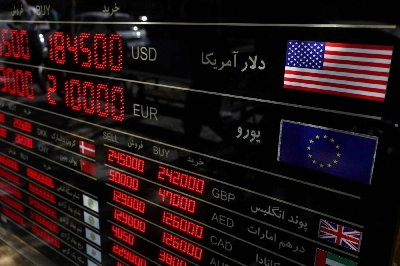
A display of currency exchange information in the Grand Bazaar in Tehran on August 17. The currency has collapsed in value from around 1mn rials to the dollar a year ago to over 2.2mn rials now.
Business

US economic pressure on Iran starting to tell, as sanctions and blockade bite

 A US campaign to throttle Iran's economy by blockading its oil exports and stopping sanctions evasion is growing increasingly difficult to withstand, three senior Iranian sources said. Washington has in recent weeks sought to ratchet up the economic pressure on Tehran, in an effort to extract concessions in any future negotiation that six months of conflict have so far failed to secure. Although Iran's clerical rulers managed to bypass sanctions for decades, the latest US moves have left them in a far more sensitive position, with few remaining channels to secure foreign currency or buy goods, the sources said. In particular, the effort to stop Iran accessing international financing networks in other countries it has long used to keep its economy functioning poses a real and urgent threat, the sources said. Any sign the economic campaign may break a months-long deadlock in the conflict will likely cheer US planners, though Iran has also warned it could respond to the pressure with military escalation, raising the stakes at a key moment. The war has erupted back into open fighting this week, with US attacks along Iran's Gulf coast prompting retaliatory Iranian strikes at US bases in Arabstates. Neither side has signalled yet it is ready to make the concessions demanded by the other, leaving the war in a costly stalemate — though one that may be shifting. While more energy is flowing to international markets through the Strait of Hormuz despite Iranian efforts to continue disrupting the seaway, the US blockade of Iranian oil exports has entirely cut off Tehran's main source of revenue. Adding to Iran's problems, the economy was already deep in crisis before the conflict, with a cratering currency and spiralling inflation, while months of bombing have run up a massive bill to rebuild damaged industry and infrastructure. Meanwhile, the country's financial squeeze is itself biting into Tehran's efforts to get around the sanctions regime, leaving less cash to pay the high premiums required to skirt sanctions, the sources said. The rial has fallen to record lows over recent days and one senior source said Iran only has another two months' supply of gasoline, which has to be imported despite domestic oil production because of limited refining capacity. The currency has collapsed in value from around 1mn rials to the dollar a year ago to over 2.2mn rials now.Iran's rulers are keenly aware of the potential risks of an economic meltdown and the possibility of it reigniting the nationwide mass protests it put down in January."They are under very, very severe economic pressure. They're losing control of the Straits. It's really a question of if they choose to negotiate and I think they'll have to," said Ali Ansari, modern history professor at St Andrews University in Scotland.The war is also entering a new phase, with each side trying to influence each other's politics.Iran hopes the threat of inflation will deter the US administration before midterm elections in November, while Washington aims to push Iranians to revolt, a senior Iranian official said.The latest US measures expanded secondary sanctions that target countries doing business with Iran in a bid to stop it clearing dollar transactions needed for both oil sales and to finance crucial imports of goods and raw materials.That effort is making Iran's existing sanctions evasion networks — front companies, unregistered tankers and smuggling — too expensive to use, the three senior sources said.Iranian crude loadings have fallen this month to about 260,000 barrels a day, from about 1.7mn a year earlier, according to data from commodity analytics firm Kpler, with only a trickle still moving off terminals for distribution by truck, train or smaller boats over the Caspian Sea.Tehran says it still has tens of millions of barrels stored in tankers outside the blockade zone that it can sell, but the new sanctions mean intermediaries are stepping back or demanding more money, one of the officials said.Total trade has fallen between 25% and 35%, with imports hit harder than exports, President Masoud Pezeshkian has said, one of several top officials warning in recent weeks about Iran's rapidly deteriorating situation.US pressure and Iran's own attacks have meanwhile disrupted one of the main conduits for Iranian trade — the United Arab Emirates, which said on August 19 that all commercial exchange and financial dealings with Tehran were halted until further notice."If those channels stay closed, a supplier wants cash, a deal is routed through another country and a shipment arrives later and dearer,” said an Iranian trader in Tehran who deals in imported goods.The internal impact is very painful. Official figures put 12-month average inflation at 69.9% with food and beverages prices rising at nearly twice that rate.Official unemployment rose to 9.1% in the spring, while the number of those in work fell by about 450,000 from a year earlier amid a wider fall in labour force participation.Even for those still in work, the average monthly salary of around $125 a month comes nowhere near meeting basic household spending requirements that come to around $450 a month according to official data. 

Gulf Times
Sport

FIFA disciplinary committee imposes sanctions following incidents at World Cup 2026

FIFA announced imposing sanctions against several players involved in the violence that followed the 2026 World Cup final at MetLife Stadium in New Jersey, USA, which ended with Argentina losing to Spain 1-0.  In a statement, FIFA's Disciplinary Committee revealed that it had suspended Argentine players Leandro Paredes for 10 international matches and fined him USD 90,000, Nahuel Molina for seven matches and fined him USD 90,000, Thiago Almada for one match and fined him USD 30,000, and team administrator Roberto Ayala for three matches and fined him USD 30,000. Spanish player Pablo Martin Paes Gavira, known as "Gavi," was also suspended for one match and fined USD 30,000.  The Argentine Football Association was also fined USD 321,000 for violating FIFA's disciplinary rules regarding the use of a sporting event for unsportsmanlike conduct, team misconduct, and discriminatory chants and gestures by its fans. However, the association announced it would appeal the suspensions and fines.  The chaos erupted when Leandro Paredes grabbed Spanish player Gavi by the neck and pulled him to the ground while holding his shirt, sparking a brawl between players of the two teams.

Gulf Times
Region

US revokes Iran oil waiver

The United States revoked a temporary sanctions waiver for Iranian oil Tuesday after three tankers were struck in the Strait of Hormuz, raising pressure on Tehran as it negotiates with Washington over ending the Middle East war.The US Treasury Department canceled a licence announced in June that had allowed Iran to produce, sell and deliver crude oil and related products through August 21."Iran's actions in the Strait were wholly unacceptable to the United States and will be met with consequences," a US official told AFP.The official, speaking on condition of anonymity, said the US-Iran memorandum of understanding was "entirely performance-based," warning that Tehran would see benefits only if it showed "good behaviour."But US negotiators were continuing to work "in good faith towards a final deal," the official said.The attacks, which ended more than a week of relative calm, revived concerns over freedom of navigation after Iran lifted its blockade of the vital waterway following a fragile ceasefire with the United States.Oil prices rose by more than 2% as the renewed attacks reignited worries over global energy supplies and cast doubt on the durability of the US-Iran agreement."We are now in a sensitive period where potential alternatives to an Iranian toll or fee system are being explored," Andreas Krieg, a security expert at King's College London, told AFP."Iran is sending a clear signal that no alternative will be accepted."Krieg said tankers trying to diverge through the Omani maritime corridor without registering with Iran would be punished, and called the attacks a "clear violation" of the ceasefire agreement and international law.Maritime traffic had tentatively resumed after Washington and Tehran signed the memorandum last month, but Iran has insisted there will be no return to pre-war arrangements, under which vessels could pass freely through the strait.Under the 14-point US-Iran memorandum, Iran and Oman, which border Hormuz, must hold talks "to define the future administration and maritime services" in the waterway with other Gulf states. 

An oil facility in the Khark Island. Iran has begun talks with Japanese companies under a US sanctions waiver ​allowing it to resume oil ‌sales, though prospective buyers are seeking a longer waiver and reassurances ‌about ship safety, ⁠three Iranian and Western ‌sources said.
Business

Iran said to explore oil sales to Japan; buyers seek longer sanctions waiver

Iran has begun talks with Japanese companies under a US sanctions waiver ​allowing it to resume oil ‌sales, though prospective buyers are seeking a longer waiver and reassurances ‌about ship safety, ⁠three Iranian and Western ‌sources said.The waiver, part of 60-day ‌peace talks between Tehran and Washington, was issued on June 22 and expires ⁠August 21.Three Japanese buyers were looking at possible crude oil purchases from Iran, their first since 2019, said two Iranian sources, who declined to be identified due to the sensitivity of the issue.Japanese and Iranian officials were in initial talks about possible oil sales, a Western industry source familiar with the matter said separately.An official at Japan's Ministry of Economy, Trade and Industry (METI), which oversees fuel ​supply infrastructure, said he was unaware of any such matter.Japan's foreign ministry and the US Treasury did not immediately respond to Reuters requests for comment.Japan, South Korea, India and European ‌countries stopped buying Iranian oil when ⁠US sanctions tightened following ​US President Donald Trump's withdrawal from Iran's nuclear pact in 2018.China has ​been Iran's main buyer in recent years.Any Japanese purchases would be a matter for private companies, a separate METI official told Reuters in June, but said it was unclear whether such deals would proceed given shipping times and existing contracts.The safety of any tanker voyage would also have to be ensured, the official added.A senior Iranian official said any deal would require the US to extend the current waiver given the shipping time between Japan and Iran.The official added that cargoes would be loaded at Iran's Kharg Island ‌and use Japanese-operated tankers.A senior ‌Iranian oil ministry official told ⁠Reuters that Iran's national oil company NIOC had approached traditional customers including Japan and told ⁠them that if a peace ⁠deal was concluded and sanctions were lifted, Iran would like them to resume their purchasing.Iran's oil ministry did not respond to a request for comment.The Strait of Hormuz ship passage is still far from safe and how it will operate once a lasting peace deal between Tehran and Washington is finalised is not yet known.A container ship ​was attacked in the Strait of Hormuz recently by Iranian forces and Iran's Revolutionary Guards have said all transits through the strait need to be cleared with them first.Securing insurance would be the biggest challenge, a senior official with a major Japanese oil refiner said.The current temporary US sanctions waiver was unlikely to draw orders from well-stocked Asian refiners, leaving independent Chinese refineries as ‌the main buyer, ​trade sources and analysts have said. 

A gas flare on an oil production platform in the Soroush oil fields is seen alongside an Iranian flag. On Monday, the US ⁠waived sanctions on Iran for 60 days after the first talks under a nascent peace deal, opening a narrow window for renewed energy trade.
Business

Middlemen offer Iranian oil to Indian refiners after US waiver, says sources

National Iranian Oil Co offers to sell discounted oil to IndiaTraders from Singapore and Dubai contacted refinersBuyers want clarity on payment terms and banking ‌channels Several middlemen have offered Indian refiners discounted ‌Iranian oil ⁠as Tehran ‌looks to expedite sales after Washington's ‌temporary sanctions waiver, Indian refining sources said.On Monday, the US ⁠waived sanctions on Iran for 60 days after the first talks under a nascent peace deal, opening a narrow window for renewed energy trade.The approaches to Indian refiners have come directly from National Iranian Oil Co (NIOC) and through intermediaries saying they have been allocated oil by the Iranian state ​producer, the sources said."Apart from NIOC, several traders are contacting us for the sale of Iranian oil. But my priority is to give a ‌chance to NIOC," said one ⁠of the refining ​sources. The sources declined to be named because the ​discussions are confidential.NIOC is telling Indian buyers that Iranian crude would be $3 to $4 a barrel cheaper than similar regional grades on a landed basis, they said.NIOC did not immediately respond to a Reuters email requesting comment due to a public holiday in Iran.The traders approaching refiners are mainly from small and mid-sized trading companies based in Singapore and Dubai, the sources said, declining to name them.Potential supplies ‌of crude and liquefied ‌petroleum gas (LPG) to India ⁠were also discussed during Iranian Petroleum Minister Mohsen Paknejad's visit to ⁠New Delhi this ⁠week, the sources added.However, Indian refiners have limited scope to absorb Iranian crude in the near term because most have already secured supplies through August and Middle Eastern term suppliers are pressing buyers to honour annual contractual commitments.India had already imported Iranian LPG through traders, ​and those flows could rise under the sanctions waiver, sources said. However, commercial negotiations could take some time because payment mechanisms and banking channels remain unclear.India received two cargoes of Iranian oil in April after Washington granted a 30-day sanctions waiver, with payments settled in Chinese yuan.Iran was India's second-largest oil supplier in the 2010/11 financial year before US sanctions pushed New Delhi to ‌reduce purchases and ​eventually halt crude imports from Tehran in May 2019. 

A general view of the Shuaiba oil refinery south of Kuwait City (file). The release of cargoes stranded inside the Gulf and a wave of crude offers from Abu Dhabi National Oil Co, Kuwait Petroleum Corp and Iraq's SOMO have boosted prompt supply and depressed Middle East benchmarks Dubai, Oman and Murban to discounts.
Business

Global physical crude markets mired in discounts as Middle East ramps up supply

Physical crude oil cargoes ‌are selling at discounts across the globe, changing trade flows as markets come under pressure from ‌fast-rising Middle Eastern supply with ⁠Iran set to boost ‌sales following a temporary reprieve from US sanctions.The steep ‌drop in prices follows the 60-day interim deal between the US and Iran to end the war that started ⁠on February 28, allowing some shipping to resume in the Strait of Hormuz which used to see a fifth of the global oil and liquefied natural gas shipments before the war.Tehran is also ramping up oil exports, seeking sales beyond China, after Washington temporarily lifted sanctions as part of the deal.The release of cargoes stranded inside the Gulf and a wave of crude offers from Abu Dhabi National Oil Co, Kuwait Petroleum Corp and Iraq's SOMO have also boosted prompt supply and depressed Middle East benchmarks Dubai, Oman and Murban to discounts.Asian refiners, which typically ​buy crude two months in advance, have already booked cargoes for delivery up to August."Refineries in the East have already been well supplied for the next two months and have no need for the incremental barrels, leading to a very weak market and Dubai ‌spreads in contango," said June Goh, a ⁠senior oil market analyst at ​Sparta Commodities.Dubai slipped to a discount of 27 cents a ​barrel on Tuesday, after peaking at more than $60 in March, while discounts for Oman and Murban widened to 96 cents and 67 cents, respectively, Reuters data showed.Prompt cargoes trade at a discount to later-dated ones in a contango market, indicating ample supplies. ADNOC sold at least 48mn barrels of spot crude so far this month for June-August loading, boosting regional supply.The collapse in Middle Eastern crude prices has made Gulf oil cheaper against Brent, enabling energy majors Exxon Mobil, Eni and TotalEnergies to send supertankers of crude such as Abu Dhabi's Murban and Upper Zakum to Europe, traders said.On the other hand, weak Middle East prices have shut the arbitrage window for Atlantic Basin crude to Asia, traders said. Spot differential for US West Texas Intermediate Midland crude has flipped from ‌a premium a week ago to a ‌discount of about 45 cents."We're expecting US crude ⁠export premiums to Asia to erode and AB (Atlantic Basin) differentials to soften as the weeks progress," Rystad analyst Janiv Shah ⁠said.US crude exports to Asia are set to ⁠ease in the third quarter after hitting a record high of 2.634mn barrels per day in May, ship tracking data from Kpler showed.Discounts for European and West African grades have also widened this week with the increase in Middle East supply.North Sea Forties crude, one of the six grades that can set the value of the dated Brent benchmark, traded on Monday at a discount of $1 a barrel to dated Brent, the lowest since November and ​sharply down from a record premium of $21.50 a barrel in April, according to LSEG data."Europe is becoming the clearing point for crude that either lost its eastern outlet or now screens cheap enough to travel west," analysts at Kpler said in a note.For West African grades, Eni has sold Angolan Nemba crude for August loading to Glencore at $7.95 a barrel below dated Brent while ExxonMobil offered a cargo of Angolan Hungo for loading on August 6-7 at a discount of $4.05 per barrel to dated Brent, traders said.Pricing agency S&P Global Energy Platts assessed on Tuesday that Congolese crude Djeno was at a discount of $10.845 per barrel to dated Brent, the lowest in its records dating back to 2013. Angola's ‌Nemba was priced at a ​six-year low discount of $7.95 per barrel, it added. 

US Vice President JD Vance. (AFP)
International

After first talks US waives oil sanctions against Iran

The United States waived sanctions on Iran for 60 ‌days from Monday after the first talks under a nascent peace deal, and officials reported calm in Lebanon after fighting that ​had prompted Iran to declare the Strait of ‌Hormuz closed.  After a weekend that had seemed to put the week-old peace agreement in jeopardy, including threats from US ‌President Donald Trump to restart ⁠the war if Iran closed the ‌strait, tanker traffic started to pick up through the waterway and ‌oil prices resumed their slide.  US Vice President JD Vance said his talks with Iranian officials in Switzerland had laid a good foundation for a ⁠final peace deal, although Iran denied that it had begun discussions of its nuclear programme.  The two sides, trying to build on the interim deal they signed last week, agreed to a roadmap towards a permanent agreement within 60 days at the talks in the Qatari-owned Swiss mountain resort of Buergenstock, mediators Pakistan and Qatar said.  They also agreed on a mechanism to end fighting in Lebanon between US ally Israel and Iran-aligned Hezbollah, and opened a communications line to help ensure safe passage for commercial ships through the strait. In the first major step of several foreseen under the agreement to provide Iran with economic benefits, the US Treasury announced a waiver until August 21 on sanctions, allowing Iran to ​sell oil and related products and receive payment for them.  Vance, who has maintained a largely upbeat tone since the memorandum of understanding was signed, said Tehran had agreed to allow in nuclear inspectors, and to establish mechanisms to handle its assets frozen abroad and manage ceasefires. "We laid a very ‌good foundation for a successful final deal," he told ⁠reporters after taking part in ​the talks.  However, Iran's Foreign Ministry spokesperson Esmaeil Baghaei told the official IRNA news agency that Iran had not yet discussed ​nuclear issues or made new commitments.  Iran has limited inspections by the International Atomic Energy Agency since the US and Israel launched a first round of air strikes last year, and suspended them entirely when war broke out in February.  It says its nuclear programme is peaceful. Vance played down the tensions that had emerged over the weekend, which were driven by escalating fighting in Lebanon, Iran's new declaration it had again closed the strait, and an angry response from Trump.  "There was a little bit of threatening, there was a little bit of whining, but at the end of the day the talks continued and we made great progress," Vance said.  Iranian Foreign Minister Abbas Araqchi said on social media that Tehran had secured waivers for oil and petrochemical exports, the release of some of its frozen assets abroad and the launch of a reconstruction and development plan for Iran.  Vance said White House envoy Jared Kushner, Trump's son-in-law, had come up with a ‌process whereby the US and Qatar would have control ‌over Iranian funds when they are unfrozen, and the money ⁠could be spent on US corn, soy and wheat.  Technical talks were due to continue for the rest of this week.  The interim peace ⁠agreement calls for ending all hostilities, including in Lebanon, which Israel ⁠invaded in March after Hezbollah fired across the border.  Israel was not party to the peace agreement and says it will not withdraw its troops from Lebanon, but on Friday it agreed a new ceasefire.  Though intense fighting continued for another day, Lebanese officials said it had abated since Saturday night.