tag

Wednesday, October 28, 2026 | Daily Newspaper published by GPPC Doha, Qatar.

Tag Results for "Innovation" (73 articles)

No Image
Qatar

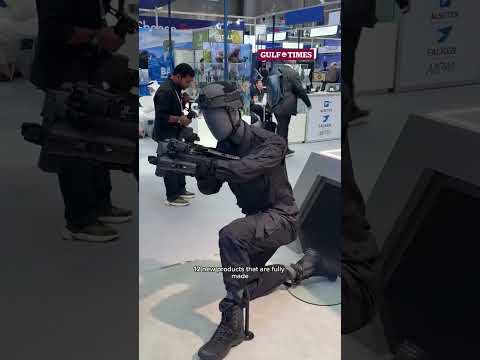
Barzan Holdings at Milipol Qatar 2026

Barzan Holdings at Milipol Qatar 2026, showcasing 12 new Made-in-Qatar innovations and advancing the future of defence

Gulf Times
Qatar

Minister of Communications and Information Technology meets US Deputy Assistant Secretary of Commerce for Middle East, Africa

His Excellency Minister of Communications and Information Technology, Mohammed bin Ali Al Mannai met on Tuesday with US Deputy Assistant Secretary of Commerce for the Middle East and Africa, Mark Mitchell.During the meeting, they discussed means of cooperation between the State of Qatar and the United States of America and explored opportunities to develop the partnership in the digital sector.The meeting also addressed opportunities to strengthen cooperation in the digital economy and investment, alongside ways to develop collaboration in the fields of innovation and entrepreneurship. 

Future Universities Alliance Summit group picture
Qatar

UDST selected for inaugural Innovation Sandbox of the Future Universities Alliance

The University of Doha for Science and Technology (UDST) has been selected for the inaugural Innovation Sandbox of the Future Universities Alliance, a global learning network incubated by the US’s Duke University. The UDST is the only institution from Qatar, and the only one from the Gulf, selected for the inaugural cohort, which brings together 49 institutions from 23 countries across five continents. Selection followed a competitive application process weighing strategic priority, leadership commitment, readiness to act, and fit with a diverse global cohort. The Innovation Sandbox is the Alliance’s 12-month global peer learning programme for institutions pursuing ambitious, institution-shaping change. Participants bring active institutional challenges into facilitated pod sessions, milestone meetings, and the annual Global Summit. “Higher education is not short of innovation, but it is short of the structures needed to connect that innovation, help it travel, and make it durable,” said Noah Pickus, founder of the Future Universities Alliance and Head of Global Strategy and Partnerships at Duke University. “The Innovation Sandbox is our answer to that gap,” he said. “We are pleased to convene this inaugural cohort and grateful for the trust these institutions have placed in one another to work together in this Alliance.” “UDST was founded on the belief that an applied university must be agile and willing to rethink how it works,” UDST president Dr Salem al-Naemi said. “Joining the inaugural Innovation Sandbox puts that belief alongside some of the most ambitious institutions in the world, and lets us contribute a Gulf perspective to a global conversation about what the university of the future should be.” The Innovation Sandbox features three distinct pathways: “Startup Institutions”, supporting emerging universities and learning ventures building new institutions from the ground up; “New Initiatives in Existing Institutions”, focusing on transforming existing academic structures and institutional models; and “Amplifying Signature Innovations”, helping institutions expand the reach and impact of their established innovations beyond their campuses. The UDST is participating in the “New Initiatives in Existing Institutions” pathway, bringing an artificial intelligence (AI) framework built in-house to the Sandbox. In this system, multiple independent AI agents review exam questions. They check that each question genuinely measures the learning outcomes a course promises, at the right level of thinking, and a question is accepted only when the agents agree.The framework is already running in UDST courses. Through the Sandbox, the university aims to develop it into a method that other universities can adopt. The project speaks directly to the Alliance’s first principle, to “innovate toward quality”, which the Alliance defines by the depth, coherence and durability of learning. Alongside Dr al-Naemi, the UDST team includes Dr Seifeddine Bouallegue, associate professor and head of Software Systems Department at the College of Computing and Information Technology (CCIT); Dr Brian McCommons, programme development and accreditation specialist; and Robert Ford, lecturer at CCIT. 

Gulf Times
Qatar

Leadership Innovation Forum to examine how institutions can outlast their founders

The third Leadership Innovation Forum 2026 will examine Qatar’s experience in education, infrastructure, and oil and gas for lessons on building institutions that sustain success beyond leadership changes. Announcing the details at a press conference, the QLC said the forum will take place on October 28, 2026, under the patronage of HE Sheikha Al Mayassa bint Hamad bin Khalifa al-Thani, Chairperson of the QLC Board of Directors. Organised by the Qatar Leadership Centre (QLC) the forum will be held under the theme “Strategy Before Execution: Building Institutions That Endure Beyond Their Leaders”. The forum will explore how strategic planning, governance and institutional culture can help organisations preserve their achievements and continue developing after their founders or senior leaders leave. Abdulla Mohammed Khalifa al-Binali, Director General of the QLC, said the forum reflects the Centre’s commitment to advancing leadership thought and encouraging the exchange of expertise across sectors. “Successful leadership is not limited to achievements realised during one’s tenure; rather, it extends to building institutions capable of sustaining success through successive leadership transitions,” he said. “Through this forum, we aim to embed the importance of strategic thinking and facilitate the exchange of experiences that support institutional sustainability and capacity building.” Qatar Media Corporation will support the forum’s media presence and help communicate its mission and objectives. The partnership, the Centre said, underlines the role of national media in spreading leadership knowledge, showcasing inspiring institutional experiences and bringing key ideas to a wider audience, fostering dialogue on the future of leadership and institutional sustainability. Professor Steven Wright, director of the Leadership Knowledge Base at QLC, said the edition would address the fundamental question of what makes an institution last beyond the people who established it. “This one really is challenging. It’s challenging; ultimately the key question, the ultimate question and the ultimate test for leaders is whether they are actually building institutions that last and have a legacy of success for the future,” he said. Wright explained that the 2026 edition builds on the previous two forums, which examined innovation and decision-making.“In 2024 we looked at how leaders innovate, in 2025 we looked at how leaders decide, and now we ask the ultimate question of what leaders leave behind and how that is the measure of success,” he said. The forum will use Qatar’s institutional development as a series of case studies, examining how organisations have built resilience and sustained their achievements across generations of leadership. Wright identified education, infrastructure, and oil and gas as three key areas for discussion. The education panel, titled “The Roots of Knowledge”, will examine how Qatar’s education institutions developed in response to national needs, beginning with teacher training, and how they have contributed to building a wider education ecosystem. “Education is what builds the people and has the legacy in that area,” Wright said, adding that the discussions would consider how the country’s experience could inform future leadership. A second panel will focus on infrastructure, exploring the scale of Qatar’s development and the leadership decisions that have sustained achievements over time. The third will examine the oil and gas sector, focusing on the long-term economic decisions and strategic vision that have contributed to Qatar’s development and its position in the global energy industry. Wright said the discussions would consider the decisions behind these achievements and the lessons future leaders could draw from them. “By bringing those together we’re ultimately asking the question of how success can be achieved beyond the founders of those institutions, which is the ultimate test for leaders to achieve,” he said. Ali Ahmed al-Kuwari, Public Relations manager at QLC, said the forum was designed to help participants connect vision and strategy with effective implementation and share practices that support more resilient, sustainable institutions. He stressed that institutional sustainability depends on more than quickly implementing initiatives. “The real challenge lies in their ability to continue achieving results and preserving their gains after leadership changes,” al-Kuwari said. He said the forum would highlight the importance of long-term planning, developing competencies, documenting institutional knowledge, preparing second-tier leaders and establishing governance systems that ensure continuity. Al-Kuwari added that the event aimed to move beyond theoretical discussion by producing ideas participants could apply in their workplaces, particularly in strategic planning, governance, and preparing future leaders. The programme will also include strategic leadership workshops for QLC alumni, along with discussions aimed at strengthening professional networks and encouraging the exchange of experience across sectors. The forum aims to establish a recurring platform to examine the future of leadership and institutional development, with its central question extending beyond what leaders achieve during their tenure to what remains after they leave. 

Gulf Times
Qatar

Qatar Leadership Centre to host Third Leadership Innovation Forum

Qatar Leadership Centre will host the third edition of its Leadership Innovation Forum on October 28, focusing on how strategic planning can help institutions sustain their performance beyond changes in leadership.The forum will be held under the patronage of HE Sheikha Al Mayassa bint Hamad Al-Thani, chairperson of the center's board, and will bring together leaders, experts and specialists from various sectors.The event will explore how organizations can establish long-term strategies, develop future leaders and build systems that ensure continuity as leadership changes.Speaking at a press conference, Ali Ahmed Al Kuwari, the center's public relations director, said the forum would provide a platform for dialogue and the exchange of expertise on leadership challenges and the demands facing institutions in the coming years.He said effective leadership was not limited to achievements during an individual's tenure, but also involved building organizations capable of maintaining progress and delivering results after a leader's departure.Al Kuwari added that institutional sustainability depended on clear strategic direction rather than simply accelerating the implementation of initiatives. He highlighted the importance of long-term planning, developing talent, applying knowledge and preparing the next generation of leaders.The forum also aims to promote the concept of leadership legacy, focusing on the systems, capabilities and organizational practices leaders leave behind to enable their successors to continue developing their institutions.Al Kuwari said the center wanted the forum's outcomes to extend beyond theoretical discussions and produce practical ideas for workplaces, particularly in strategic priority-setting, talent development, governance and leadership succession.The third edition builds on discussions at the previous two forums. The 2024 edition focused on leadership innovation, while the 2025 forum examined decision-making.This year's event will address the institutional legacy leaders leave behind and how organizations can continue to achieve their objectives beyond individual tenures.Professor Steven Wright, director of the Leadership Knowledgebase Department, said the forum would examine what enables institutions to remain successful after their founders and leaders leave.He said Qatar's experience in building national institutions offered examples that could inform discussions on sustainability, governance and organizational culture.The program will include workshops on strategic leadership for graduates of Qatar Leadership Center, alongside discussions on the characteristics of exceptional leadership and the practices that enable institutions to maintain their objectives through leadership transitions.The forum brings together graduates of the center and professionals from government, public and private sector organizations to exchange experiences and explore approaches to strengthening institutional effectiveness and resilience. 

Dr Sanaa al-Harahsheh.
Qatar

Qatar Foundation researcher highlights building healthy digital habits before problems begin

Dr Sanaa al-Harahsheh, research manager at the World Innovation Summit for Health (WISH), Qatar Foundation’s (QF) global healthcare initiative, examines through her work how digital life affects the mental health of children and families.Her message to parents is simple: prevention is far better than cure. Problematic digital use can develop gradually, so families should start with healthy boundaries early. “Start with prevention, because the cost will be a lot later,” she says, pointing to psychological and social costs, as well as something families cannot recover – time lost together.Her concern is not only what children see online, but what slowly changes at home. She describes the risk as hidden and unnoticed, and it often starts at the dinner table. Parents call children down for a meal, only for them to stay in their rooms or reply by message from elsewhere in the same house. “It has affected the daily interaction between the family and the relationship,” she says.Emotions run high too. Children whose devices are taken away “get angry, they get stressed out,” she says. Games add pressure of their own – with teammates abroad, some children wake at midnight to play for fear of missing out or being excluded from their gaming group. “You don’t know who is playing with your children,” she explains.“This also raises cybersecurity concerns. Children may communicate with people they have never met offline, making conversations about privacy, suspicious messages, and inappropriate contact essential.”For some, screens become an escape. A child struggling in class, or in conflict with parents or siblings, may play to feel better. “It’s to escape the situation they’re in,” she explains. “But at the end, it’s not a solution. It’s temporary.”A research paper co-authored by Dr al-Harahsheh, published in Scientific Reports in 2024, surveyed 331 students in Qatar’s schools and found that problematic internet use and spending more time online for entertainment were associated with greater physical and mental fatigue, while time spent online for schoolwork was not.What children do online, and why they do it, therefore matters – it’s not simply about the amount of screen time. Nearly a third of participants in Dr al-Harahsheh’s study showed signs of problematic internet use, with coping with stress or escaping problems among the commonly reported features.Digital use can also become concerning when it displaces face-to-face interaction. It is “very serious,” she says, because real interaction happens face to face, not behind a screen. Some children come to prefer their online circle to talking with parents, cousins or relatives. Years of reduced human contact may show up later as loneliness, anxiety and low mood, a risk she sees stretching across the decades ahead.None of this, she emphasises, means technology is the enemy. “This does not mean that technology itself is harmful. It can support education, communication, creativity and social connection. The goal is a healthy relationship with it.”Boundaries work best when children understand them, says Dr al-Harahsheh. She encourages parents to talk with their children about why limits exist, how they benefit them, and to follow them too. “If I don’t control myself with the device, how will my kids take it?” she asks.“Children learn from what adults do, not only what they say. Families can protect personal information, use privacy settings and teach children to recognise scams and unwanted contact. Monitoring tools can help, but should not replace communication and trust.”Telling children to put the screen down is not enough; they need something to move on to. “Parents should offer real alternatives and take part themselves, from a walk or sport to bowling or a camping trip. Take the child out, spend time as a family and ensure everyone is present both physically and mentally,” she says. Time together supports children’s social, emotional and behavioural development, as well as family relationships.She explains that responsibility is shared: parents shape habits through communication and role modelling; schools can strengthen digital literacy and online safety; and technology providers and policymakers can help create healthier digital environments. 

The awards celebrate Commercial Bank's ongoing commitment to delivering exceptional experiences to its affluent segment, through its flagship Limited Edition Mastercard World Elite card portfolio.
Business

Commercial Bank wins three Mastercard awards for excellence in premium cards, affluent banking

Mastercard has presented Commercial Bank with three awards, reaffirming the bank’s leadership in premium banking, payments innovation, and affluent consumer engagement.The awards celebrated Commercial Bank's ongoing commitment to delivering exceptional experiences to its affluent segment, through its flagship Limited Edition Mastercard World Elite card portfolio. The award for highest spend per Mastercard World Elite card reflects the continued success of the Bank’s premium card proposition across the region.Commercial Bank also won the Card Design Excellence Award for the innovative design and craftsmanship of its Limited Edition Mastercard World Elite Gold Metal card, featuring a fully engraved gold aesthetic. The award highlights the bank's ability to translate premium materials and technical functionality into a payment product that stands out in the region's highly competitive market.Further, Commercial Bank received the Affluent Banking Excellence Award for its sustained investment in building one of the region's leading premium card portfolios.Stephen Moss, Group CEO, said: "We are honoured to accept these three prestigious awards from Mastercard. Being recognised for the highest spend per card account across the region for the third consecutive year is particularly rewarding. These achievements are a testament to the dedication of our teams and the strength of our longstanding collaboration with Mastercard as we continue to raise the bar in premium banking and payments."Shahnawaz Rashid, executive general manager and head of Retail Banking at Commercial Bank, added: "These awards reinforce the success of our strategy to deliver market-leading products to our most valued customers. “Our Limited Edition Mastercard World Elite portfolio has been carefully curated to combine elevated benefits, exclusive lifestyle experiences, and distinctive card design, resonating strongly with high net-worth individuals. We are pleased to see these efforts acknowledged by Mastercard and look forward to developing new differentiated offerings together."Mark Elliott, Division president for East Arabia at Mastercard, said: “Mastercard and Commercial Bank share a commitment to innovation and to creating value for consumers. The three awards recognise Commercial Bank’s leadership in shaping the country’s affluent banking segment. We are proud of the collaboration that has brought the Limited Edition Mastercard World Elite card portfolio to life, and the strong response it has received from premium customers. We are confident that our partnership will deliver many more milestones in the years ahead.”

Gulf Times
Qatar

AlRayan Bank, Visa to introduce new generation of lifestyle cards for Qatar

AlRayan Bank announced the upcoming launch of a new premium lifestyle card proposition, developed in partnership with Visa.The initiative reflects the bank’s broader ambition to reshape how customers engage with everyday spending, bringing together rewards, personalisation, and digital innovation within a single, connected experience.Shaped by extensive market analysis, customer research, and global benchmarking, the new proposition is built to deliver a differentiated experience for personalisation, rewards, and customer value in Qatar’s and the GCC’s card market.It will deepen relevance across the moments that matter most to customers: shopping, dining and travel. The new offering embeds innovative features designed around customers’ digital lifestyles. The result is a proposition designed to reward customers in ways that feel more personal, more current, and more meaningful.Omar al-Emadi, acting Group CEO and Group Chief Operations and Administration officer at AlRayan Bank, said: “At AlRayan Bank, we continuously challenge ourselves to anticipate the future needs of our customers rather than simply respond to them. Our upcoming lifestyle proposition represents a significant step forward in that journey.“We are creating an ecosystem that goes beyond traditional banking rewards to deliver experiences, flexibility, and personalised value that reflects how our customers live, spend, and engage with the world around them, including the digital and AI platforms that are increasingly part of daily life. We believe this proposition will set a new benchmark for lifestyle banking in Qatar.”Houssam Itani, Group Chief Strategy and Technology officer at AlRayan Bank, said: “This initiative is another example of how AlRayan Bank is leveraging technology, data, and strategic partnerships to deliver personalised customer experiences. The proposition has been designed from the ground up with personalisation, scalability, and digital enablement at its core. Customers can expect capabilities designed to respond to evolving customer expectations.”Lucca Bianconi, Country manager at Visa Qatar, said: “At Visa, we are committed to working with AlRayan Bank to deliver payment experiences that reflect the evolving lifestyles and expectations of consumers in Qatar. By combining Visa’s global payments expertise and trusted technology with AlRayan Bank’s deep understanding of its customers, this new proposition will bring greater choice, personalisation and value to everyday spending, while supporting the continued growth of Qatar’s digital economy.” 

Gulf Times
Qatar

HMC to hold Qatar International Neonatal Congress 2026 in Nov

Hamad Medical Corporation (HMC) will hold the Qatar International Neonatal Congress (QINC) 2026 from November 4 to 7. The conference has two parts: pre-conference workshops on November 4 and 5 at the ITQAN Clinical Simulation and Innovation Centre, and the main conference at Pullman West Bay on November 6 and 7. The conference will include many participants from medical facilities across the country, as well as delegates from across the region and beyond. Attendees will have several workshop options, especially during the pre-conference programme. According to the chairperson of the congress, Dr Mai Abdulla al-Qubaisi, senior consultant and director of NICU, chair of the Corporate Neonatal Perinatal Medicine Department, Women’s Wellness and Research Centre (WWRC) HMC, the event aims to explore the frontiers of neonatal medicine and redefine the standards of care for the smallest and most vulnerable patients. “This year’s scientific programme is meticulously curated to address the most critical pillars of our field. We will delve into advanced strategies in neonatal neurology, optimise precision nutrition, and refine our approach to sepsis management. Furthermore, we will highlight the indispensable role of POCUS (Point-of-Care Ultrasound) as a bedside diagnostic cornerstone,” said Dr al-Qubaisi. According to the official, a key highlight of this edition will be the exploration of the Integration of Artificial Intelligence, ensuring that technology augments clinical expertise. “Beyond the clinical sessions, this conference remains a premier platform for global networking. It is an opportunity to engage with world-renowned experts, share transformative research, and foster collaborations that transcend borders,” added Dr al-Qubaisi. Neonatology is a rapidly evolving frontier, where staying current with evidence-based practices is not just a professional requirement but a clinical imperative. This year’s conference aims to bridge the gap between foundational care and the cutting-edge technologies that are redefining newborn outcomes. A central focus of this event is the transformative role of Artificial Intelligence in personalising treatment and enhancing diagnostic precision. The conference and associated workshops, according to the organisers, aim to equip participants with emerging concepts and skills in the field. One of the conference’s primary goals is to recognise and understand the basic concepts of recent mechanical ventilation strategies to enhance respiratory support in neonates. It also focuses on understanding and applying high-frequency ventilation techniques in appropriate and safe settings to improve respiratory outcomes. Advancing understanding of the neonatal brain remains a top priority, and the Congress focuses on integrating advanced neuro-monitoring and management with long-term neurodevelopmental follow-up strategies to protect the fragile developing brain. Furthermore, the Congress aims to implement the best practices to achieve optimal growth and developmental outcomes for neonates through evidence-based nutritional strategies. The Congress offers an enriching experience that promises to be both scientifically rigorous and deeply inspiring. 

Gulf Times
Community

DPS Modern Indian School organises 4th Jamboree

DPS Modern Indian School hosted the 4th edition of Jamboree 2026 on the theme Where Eras Collide – Rewind and Reload, celebrating student creativity, innovation, teamwork, leadership and entrepreneurship on October 3. The event featured more than 55 student-created stalls showcasing food, games, karaoke, and art & crafts, turning the campus into a vibrant hub of ideas and enterprise. Addressing the gathering, principal Soma Bhattacharjee highlighted the importance of nurturing entrepreneurial thinking through hands-on experiences. She announced this year’s unique Jamboree charity initiative in collaboration with Nexus Innovation Association. As part of the initiative, students will contribute books, clothes and bags through Nexus Innovation Association, which will facilitate their distribution to Maktaba Children’s Library and Qatar Charity. Chief guest Kamakshi Gopi, the vice-president of the Indian Women Welfare Organisation, encouraged students to identify opportunities, think creatively, and turn ideas into action. Group Academic adviser Asna Nafees described Jamboree as a student-driven platform for experiential learning, reinforcing the spirit of “Service Before Self”. Jamboree 2026 gave students an opportunity to experience entrepreneurship through creativity, collaboration, responsibility, and initiative. 

Gulf Times
Qatar

Singapore Minister introduced to Qatar's Tech Initiatives during TASMU lab visit

 Minister for Social and Family Development of the Republic of Singapore Masagos Zulkifli has visited the TASMU Innovation Lab of Qatar's Ministry of Communications and Information Technology to review projects and initiatives supported by the facility.During the visit, the Minister and his delegation were briefed on innovative solutions and projects developed through the lab, as well as its role in supporting new ideas and emerging technologies.The delegation also learned about the lab's efforts to foster cooperation between government bodies, the private sector, innovators and entrepreneurs.Officials said the visit highlighted Qatar's efforts to promote digital innovation and develop technology-based solutions aimed at addressing challenges and expanding the use of emerging technologies across different sectors. 

Gulf Times
Qatar

Ministry of Culture obtains accreditation from Global Innovation Institute

The Ministry of Culture has achieved a new institutional milestone, with the This Is Qatar encyclopedia receiving Innovation Endorsement - Tier 3 accreditation from the Global Innovation Institute (GInI), the third and highest level of endorsement. The recognition reflects the encyclopedia's ability to deliver innovative cultural and knowledge-based value, as well as the Ministry's capacity to translate innovation into practical applications and tangible outcomes with measurable impact. The accreditation further advances the development of the This Is Qatar encyclopedia, which was launched during the opening of the 35th Doha International Book Fair as a modern knowledge and documentation platform showcasing the history of the State of Qatar, its cultural identity and national achievements. The encyclopedia is based on an integrated system combining knowledge-based content, historical documentation, multimedia, interactive solutions and modern content-presentation methods. This enables Qatar's history and national heritage to be presented in a contemporary manner while expanding access to cultural content for different segments of society and in multiple languages. The Ministry added that receiving this international accreditation reflects its commitment to establishing innovation as a key enabler of institutional cultural work and to developing initiatives capable of creating sustainable cultural and knowledge-based value, alongside employing modern technologies and methods in producing and providing access to content. The Ministry affirmed that the achievement represents a step within a broader path toward developing national cultural projects and strengthening their ability to preserve national memory, reinforce identity, and showcase the history and achievements of the State of Qatar, thereby supporting its cultural and intellectual presence at the regional and international levels. The accreditation also underscores the ability of national talent at the Ministry of Culture to develop cultural initiatives in accordance with international standards and to strengthen Qatar's presence in the fields of cultural and institutional innovation. The Global Innovation Institute affirmed that the Ministry of Culture is the first ministry in the State of Qatar to receive Innovation Endorsement - Tier 3 recognition for one of its initiatives, adding this achievement to the Ministry's efforts to develop its institutional framework and promote excellence and innovation in the cultural sector.