


Agencies/New Delhi
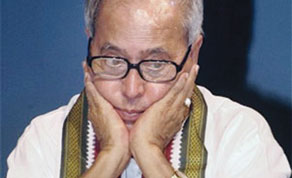
 Finance Minister Pranab Mukherjee unveils the country’s general budget tomorrow following a drubbing in state polls that will weigh heavily on efforts to boost sluggish growth while reining in inflation and the fiscal deficit.
With a general election due by 2014 at the latest, analysts say the downturn in the fortunes of the ruling Congress Party will blunt Mukherjee’s ability to push any unpopular reforms.
The government has already rowed back on opening the retail sector to foreign investment, and struggled with plans to overhaul pension, insurance and tax systems and bring in new land acquisition laws to spur industrialisation.
“No bold reforms are possible with the election results - they daren’t risk it,” said Deepak Lalwani, head of India-focused investment consultancy Lalcap.
The recent polls saw Congress win outright in only one of five states and suffer a humiliating defeat in politically vital Uttar Pradesh.
The need to woo back voters could tempt Mukherjee into unveiling some populist measures, including tax breaks for the poor and increased spending on food subsidies, health and education.
But analysts say his largesse will be restricted by the need to cut the fiscal deficit and persuade the central bank to start unwinding interest rates from four-year highs to kickstart growth.
“The Reserve Bank of India would ideally want to see a more aggressive tightening,” said Credit Suisse economist Robert Prior-Wandesforde. But the budget should “do just about enough to start the rate-cut ball rolling.”
“The best that can be hoped for is muddle-through policies,” added Goldman Sachs analyst Tushar Poddar.
Last year, Mukherjee announced a budget that missed its targets not only on the deficit -but also on growth, revenues and spending, as political paralysis over a slew of corruption scandals and a global downturn upset the apple cart.
He is expected to project economic growth of 7.5-8.0% for the 12 months to March 2013. Growth this year has been estimated at 6.9% - the slowest rate since the 2008 global financial crisis.
Analysts forecast a fiscal deficit target of around 5% of gross domestic product. The 2011-12 deficit is expected to come in at close to 6.0%, overshooting the previous budget target of 4.6%.
Mukherjee will not be helped by elevated oil prices that will keep fuel subsidy bills for the poor high.
“To achieve its goals, the government will likely rely on raising indirect taxes, higher divestment receipts, and some cuts in subsidies,” said HSBC chief economist for India and Asean (Association of Southeast Asian Nations) Leif Eskesen.
“There’s clearly a risk they will only deliver on paper - again relying on optimistic growth assumptions and divestment targets, and leaving inevitable expenditure hikes to extra-budgetary sessions later,” he said.
Speaking to the CNBC-TV18 channel, former Reserve Bank governor Bimal Jalan said that growth targets were meaningless without clear and effective policy implementation.
“The job of the budget should be to restore confidence in the way we are running our economy,” Jalan said.
“If you look at corruption, if you look at policy paralysis, if you look at governance issues, every day there is some problem. Look at policymaking - we announce something, but we do something else.
“When I look at India’s economic fundamentals, it’s very hard to find something wrong. But if you look at the other side, which is the way we are doing things, then it is very hard to find something right,” he said.
l Spurred by its win in the recent civic elections in Maharashtra, an aggressive opposition plans to take on the ruling Democratic Front (DF) on a wide range of issues in the crucial budget session of the legislature that begins in Mumbai today.
Inflation accelerates to near 7%
India’s headline inflation picked up for the first time in five months in February on higher food costs but another measure of price pressures cooled, sparking market speculation that the central bank may surprise with an interest rate cut today. The Wholesale Price Index, India’s main gauge of inflation, edged up a faster-than-expected 6.95% from a year earlier in February after a spike in vegetable prices fanned food inflation. Wholesale prices had risen an annual 6.55% in January, the slowest in 26 months.
But non-food manufactured inflation, which the central bank uses to gauge demand-driven price pressures, slowed to a 14-month low of 5.8% from 6.7% in January. “The key trend that needs to get captured is on core inflation...and that is something that should go as a positive for monetary policy,” said Shubhada Rao, chief economist at Yes Bank in Mumbai.
“We still believe the RBI could look at a repo rate cut of 25 basis points tomorrow.” Weakening economic momentum as well as a softer policy stance adopted by central banks in the region is piling pressure on Reserve Bank of India Governor Duvvuri Subbarao to start cutting rates sooner than later.