


Reuters/Mumbai/ New Delhi

India’s economic gloom deepened yesterday as figures showed a record low rupee is adding to the central bank’s inflation headache and an adviser to the prime minister said there was little that could be done to check the currency’s slump.
An 18% slide in the value of the rupee since July is adding to a growing worry of economic crisis in the country as stubbornly high inflation ties the hands of the central Reserve Bank of India from easing policy to try to turn a grim economic outlook.
A worsening fiscal picture means the government’s financial firepower is also limited. Parliament is in gridlock, preventing approvals for investment that could help offset a ballooning current account deficit.
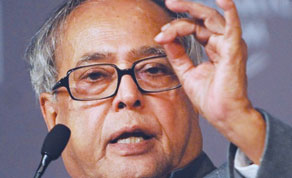
Indeed, C Rangarajan, chairman of the Prime Minister’s Economic Advisory Council, suggested there was little policymakers can do to counter the slide in the currency.
He said the rupee was subject to the whims of global investors, who are buying the dollar as a safe haven from the eurozone debt crisis.
“The behaviour of the rupee is also a reflection of the behaviour of the dollar,” he said. “There is very little that can be done.”
Data yesterday showed wholesale prices, the main gauge of inflation in India, rose 9.11% in November from a year earlier. That showed inflation actually fell from 9.73% in October thanks to a sharp pullback in food price pressures.
However, fuel inflation rose to 15.48% from 14.79% and manufacturing inflation increased to 7.7% from 7.66% as the tumbling rupee pushed up import costs.
The slide in the rupee has caught policymakers flat-footed and by firing up import costs it is undermining the RBI’s forecast for inflation to drop to 7% by March. That potentially pushes back when the central bank could ease policy.
The rupee fell to a fresh low of 54 per dollar yesterday.
Many economists believe it will fall further, in turn keeping downward pressure on Indian stocks, which are off 22% in 2012, among the worst in Asia. The main index fell 0.76% yesterday.
“The bearish sentiment is very strong and there is nothing going for the rupee,” said Hari Chandramgathan, a foreign exchange dealer with Federal Bank.
While the RBI has stepped in to smooth volatility in the foreign exchange market, it has not mounted a spirited defence of the currency and is not expected to do so given limited reserves and the need to fund a swelling trade deficit.
“Central bank has a limited flexibility, but I think they should intervene,” said M Govinda Rao, a member of Prime Minister Manmohan Singh’s economic advisory team.
“RBI can intervene, but since the balances are not large, there is a serious problem. RBI cannot be immune to that,” he said, adding that one possibility is to raise interest rates on deposits of non-resident Indians.
The current account deficit hit $14bn in the April-June quarter, nearly triple the previous quarter’s tally.
The risk is that a plunging rupee will be seen by investors as reason enough to pull capital out of the country, adding yet more downward pressure on the currency and setting off a balance of payments crisis.
Deutsche Bank said in a November 24 report that now is “India’s time of reckoning” and UBS said investor sentiment “has gone from cautious to outright scared.”
The rupee is vulnerable because external debt payments of about $20bn are due in the first half of 2012 and because importers are not effectively hedged, said Sailesh K Jha, head of Asia strategy at Skandinaviska Enskilda Banken in Singapore.
“We anticipate continued net outflows from the equity market into first half of 2012 as the uncertainty on the outlook for India growth, inflation and macroeconomic policies lingers,” said Jha, who expects the currency to touch 57 in the first quarter of 2012, with 60 possible in the first half.
India’s economy has been battered by local setbacks and global headwinds. The government had originally projected growth of 9% in the fiscal year to March 2012.
Now, analysts say India will struggle to grow even 7%, a sharp drop from 8.5% in 2010/11.
Such forecasts were supported by data on Monday showing India’s industrial output slumped more than 5% in October from a year earlier, far worse than expected and the first fall in over two years.
Central banks elsewhere in the world, including in China, Brazil and Indonesia, have started to ease monetary policy as dark economic clouds gather globally.
India’s central bank will not be able to move so fast.
Headline inflation has been above 9% for 12 consecutive months despite 13 rate increases since March 2010 that have lifted the repo rate - the policy rate - to a three-year high of 8.5% from 4.75%.