


Reuters/New Delhi
 India has rejected US firms for an $11bn fighter jet contract, shortlisting European companies instead, in a move that could sour its relationship with the US while broadening its strategic ties with other regions.
The rejection comes despite lobbying from President Barack Obama during a high-profile visit to India five months ago, and coincides with the unexpected resignation of the US ambassador to India, who cited “personal, professional, and family considerations” in a statement yesterday.
The US embassy declined to comment if Timothy Roemer’s resignation was linked to the jet decision, with a spokeswoman referring queries to a statement on their website.
Roemer said in a separate statement on India’s decision: “We are...deeply disappointed by this news. We look forward to continuing to grow and develop our defence partnership with India.”
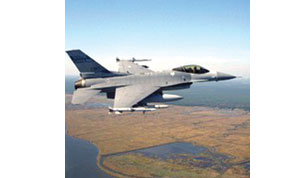
Lockheed Martin’s F-16 and Boeing’s F/A-18 Super Hornet did not meet the Indian Air Force’s technical requirements, a defence ministry source said.
“The Americans will be very unhappy and people who have been backing the contract will say India has not sufficiently taken into account the political relationship with the US,” said Kanwal Sibal, a former Indian foreign secretary.
“That is a political setback for relations.”
Relations between the two democracies have been on the rise after the end of the Cold war, when India was seen as closer to the Soviet Union.
The two nations signed a landmark civil nuclear co-operation deal in 2007 and Obama last year promised to back India’s bid for a permanent place on the UN Security Council during a visit with more than 200 business executives.
In his three-day trip - the longest stay in any foreign country by Obama - the US leader also announced $10bn in business deals.
But suspicions remain. India has strived to broaden the base of its diplomatic relationships, working along with China, Russia and other emerging powers to avoid being perceived as part of the US camp.
India has also been unwilling to commit to greater defence ties, including joint military exercises and patrols.
Obama, meanwhile, has been walking a diplomatic tightrope, on the one hand trying to boost diplomatic and business ties with India while on the other ensuring relations with Pakistan and China, nations often at loggerheads with India, stay stable.
India also ruled out Sweden’s Saab and Russia’s MiG-35, departing from a long-running tradition of relying mainly on Russian aircraft for its air force.
Eurofighter, which makes the Typhoon fighter jet shortlisted for the order, is a four-nation consortium of EADS, representing Germany and Spain, Britain’s BAE Systems and Italy’s Finmeccanica. Dassault makes the Rafale.
The contest sets up a showdown between two multi-role European fighters now actively deployed in policing the no-fly zone over Libya, both hungry for export sales to compensate for defence spending cuts at home.
The order has been keenly contested by global defence firms and has seen lobbying from leaders like Britain’s David Cameron, France’s Nicholas Sarkozy and Russia’s Dmitry Medvedev.
“To the extent that it has come down to the Rafale or Typhoon, the Europeans have, in a sense, won. India is balancing its international relationships,” said Howard Wheeldon, senior strategist at BGC Partners in London.
Boeing said it was disappointed with the decision and would seek a “debrief” from the Indian Air Force before considering its options.
A New Delhi-based spokeswoman for Lockheed said it was told by US authorities that Washington would respond to the Indian defence ministry’s letter on the competition.
Saab, in a statement from Sweden, said its plane was not shortlisted for the bid. Dassault and Eurofighter declined comment.
India is the world’s largest arms importer, accounting for 9% of the global arms trade between 2006 and 2010, according to data from Swedish think-tank Stockholm International Peace Research Institute.
Its defence budget for the year to March 2011 rose 11.6% to $36.28bn, but is still less than half of that officially spent by long-term rival China.
It plans to spend $50bn over the next five years to upgrade its military, which is largely made up of Soviet-era equipment, to counter the rising might of China and threats from Pakistan.
New Delhi fears Beijing is trying to strategically encircle it as the two emerging economies compete for resources globally, while Pakistan already has the F-16 fighters in its fleet.
The Indian Air Force, which mainly relies on Russian aircraft and some French Mirage jets, is looking to deploy the new weaponry near the western and northeastern frontiers to tackle any threat from the two nations.