


 |
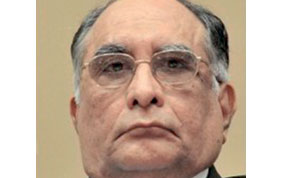
| S H Kapadia |
The judiciary should not try to act as a super legislature, Chief Justice of India S H Kapadia said yesterday. He also asked the political leadership to resist from giving protection to corrupt judges.
He cautioned against internal interference from high-ranking judges which, if resisted, could lead to junior judges being transferred or being denied promotions.
“Similarly political protection should not be given to corrupt judges.”
The chief justice said judges should resist the temptation of post-retirement assignments. “A judge must not accept patronage through which he acquires office, preferential treatment or pre-retirement assignments. These can give rise to corruption.”
Kapadia advised judges to impose upon themselves certain “restrictions” and remain “a little aloof and isolated” from people in order to erase the suspicion that they were susceptible to undue influence in the discharge of duties.
He told judges to eschew contact with lawyers, individuals or political parties, their leaders or ministers except on social occasions. A judge’s obligation must start and end with his analysis of law, not just personal beliefs or preferences.
Kapadia asked the courts to desist from the tendency of substituting decisions of legislative bodies with their own socio-economic beliefs.
“We must refuse to sit as super legislatures to weigh the wisdom of the legislation,” Kapadia said, delivering the fifth M C Setalvad Memorial Lecture on the ‘Canons of Judicial Ethics’ in New Delhi.
“In many PILs (public interest litigations), the courts freely decree rule of conduct for the government and public authorities which are akin to legislation. Such exercises have little judicial function in them,” the chief justice said.
Disagreeing with the rationale that the judiciary was encroaching upon the legislative domain because the executive (government) had failed to discharge its responsibilities, Kapadia said “the courts should be circumspect in understanding the thin line between law and governance.”
The chief justice said a balance had to be struck between judicial independence and the accountability of judges. He said the challenge before the judiciary was how to respond to unreasonable criticism of courts.
The chief justice said there was a need for striking a right balance between the judicial accountability and principle of judicial independence.
He said the challenge was “how does one achieve the right balance between autonomy in decision making and independence from external forces on the one hand and accountability to the community on the other hand.”
The habit of thinking impersonally, without regard for the worldly advantages or disadvantages of an opinion or an action was ethical thinking, he said.
“This is the prerequisite of judicial thinking. The man who is only interested in himself is not admissible (to ethical thinking),” the chief justice said.
Kapadia in his lecture dealt with a wide range of subjects relating to Canons of Judicial Ethics that included subject like Judicial ethics: From just words to deeds, Structuring of judgments, Accountability and judicial independence in the context of judicial activism and Value-based judicial accountability and independence.
The lecture was organised by the Bar Association of India in memory of Setalvad, who was the first attorney general of India.
Delhi High Court Chief Justice Dipak Misra earlier said that the canons of judicial ethics should include both the judges and the advocates. He said that there should be strict adherence to integrity both in public and private life.