


 |
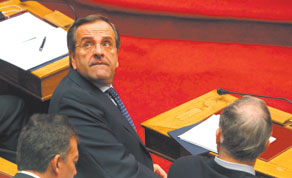
| Samaras: refused to provide a written guarantee |
Greek Prime Minister Lucas Papademos’s crisis coalition cleared its first hurdle yesterday by winning a vote of confidence, but faces a Herculean task keeping fractious parties behind painful reforms needed to avert national bankruptcy.
The 300-member parliament endorsed by 255 votes a national unity government that unites bitter rivals from the Socialist party of fallen premier George Papandreou, the conservative New Democracy and the far-right LAOS party.
But, in a sign of tensions ahead, New Democracy leader Antonis Samaras again refused to provide the written guarantee sought by Brussels to meet the terms of Greece’s latest bailout worth 130bn euros – a stance sure to rile creditors.
The stakes for the government of Papademos, who as Bank of Greece chief presided over his country’s entry into the eurozone in 2002, could not be higher.
If Greece defaults, he or his successor risk presiding over its exit.
“Dealing with Greece’s problems will be more difficult if Greece is not a member of the eurozone,” Papademos, a former vice-president of the European Central Bank (ECB), told parliament in a final appeal for support ahead of the vote. “I’m certain that we will make it if we are united.”
The first task of his government is to approve a new budget of tax hikes and spending cuts that will unblock the next tranche of financial aid from the EU and International Monetary Fund (IMF) worth 8bn euros to repay debts due next month.
“We must take more radical measures to deal with the crisis which include ... boosting the resources and the flexibility of the EFSF (the EU’s bailout fund, the European Financial Stability Facility) and creating a stronger framework of economic governance in the eurozone,” Papademos said.
Greece’s two-year debt saga has morphed into a major crisis threatening the very existence of the euro.
Global equity markets and the euro slid again yesterday after the ECB failed to stem a bond sell-off in the eurozone by buying up member states’ sovereign debt.