


 |
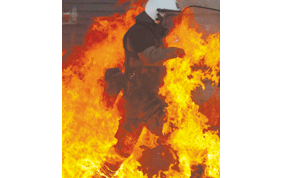
| A police officer is engulfed in flames after he was hit by a petrol bomb thrown by protesters during clashes near the parliament building in Syntagma (Constitution) square, Athens |
The rally, which drew 70,000 people, was interrupted by fighting between groups of black-clad youths and rivals from PAME, a communist-affiliated labour group, which opposed the disruption of the protest.
Police initially stood by but eventually moved in to confront rioters, firing tear gas at groups of protesters throwing rocks and masonry chipped off nearby buildings.
At least 74 people were taken to hospital with injuries.
One man died of a heart attack on the fringes of the protest but officials said that he had not been hurt in the incidents.
The clashes in front of parliament followed violence on Wednesday when groups of youths fought police at the start of a 48-hour general strike against the package of cuts and tax hikes demanded by the European Union and International Monetary Fund (IMF).
Deputies are expected to pass the plan later in the day after the bill secured a first vote on Wednesday.
As Prime Minister George Papandreou prepared to fly to Brussels for a meeting of European leaders to try to prevent the debt crisis spinning out of control, he made a final plea to pass the bill and prove Greece’s credibility.
“We are at a critical point, not only for us but for European history. I have never, in my memory, heard before from leaders of major European countries that there is danger of Europe coming apart,” Papandreou told a cabinet meeting.
“It is time for all of us now to assume our collective responsibility.”
As night fell, streets were strewn with rubbish and debris after hours of on and off clashes but the square in front of parliament was cleared of demonstrators.
The head of the Greek Communist party, Aleka Papariga condemned the violence, which she said had been deliberately provoked by groups of “hood-wearers”.
“This was a pre-meditated attack,” she told reporters, saying the rioters served the interests of what she termed “specific mechanisms”.
“No matter what happens, we’re not leaving,” she said. “There’s no other way out, people have to take the situation into their own hands.”
One rebel deputy said she would vote against an article in the bill restricting collective wage bargaining deals, prompting last-minute discussions over possible modifications.
Two others bowed to pressure from party leaders who said agreement was needed to persuade lenders to release badly needed new funds.
Even if rebel deputy Louka Katseli votes against the article, the government’s majority of 154 seats in the 300-member parliament should be enough to see the bill passed. But discontent in the ruling PASOK party is running high.
“I will vote in favour, but this is the last time – I am struggling with my conscience,” said Vasso Papandreou, one of the dissenters who decided to go along the package.
“Enough is enough, society is despairing, the country is collapsing,” she said to applause from other PASOK deputies.
The deep public sector pay and pension cuts, tax hikes and changes to sectoral wage agreements have roused deep hostility from many Greeks, who say it punishes the weak and will only drive the stricken economy further into the ground.
The general strike called by unions representing around half the Greek workforce was one of the largest protests since the start of the crisis two years ago and brought more than 100,000 people to the streets on Wednesday.