


DPA/Belgrade
A top Serbian official yesterday sharply criticised the West’s policy towards Kosovo, saying the conditions for Belgrade’s approach to European Union membership was tantamount to a call to Kosovo’s Serbs to flee their homes.

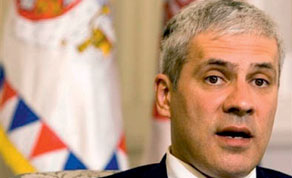
Boris Tadic
“It is a message for the Serbs to move from Kosovo ... even if it comes from European politicians, it is a call for further ethnic cleansing,” Deputy Prime Minister Ivica Dacic said on a tour of southern Serbia and the border with the former province.
German Chancellor Angela Merkel said last week in Belgrade that Serbia must stop supporting its compatriots’ resistance to the authority of the government in Pristina.
Ethnic Serbs are an overall minority to ethnic Albanians in Kosovo, but they dominate its northern section and have so far managed to fight Pristina’s authorities off.
Some European politicians “believe Kosovo Serbs are told what to do by Belgrade ... but anyone can say whatever anyone wants in Belgrade, yet they will never accept the so-called independent Kosovo,” the B92 news portal quoted Dacic as saying.
Dacic heads the Socialist Party, a junior partner in the ruling coalition dominated by President Boris Tadic’s Democratic Party.
The Socialists governed in the 1990s, when their leader Slobodan Milosevic steered Serbia to Yugoslav wars and international isolation, as well as a conflict with Nato, which ousted Belgrade’s forces from Kosovo in 1999 and paved the way for its secession in 2008.
Following Merkel’s visit, Tadic said Belgrade would not dismantle the structures of parallel authority it maintains in northern Kosovo, though insisting that it would also keep pursuing the goal of EU membership.
With his fragile alliance facing elections in the first half of 2012, Tadic had hoped for good news on Serbia’s EU aspirations from Merkel, not the harsh conditions she formulated on behalf of the West.
The United Nations Security Council was due to debate Kosovo, but the meeting was postponed by a day because of hurricane Irene in New York.
With the help of its ally Russia, Serbia will look for the Council to condemn Kosovo authorities, blaming them for a recent spate of violence in the north and renewed tensions.
Nato said yesterday that the situation in the north of Kosovo was still tense and it would continue to control the border with Serbia, scene of violent clashes last month, until the end of September.
“There is still a high degree of tension in the North,” the top Nato official in Kosovo, German general Erhard Buhler said in a press release.
He added that this tension made it “necessary” that Nato-led Kfor troops remain “in the lead to control” the border between Kosovo and Serbia “at least until the end of September”.
Buhler’s statement came as Nato commander, admiral James Stavridis and the chairman of the alliance’s Military Committee, admiral Giampaolo Di Paola, made a landmark visit to the Nato troops in Kosovo.
A trade row spilled over into violence late July when Pristina ordered its security forces to take over the two border crossings to Serbia to enforce a newly imposed ban on Serbian goods. The ethnic Albanian Kosovo government said the ban was being ignored by ethnic Serb members of Kosovo’s border police.
Serbs in northern Kosovo reacted angrily and an ethnic Albanian police officer was killed and four injured in ensuing clashes.
Nato troops stepped in when one of the border posts was set on fire and bulldozed, apparently by ethnic Serbs.
On Friday EU-mediated talks between Belgrade and Pristina, designed to ease day-to-day troubles for the inhabitants of the disputed territory, are set to resume. Brussels has insisted the talks must yield some results if Belgrade wants to secure EU candidacy status by the end of the year.