


AFP/Mari, Cyprus
 |
|
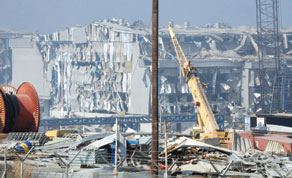
A view of the damaged Mari power station – the island’s primary electricity generator – following a huge explosion at the Evangelos Florakis naval base in Mari, Cyprus |
The early morning explosions devastated the adjacent Vassiliko power station in what Commerce Minister Antonis Paschalides called a “tragedy of Biblical dimensions” for the small Mediterranean island.
The plant produces almost 60% of the country’s electricity supply.
Massive damage was caused to homes in the nearby village of Mari, forcing the evacuation of its 150 residents, the village headman told AFP.
Government spokesman Stefanos Stefanou said 62 people were injured, two of them seriously, and announced three days of official mourning.
Defence Minister Costas Papacostas and Greek Cypriot National Guard commander Petros Tsaliklides resigned at an emergency cabinet meeting, Stefanou said.
The defence ministry had held talks last week about storage conditions after National Guard chiefs reportedly expressed concerns about the arms cache being kept in the open as temperatures touched 40 degrees Celsius (104 Fahrenheit).
“Decisions were taken on protecting the material but unfortunately this was not possible as time ran out,” Stefanou said, promising a “thorough investigation”.
The official CNA news agency said the death toll of 12 killed could rise as a number of people were missing at the blast site which had been reduced to scorched earth.
The agency said that the bodies of four of the 12 dead were taken to Nicosia General Hospital for identification by their families.
Twenty-year-old twin brothers were reported to be among the dead.
Firefighters were called to tackle a small fire in the storage area at the base at 4.24am (0124 GMT) and the explosions followed at 5.50am (0250 GMT), according to public radio.
Five firefighters were among the dead, who also included four National Guard members and two sailors. There was no immediate word on the identity of the other victim.
An AFP correspondent saw magazine casings, shrapnel and other debris from the explosion littered throughout Mari.
Windows and doors were blown in, some roofs had collapsed and structural damage was widespread.
Debris was hurled as far as 3km from the seat of the blast in the Evangelos Florakis naval base between Mari and the fishing village of Zygi to the west, the correspondent reported.
Hundreds of trees on nearby hillsides were flattened by the force of the shock wave and several generator buildings and fuel tanks at the Vassiliko plant were reduced to shells.
Virtually every window was blown out in Zygi, a village whose seafront fish restaurants are popular with locals and tourists alike.
The main motorway connecting Nicosia with the island’s second-largest city Limassol runs less than a kilometre from the Vassiliko plant and passing motorists reported seeing debris flying through the air.
State television broadcast images of damaged vehicles, twisted road signs and debris strewn across the central reservation.
Before handing in his resignation, Tsaliklides told public radio the blasts struck among containers of Iranian munitions seized from Cypriot-flagged vessel the M/V Monchegorsk in January 2009.
It was intercepted in the eastern Mediterranean en route to Syria, and after repeated searches its cargo was eventually seized.
A UN Security Council panel concluded in March 2009 that the shipment was in clear violation of an arms embargo against Iran under UN sanctions imposed over Tehran’s controversial nuclear programme and the weapons were put into storage.
President Demetris Christofias visited the blast scene yesterday.
“I want to express my sympathy and condolences to the families of the people who died while selflessly performing their duty,” he said. “The material damage can be repaired, but lives do not come back.”
Electricity Authority of Cyprus Chairman Charis Thrassou warned that it would take a long time to repair the Vassiliko plant and added that an emergency rationing plan would be put to ministers.
CNA reported him as saying billions of euros may be needed to restore the plant to normal.
Power outages have already hit large swathes of the island.
The loss of supply also prompted the closure of desalination plants which had allowed the gradual abandonment of summer water rationing over the past two years.
The Nicosia Water Board announced that consumers in the capital would now be supplied with water for just 12 hours in every 48.
“The government calls on all the people to co-operate to tackle all these difficulties,” government spokesman Stefanou said.
At the island’s main international airport in Larnaca, morning flights were severely disrupted after the blasts. When flights returned to normal, passengers had to cope with severely reduced air conditioning in the terminals.
There was no immediate word on any damage to naval vessels at the Evangelos Florakis base, but officials who visited spoke of a scene of “devastation”.
The defence ministry in Greece said it would fly a team of explosives experts to Cyprus to aid investigations, following a request from the government in Nicosia.