


Reuters/
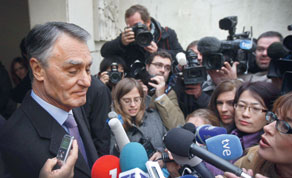
Cavaco Silva: widely expected to win re-election
Portuguese voted yesterday in an election looking certain to return President Anibal Cavaco Silva for a second term, a result that would uphold the government’s efforts to avoid an international financial bailout.

Opinion polls showed Cavaco Silva of the opposition Social Democrats getting 60% of the vote against 20% for his closest rival, Manuel Alegre of the ruling Socialists – enough to secure victory without a second round run-off.
The post is largely ceremonial but the former economics professor, who was prime minister from 1985 to 1995, is expected to underpin Socialist Prime Minister Jose Socrates’s drive to cut
Although the president’s powers are limited, he can dismiss the prime minister and dissolve parliament.
Should
But after casting his vote in a chilly
“I am a president in favour of stability. I consider that it is very important for
Many Portuguese are disillusioned because of salary cuts, higher taxes and rising unemployment, and turnout was expected to be low.
“This one has already been won by Cavaco. The left is all divided, just giving more strength to Cavaco. Nothing is going to change,” said lawyer Miguel Vila de Brito, 47, before he voted. “There will be hope when there will be new general elections.”
Among those choosing to stay away from the polling booths was construction worker Antonio Pinto, 48.
“I don’t see much sense in voting. The president doesn’t really change anything. We have to think about how to get out of the crisis but this lies more with the government,” he said as he headed for breakfast on
Unlike
Political analyst Antonio Costa Pinto told Reuters that the expected election result would not in itself change anything regarding the crisis.
“That context depends exclusively on the government having the capacity and stability to continue to respond to the international markets and the crisis,” he said.
Next year’s budget, to be presented in October, will be a crucial factor, he said.
“One thing is certain, the president will have a significantly more important role in this next phase after the election than before it.
“Not just due to the crisis, but also because we have a minority government and the president has margin to manoeuvre,” Costa Pinto said.
Socrates won backing from the Social Democrats for this year’s budget, which cut civil servants’ wages by 5% and introduced tax hikes, partly through Cavaco Silva nudging his own party to provide support.
The government has promised
Many economists expect that to tip the country back into recession after 1.3% growth in 2010.