


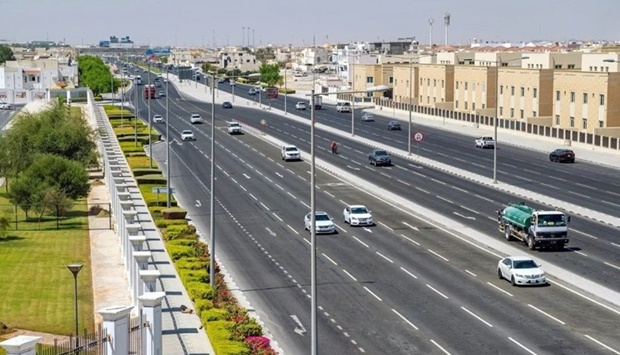
The Public Works Authority (Ashghal) has completed the construction works of the rainwater and groundwater network in Al Thumama area (Zone 46) with a total length of 26 km covering 50 streets.
The network, according to an official statement, is part of the stormwater and groundwater infrastructure development project in areas South of Doha, which aims to reduce rainwater accumulation and control the groundwater level in the area.

Engineer Khalid al-Khayareen, Drainage Network Projects Department manager, said the development works are important as Al Thumama area is one of the vital areas in the country that is witnessing great urban and population growth.
“The location of the works increases the project’s importance as they are implemented near Al Thumama Stadium, one of the eight stadiums hosting the FIFA World Cup Qatar 2022. The new network would accommodate rainwater flows from Al Thumama (Zone 46) to Abu Hamour Tunnel through Al Najma Tunnel and transfer it to the main drainage network. This will contribute to reducing rainwater accumulation, meeting the needs of the population and improving the quality of life and environmental conditions in the area,” he explained.
Engineer Hassan Mohsen, head of the Drainage Networks Projects Section, said a total of 26km of surface and groundwater drainage network pipes have been installed, at a depth ranging between 5m and 26m. “This is divided into 9km of rainwater drainage network lines, which are implemented using deep micro-tunneling techniques to mitigate the effects of excavation works on the traffic and residents of the area. There are also about 17km of shallow rainwater drainage network lines, of which 5km are perforated lines to control the level of groundwater,” he said.


About 97% of the construction of the rainwater and groundwater drainage network in Al Thumama (Area 46) have been completed and the final works are currently being completed to inspect the network and implement road reinstatement works. The new network covers 50 streets, most notably the E-Ring Road, Najma Street, Al Thumama Street, Al Quds Street, Al Madinah Street and Masjid Al Haram Street. The network also serves Kahramaa Awareness Park and Al Furjan markets in the area.
The works also included the construction of 50 manholes and 200 gullies, in addition to connecting more than 1,500 existing gullies to the new network to enhance its efficiency.

The network, according to an official statement, is part of the stormwater and groundwater infrastructure development project in areas South of Doha, which aims to reduce rainwater accumulation and control the groundwater level in the area.
Engineer Khalid al-Khayareen, Drainage Network Projects Department manager, said the development works are important as Al Thumama area is one of the vital areas in the country that is witnessing great urban and population growth.
 Engineer Khalid Al Khayareen |
 Engineer Hassan Mohsen |
Engineer Hassan Mohsen, head of the Drainage Networks Projects Section, said a total of 26km of surface and groundwater drainage network pipes have been installed, at a depth ranging between 5m and 26m. “This is divided into 9km of rainwater drainage network lines, which are implemented using deep micro-tunneling techniques to mitigate the effects of excavation works on the traffic and residents of the area. There are also about 17km of shallow rainwater drainage network lines, of which 5km are perforated lines to control the level of groundwater,” he said.
About 97% of the construction of the rainwater and groundwater drainage network in Al Thumama (Area 46) have been completed and the final works are currently being completed to inspect the network and implement road reinstatement works. The new network covers 50 streets, most notably the E-Ring Road, Najma Street, Al Thumama Street, Al Quds Street, Al Madinah Street and Masjid Al Haram Street. The network also serves Kahramaa Awareness Park and Al Furjan markets in the area.
The works also included the construction of 50 manholes and 200 gullies, in addition to connecting more than 1,500 existing gullies to the new network to enhance its efficiency.