


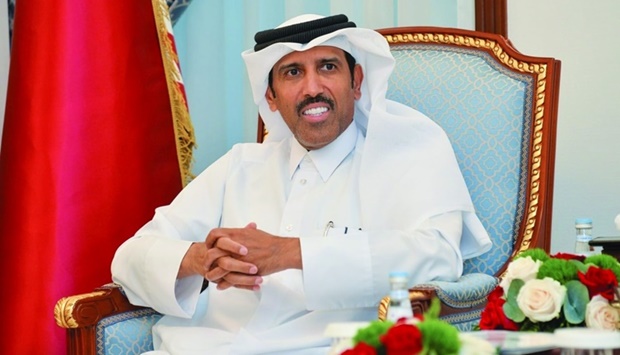
* Secretary-General of Shura Council: Intensive preparations for the start of second session next Tuesday
HE the Shura Council Secretary-General Dr Ahmed bin Nasser al-Fadhala has affirmed the Council's readiness to start a new phase in its legislative process, as it is scheduled to start next Tuesday the second ordinary session of the first legislative term, corresponding to the 51st ordinary session.
HE Dr al-Fadhala said during a press conference yesterday that a committee has been formed under his chairmanship to conduct and follow up the work of the opening of the second session, and preparing the various conditions and requirements for its distinctive start, especially since it is the first session to be held in the Council's new hall.
He said that the Council's General Secretariat plays an important and pivotal role in supporting the work of the Council, through its exercise of the powers stipulated by the relevant laws, including the completion of all administrative work of the Council, organising sessions and committee meetings, writing minutes, and providing full support for the work of the Council administratively, legally and financially through the various departments, the General Secretariat also addresses the various state authorities regarding the work of the Council, organises the members' affairs and provides them with support to carry out their role to the fullest.
He stressed that the General Secretariat made unremitting efforts during the first session, by attracting Qatari competencies, to provide the Council with qualified personnel with qualitative competence that are in line with the requirements of the current stage. It has also, during the past short period, accomplished many important organisational matters, such as approving the organisational structure and regulations for personnel affairs in the Council, defining the competence of departments, preparing buildings and supervising their implementation in the required manner.
HE Dr al-Fadhala pointed out that the most prominent challenges that have been overcome lie in restructuring the General Secretariat in proportion to the competencies and workload of the elected council, as the number of Council members has become 45 from 30, as well as expanding their powers with regard to legislation. Regarding the General Secretariat's preparations for the next session, he said that its work does not start with the beginning of the session and does not stop with its end, but rather it continues throughout the year by carrying out all the necessary administrative work to ensure the smooth functioning of the legislative process.
With regard to the Council's new building, HE al-Fadhala said that its prominent features are the main hall, which accommodates about 500 people, in which the general sessions of the Council will be held and will also witness the opening session, while the two-storey building includes several facilities that meet the requirements of the current and future stage, as the building includes a reception hall that can accommodate about 50 people, as well as boards and side halls, and a meeting room equipped with all modern services and technologies, a hall for holding press conferences that accommodates about 50 people, and the basement parking for about 400 cars.
He noted that the design of the building was linked to the old building of the Council, which was completely renovated, to form one building, indicating that the building as a whole complies with the latest requirements of institutional work, and derives its design from the Qatari urban heritage.
He stressed that the hall and the capacity of the new building will contribute to establishing a new stage towards informing public opinion about what is going on in the sessions, and the building will represent a qualitative leap for the work of the Council in general.
HE Dr al-Fadhala highlighted that the General Secretariat was able to complete many administrative and organisational works entrusted to it within a short period, including the preparation of the organisational structure and the list of personnel affairs, the general budget of the council and the formation of committees concerned with employees and workers in the Secretariat and committees to conduct the work of the Secretariat.
He explained that the personnel affairs regulation organised the mechanisms of recruitment, salaries, bonuses and allowances, staff development and training, vacations and promotions, and other organisational matters that contribute to creating a healthy working environment, as well as contributed to attracting competencies from national cadres and local expertise to work in the Council.
He said that the expert bureau, the technical Bureau, the internal audit department, the members affairs department, and other departments and sections have been created that will contribute to facilitating the work of members and enhance the work of the council, as well as the improvements and updates made to previous departments, in terms of their development and restructuring to suit the needs of the council and the nature of its work.
HE Dr al-Fadhala added that the General Secretariat has attracted a number of qualified and experienced female cadres in order to enhance the work and diversify the expertise in the General Secretariat, as this step comes from the fact that women have proven their competence as an actor in various fields of work, noting that women exercise their right to vote, run and choose who represents them within the Shura Council, and therefore it is natural to have an active presence in the administrative work of the council.
Regarding the role of the first session, HE Dr Ahmed bin Nasser al-Fadhala said that during the first session, the council discussed a number of important draft laws, such as the social insurance and military retirement laws, the council also discussed 10 draft laws and 8 requests for general discussion, and reviewed 12 reports of the five committees and 33 reports of the council's delegations, while it completed two law decrees.
The standing committees also discussed 19 topics, and the temporary committees discussed 4 topics, and the council had 25 external participations, as well as 14 visual meetings, in addition to 72 meetings and a meeting held by the council with heads of states and delegations. He stressed that the General Secretariat spares no effort in providing everything that would facilitate the work of the Council members to carry out their role to the fullest, by providing all the support they need to achieve this, in addition to providing all the information, reports and consultations members needed to support their work and output it in the required manner.
He pointed out that Qatar's the victory, represented by the Shura Council Secretary-General, of the Presidency of Arab Association of Secretaries General of Parliaments came as a result of the prominent role played by the State at all levels, as well as the great confidence it enjoys both at the international level and at the level of regional and international organisations and bodies, indicating that Qatar, thanks to its wise leadership, has been able to assume a prestigious regional and international position, and to win the trust of everyone due to its positions in support of international peace and security, its respect for international charters approved by the international community and its firm positions on issues the Arab and Islamic nations.
HE Dr al-Fadhala said during a press conference yesterday that a committee has been formed under his chairmanship to conduct and follow up the work of the opening of the second session, and preparing the various conditions and requirements for its distinctive start, especially since it is the first session to be held in the Council's new hall.
He said that the Council's General Secretariat plays an important and pivotal role in supporting the work of the Council, through its exercise of the powers stipulated by the relevant laws, including the completion of all administrative work of the Council, organising sessions and committee meetings, writing minutes, and providing full support for the work of the Council administratively, legally and financially through the various departments, the General Secretariat also addresses the various state authorities regarding the work of the Council, organises the members' affairs and provides them with support to carry out their role to the fullest.
He stressed that the General Secretariat made unremitting efforts during the first session, by attracting Qatari competencies, to provide the Council with qualified personnel with qualitative competence that are in line with the requirements of the current stage. It has also, during the past short period, accomplished many important organisational matters, such as approving the organisational structure and regulations for personnel affairs in the Council, defining the competence of departments, preparing buildings and supervising their implementation in the required manner.
HE Dr al-Fadhala pointed out that the most prominent challenges that have been overcome lie in restructuring the General Secretariat in proportion to the competencies and workload of the elected council, as the number of Council members has become 45 from 30, as well as expanding their powers with regard to legislation. Regarding the General Secretariat's preparations for the next session, he said that its work does not start with the beginning of the session and does not stop with its end, but rather it continues throughout the year by carrying out all the necessary administrative work to ensure the smooth functioning of the legislative process.
With regard to the Council's new building, HE al-Fadhala said that its prominent features are the main hall, which accommodates about 500 people, in which the general sessions of the Council will be held and will also witness the opening session, while the two-storey building includes several facilities that meet the requirements of the current and future stage, as the building includes a reception hall that can accommodate about 50 people, as well as boards and side halls, and a meeting room equipped with all modern services and technologies, a hall for holding press conferences that accommodates about 50 people, and the basement parking for about 400 cars.
He noted that the design of the building was linked to the old building of the Council, which was completely renovated, to form one building, indicating that the building as a whole complies with the latest requirements of institutional work, and derives its design from the Qatari urban heritage.
He stressed that the hall and the capacity of the new building will contribute to establishing a new stage towards informing public opinion about what is going on in the sessions, and the building will represent a qualitative leap for the work of the Council in general.
HE Dr al-Fadhala highlighted that the General Secretariat was able to complete many administrative and organisational works entrusted to it within a short period, including the preparation of the organisational structure and the list of personnel affairs, the general budget of the council and the formation of committees concerned with employees and workers in the Secretariat and committees to conduct the work of the Secretariat.
He explained that the personnel affairs regulation organised the mechanisms of recruitment, salaries, bonuses and allowances, staff development and training, vacations and promotions, and other organisational matters that contribute to creating a healthy working environment, as well as contributed to attracting competencies from national cadres and local expertise to work in the Council.
He said that the expert bureau, the technical Bureau, the internal audit department, the members affairs department, and other departments and sections have been created that will contribute to facilitating the work of members and enhance the work of the council, as well as the improvements and updates made to previous departments, in terms of their development and restructuring to suit the needs of the council and the nature of its work.
HE Dr al-Fadhala added that the General Secretariat has attracted a number of qualified and experienced female cadres in order to enhance the work and diversify the expertise in the General Secretariat, as this step comes from the fact that women have proven their competence as an actor in various fields of work, noting that women exercise their right to vote, run and choose who represents them within the Shura Council, and therefore it is natural to have an active presence in the administrative work of the council.
Regarding the role of the first session, HE Dr Ahmed bin Nasser al-Fadhala said that during the first session, the council discussed a number of important draft laws, such as the social insurance and military retirement laws, the council also discussed 10 draft laws and 8 requests for general discussion, and reviewed 12 reports of the five committees and 33 reports of the council's delegations, while it completed two law decrees.
The standing committees also discussed 19 topics, and the temporary committees discussed 4 topics, and the council had 25 external participations, as well as 14 visual meetings, in addition to 72 meetings and a meeting held by the council with heads of states and delegations. He stressed that the General Secretariat spares no effort in providing everything that would facilitate the work of the Council members to carry out their role to the fullest, by providing all the support they need to achieve this, in addition to providing all the information, reports and consultations members needed to support their work and output it in the required manner.
He pointed out that Qatar's the victory, represented by the Shura Council Secretary-General, of the Presidency of Arab Association of Secretaries General of Parliaments came as a result of the prominent role played by the State at all levels, as well as the great confidence it enjoys both at the international level and at the level of regional and international organisations and bodies, indicating that Qatar, thanks to its wise leadership, has been able to assume a prestigious regional and international position, and to win the trust of everyone due to its positions in support of international peace and security, its respect for international charters approved by the international community and its firm positions on issues the Arab and Islamic nations.