


The Bank of England (BoE) may be forced to push back a long-awaited plan to start selling bonds this month after a fresh bout of market panic.
The central bank has already postponed a so-called active quantitative tightening programme to the end of the month and has had to start buying debt to prop up the market. Many investors and analysts are now betting bond sales will be delayed even longer.
“I would imagine they will keep kicking the can down the road until the market finds more stable footing,” said BMO Global Asset Management portfolio manager James Lindley. “The bank is going to be far, far more nervous about potentially adding to the dysfunction of the gilt market.”
A lengthy delay could throw the BoE’s painstakingly-laid plans to reduce a balance sheet of over £800bn ($885bn) into disarray, following years of purchases since the credit crisis and pandemic.
But policy makers will be fearful of helping trigger another selloff that could see the UK economy spiral into a fresh financial crisis. BoE Governor Andrew Bailey, due to speak in Washington for the first time since the crisis over the past few weeks, has said officials would suspend quantitative tightening in times of market turmoil and that a very clear timetable of sales will be made transparent.
Policy makers have already been forced to expand the scope of emergency measures Tuesday to add inflation-linked debt to purchases in an effort to stop “fire sale dynamics.” While that initially sparked a rally in bonds, long-dated yields have begun edging up again, following a record surge in real yields on Monday.
Many pension funds want the central bank to keep buying bonds beyond this week, an industry association said.
“If the market is already shifting yields aggressively higher with the BoE in the market on the buying side, how will the market deal with an active QT programme, where a pre-defined size will have to be pushed into the market?” said Peter Schaffrik, global macro strategist at RBC Capital Markets. State Street Global Advisors’ head of EMEA investment strategy Altaf Kassam said in an interview with Bloomberg Television that it was unlikely policy makers would stick to the plans for quantitative tightening that would involve selling £10bn in bonds per quarter.
Prior to the postponement of bond sales, officials had repeatedly stressed that there would be a high bar for delaying the start, with only “very distressed” market conditions warranting a change of plan.
It could argue those terms have been met.
The bond sales are meant to start on October 31, the same day that Chancellor of the Exchequer Kwasi Kwarteng is set to release a medium-term fiscal plan. Current borrowing proposals would see record gilt supply hitting the market in coming years, according to some estimates.
“If it is the case that markets are still jittery, some of which could depend on the Chancellor’s presentation of the medium term fiscal plan, then it is likely that the BoE would opt for another delay to its plans to reduce the balance sheet,” said Dean Turner, chief UK economist at UBS Global Wealth Management.
If delaying bond sales is unpalatable for policy makers, another option could be to tweak the current plan, which involves selling gilts evenly across different maturities.
One option could be to start by selling short-dated bonds, according to Iain Stealey, international CIO for fixed income at JPMorgan Asset Management. HSBC Holdings Plc rates strategist Daniela Russell also thinks a “restructured” form of gilt sales could be feasible alongside separate measures to act as a “strong, powerful backstop” for longer-dated bonds. These have been worst hit in the recent rout, due to forced selling by pension funds.
“They need to get the market functioning broadly again,” said David Zahn, head of European fixed income at Franklin Templeton. “Then they can talk about QT. They’re trying to do it all so quickly, it’s creating more uncertainty in the market.”
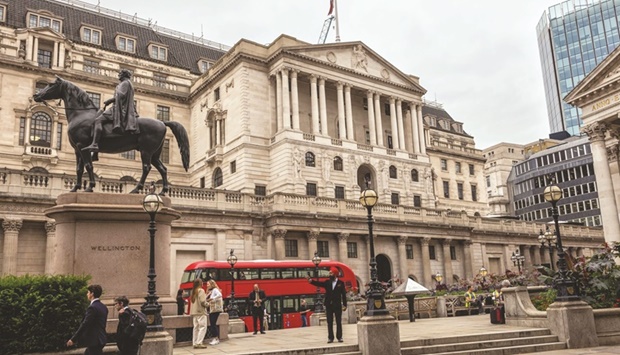
The Bank of England headquarters in London. The BoE may be forced to push back a long-awaited plan to start selling bonds this month after a fresh bout of market panic.