


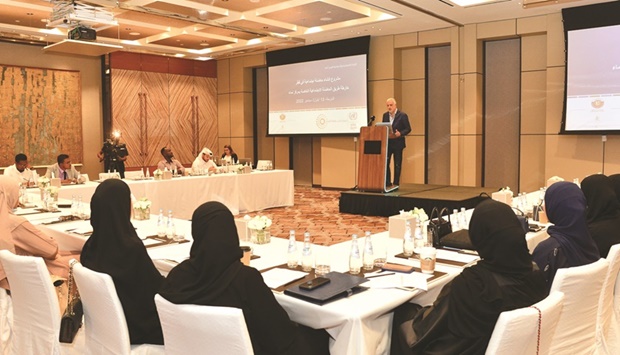
The Social Development Centre (Nama) and the United Nations Economic and Social Commission for Western Asia (ESCWA) organised on Tuesday a national consultative meeting to establish a social incubator in Qatar.
The Nama is a leading institution for young people, and contributes to expanding their opportunities, building their capacities, and empowering them in Qatar. The purpose of the ESCWA, headquartered in Beirut, Lebanon, is to stimulate economic activity in member countries, strengthen co-operation between them and promote development.
A group of various stakeholders involved in social entrepreneurship in Qatar participated in the meeting. It aimed to present a roadmap for establishing the social incubator, and researching its importance, strategic objectives, activities, and management model and collect feedback from participants to finalise the roadmap and present it to the Nama for implementation.
The meeting provided an opportunity for participants to exchange experiences and lessons learned from their entrepreneurial paths and identify potential opportunities for co-operation between the various stakeholders. The Nama project is intended for 15 teams, with activities aimed at familiarising people in the 18-45 age group, with the goal of building the capacity of young social entrepreneurs.
It is also envisaged to address the stakeholders via social media, encourage them to shoulder social responsibility through customised programmes in order to ensure financial and impact sustainability and partnership with those who are involved in the ongoing projects.
 Osama Safa, head of Social Justice Division, Gender Justice, Population and Inclusive Development Cluster, ESCWA, lead the presentations with facilitator Dina Tannir and gave the floor to participants to debate the background to establishing a social incubator in Qatar and the readiness of local social entrepreneurs to strengthen the ecosystem through partnerships with stakeholders, through discourse for raising awareness, co-operating with the media to address people, to simplify concepts and clarify the confusion between social responsibility and charitable work. The participants acknowledged that there is a need for carrying out a survey of the needs, gaps and opportunities in Social entrepreneurship in Qatar.
Safa said that the findings and recommendations of the first consultative meeting with Nama met ESCWA's expectations and are very encouraging to move on to the implementation phase. There is a need to devise a strategy and methodology for working on the incubator's roadmap, set up its objectives, vision and principles of work, components, programme, space, and how to enhance the environment. By strengthening the ties with the beneficiaries of the social incubator, business support services should be provided through the social incubator programme, schedule and basic activities.
The participants expressed their opinions about the incubator’s work plan and the exchange of experiences and lessons learned in managing the entrepreneurial programmes, especially those working on the 'Rawassy' project at Nama. They stressed the importance of strengthening the social entrepreneurship ecosystem based on the current gaps and opportunities and the requirements and best practices for success.
The meeting concluded with a debate on multi-stakeholder approach and partnerships, with academics, experts, business incubators, and accomplished success stories to create a snowball effect.
The Nama is a leading institution for young people, and contributes to expanding their opportunities, building their capacities, and empowering them in Qatar. The purpose of the ESCWA, headquartered in Beirut, Lebanon, is to stimulate economic activity in member countries, strengthen co-operation between them and promote development.
A group of various stakeholders involved in social entrepreneurship in Qatar participated in the meeting. It aimed to present a roadmap for establishing the social incubator, and researching its importance, strategic objectives, activities, and management model and collect feedback from participants to finalise the roadmap and present it to the Nama for implementation.
The meeting provided an opportunity for participants to exchange experiences and lessons learned from their entrepreneurial paths and identify potential opportunities for co-operation between the various stakeholders. The Nama project is intended for 15 teams, with activities aimed at familiarising people in the 18-45 age group, with the goal of building the capacity of young social entrepreneurs.
It is also envisaged to address the stakeholders via social media, encourage them to shoulder social responsibility through customised programmes in order to ensure financial and impact sustainability and partnership with those who are involved in the ongoing projects.
Osama Safa, head of Social Justice Division, Gender Justice, Population and Inclusive Development Cluster, ESCWA, lead the presentations with facilitator Dina Tannir and gave the floor to participants to debate the background to establishing a social incubator in Qatar and the readiness of local social entrepreneurs to strengthen the ecosystem through partnerships with stakeholders, through discourse for raising awareness, co-operating with the media to address people, to simplify concepts and clarify the confusion between social responsibility and charitable work. The participants acknowledged that there is a need for carrying out a survey of the needs, gaps and opportunities in Social entrepreneurship in Qatar. Safa said that the findings and recommendations of the first consultative meeting with Nama met ESCWA's expectations and are very encouraging to move on to the implementation phase. There is a need to devise a strategy and methodology for working on the incubator's roadmap, set up its objectives, vision and principles of work, components, programme, space, and how to enhance the environment. By strengthening the ties with the beneficiaries of the social incubator, business support services should be provided through the social incubator programme, schedule and basic activities.
The participants expressed their opinions about the incubator’s work plan and the exchange of experiences and lessons learned in managing the entrepreneurial programmes, especially those working on the 'Rawassy' project at Nama. They stressed the importance of strengthening the social entrepreneurship ecosystem based on the current gaps and opportunities and the requirements and best practices for success.
The meeting concluded with a debate on multi-stakeholder approach and partnerships, with academics, experts, business incubators, and accomplished success stories to create a snowball effect.