


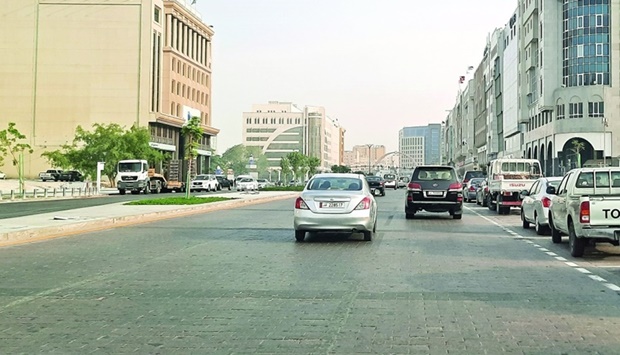
The streets of central Doha have started wearing a new look with the old asphalt layer being replaced with granite slabs, thanks to the Doha Central Development and Beautification Project.
Local Arabic daily Arrayah has reported that the Public Works Authority (Ashghal) is giving the area a special look by implementing various beautification works. The granite slabs being used are characterised by their longer life compared to asphalt and ensuring safe driving.

The beautification of streets have been completed in areas that include Al Abraj, Grand Hamad Street and Msheireb in central Doha. The report adds that there will be restrictions for vehicles on these streets during the FIFA World Cup Qatar 2022. The roads will be fully available for pedestrians, giving them an opportunity to enjoy the distinguished landmarks there.

The development and beautification projects in central Doha aim to create a healthy, social and cultural environment that encourages the public to follow a healthy lifestyle while transforming the path to their destinations into an enjoyable journey. These will be achieved by providing pedestrian-friendly transportation such as paths and crossings. They also enhance the movement of walking by linking all the vital centers in the region while highlighting Qatar's historical and cultural heritage and respect for the country's natural environment.

The development works are also expected to remarkably improve traffic flow in Doha by ensuring better connectivity. Ashghal is carrying out multiple works as part of the three phases of the Doha Central Development and Beautification Project.
The project includes a host of infrastructure works. The first package features the development of Abdullah Bin Thani Street, one of the main roads in the Doha Central region. It includes the development of Al Dostour, Al Sakhama, Ras Brouq, Dar Al Kutub, Bu Hasaya, Al Ghous and Ras Usheirej streets. Lighting poles, street furniture and traffic signals for vehicles and pedestrians will be installed and pedestrian crossings and shared paths for pedestrians and cyclists set up. The aim is also to reduce traffic volume by promoting pedestrian movement besides increasing tree plantation and landscaping.

During the second phase, 8.5km of surface water drainage network, 4.7km of foul sewer network and 6.8km of electricity network are to be developed while installing 329 decorative lighting poles and planting about 1,400 trees along with developing 10,000sqm of green areas. These are in addition to developing a 22.6km-long pedestrian and cycling path within Doha city.
The second phase of the project covers areas surrounding the National Museum of Qatar and opposite to the Museum of Islamic Art while developing and beautifying main streets and internal neighbourhoods in addition to the infrastructure development works.

The third phase features the development of 10.2km of surface water drainage network, 11.2km of foul sewer drainage network, 4.7km of electricity network, installing 515 decorative lighting poles, planting about 3,250 trees, development of about 30,000sqm of green areas and construction of 35.3km pedestrian and cycling paths. Besides, all the main streets will be covered with granite.
Ashghal has said the project meets the needs of Doha’s residents and visitors while creating memorable experiences by linking people to places and destinations through a convenient, safe and accessible public realm.
Local Arabic daily Arrayah has reported that the Public Works Authority (Ashghal) is giving the area a special look by implementing various beautification works. The granite slabs being used are characterised by their longer life compared to asphalt and ensuring safe driving.
The beautification of streets have been completed in areas that include Al Abraj, Grand Hamad Street and Msheireb in central Doha. The report adds that there will be restrictions for vehicles on these streets during the FIFA World Cup Qatar 2022. The roads will be fully available for pedestrians, giving them an opportunity to enjoy the distinguished landmarks there.
The development and beautification projects in central Doha aim to create a healthy, social and cultural environment that encourages the public to follow a healthy lifestyle while transforming the path to their destinations into an enjoyable journey. These will be achieved by providing pedestrian-friendly transportation such as paths and crossings. They also enhance the movement of walking by linking all the vital centers in the region while highlighting Qatar's historical and cultural heritage and respect for the country's natural environment.
The development works are also expected to remarkably improve traffic flow in Doha by ensuring better connectivity. Ashghal is carrying out multiple works as part of the three phases of the Doha Central Development and Beautification Project.
The project includes a host of infrastructure works. The first package features the development of Abdullah Bin Thani Street, one of the main roads in the Doha Central region. It includes the development of Al Dostour, Al Sakhama, Ras Brouq, Dar Al Kutub, Bu Hasaya, Al Ghous and Ras Usheirej streets. Lighting poles, street furniture and traffic signals for vehicles and pedestrians will be installed and pedestrian crossings and shared paths for pedestrians and cyclists set up. The aim is also to reduce traffic volume by promoting pedestrian movement besides increasing tree plantation and landscaping.
During the second phase, 8.5km of surface water drainage network, 4.7km of foul sewer network and 6.8km of electricity network are to be developed while installing 329 decorative lighting poles and planting about 1,400 trees along with developing 10,000sqm of green areas. These are in addition to developing a 22.6km-long pedestrian and cycling path within Doha city.
The second phase of the project covers areas surrounding the National Museum of Qatar and opposite to the Museum of Islamic Art while developing and beautifying main streets and internal neighbourhoods in addition to the infrastructure development works.
The third phase features the development of 10.2km of surface water drainage network, 11.2km of foul sewer drainage network, 4.7km of electricity network, installing 515 decorative lighting poles, planting about 3,250 trees, development of about 30,000sqm of green areas and construction of 35.3km pedestrian and cycling paths. Besides, all the main streets will be covered with granite.
Ashghal has said the project meets the needs of Doha’s residents and visitors while creating memorable experiences by linking people to places and destinations through a convenient, safe and accessible public realm.