


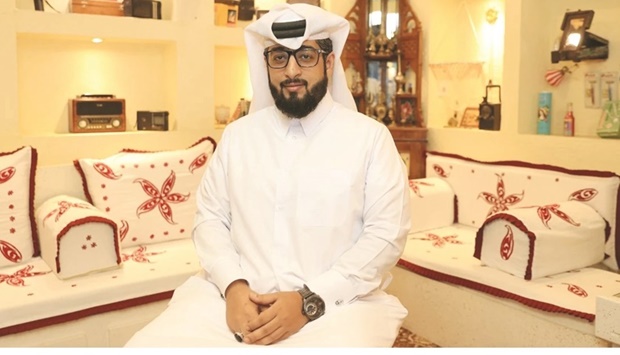
* Ali al-Haddad discusses his performance during Qatar 2022 Final Draw ceremony
When Ali al-Haddad took to the stage during the FIFA World Cup Qatar 2022 Final Draw, most viewers were being introduced to the art of fijiri for the first time.
The vocal repertoire is indigenous to the seafarer communities that inhabited the Arabian Gulf, traditionally performed either on pearl diving boats or on the shores that welcomed them after a day out at sea.
Al-Haddad took part as the nahham – the lead singer – in an audiovisual composition that brought together the traditional sounds of fijiri with the hypnotic sounds of electronic music, in a performance that embodied the cultural bridging that Qatar aims to accomplish when it hosts the FIFA World Cup later this year, the Supreme Committee for Delivery & Legacy said in a report.
The vocal repertoire is indigenous to the seafarer communities that inhabited the Arabian Gulf, traditionally performed either on pearl diving boats or on the shores that welcomed them after a day out at sea.
Al-Haddad took part as the nahham – the lead singer – in an audiovisual composition that brought together the traditional sounds of fijiri with the hypnotic sounds of electronic music, in a performance that embodied the cultural bridging that Qatar aims to accomplish when it hosts the FIFA World Cup later this year, the Supreme Committee for Delivery & Legacy said in a report.

“Sharing Qatar’s cultural heritage with hundreds of millions of people was a beautiful moment in my life,” said al-Haddad, who is regarded as one of the leading *nahham performers in the region, having won a coveted competition in 2019. “To be able to introduce global audiences to an art form that defines our identity was a moment I’ll never forget.”
In addition to being a vocalist, his traditional practices extend to handicraft and building pearl diving ships.
For him, these different disciplines are part of a substantial and historically significant cultural phenomenon that forms the backbone of Qatari identity.
“The sounds of the *nahham are the true face of Qatari identity,” al-Haddad said. “Without our cultural experiences as a seafaring people, that built our communities from the bounties of pearl diving, we wouldn’t be who we are today, and that’s why sharing this particular part of our cultural heritage during the final draw was so important for me.”
He comes from a family that has dedicated their lives to the preservation of Qatar’s cultural heritage, with his father involved in the creation of traditional jewellery and his uncle working as a designer and builder of traditional boats, originally used by pearl divers throughout the Arabian Gulf.
For him, cultural preservation is a way of life.
“I want to make sure that we continue to revive this art form and celebrate it for generations to come,” al-Haddad said. “It is an art form that represents our tenacity as a people to overcome the harshness of desert life at a time when all we had was the sea to feed our communities.”
The piece performed at the draw ceremony, *A Journey into the Art of Fijiri, was composed by renowned Qatari artist Faisal al-Tamimi, along with American composer Greg M Johnson.
It was performed live on stage against a visual backdrop inspired by the many design elements found in the eight stadiums that will host the tournament.
“The art of *fijiri is unique as it brings together the magic of the *nahham’s voice with the complexities of the percussion instruments that carry his voice out onto the sea,” al-Haddad said. “I want the world to know about the depth of this art form and learn more about it, and I hope the World Cup will play a big role in sharing this art form with the rest of the world.”
In addition to being a vocalist, his traditional practices extend to handicraft and building pearl diving ships.
For him, these different disciplines are part of a substantial and historically significant cultural phenomenon that forms the backbone of Qatari identity.
“The sounds of the *nahham are the true face of Qatari identity,” al-Haddad said. “Without our cultural experiences as a seafaring people, that built our communities from the bounties of pearl diving, we wouldn’t be who we are today, and that’s why sharing this particular part of our cultural heritage during the final draw was so important for me.”
He comes from a family that has dedicated their lives to the preservation of Qatar’s cultural heritage, with his father involved in the creation of traditional jewellery and his uncle working as a designer and builder of traditional boats, originally used by pearl divers throughout the Arabian Gulf.
For him, cultural preservation is a way of life.
“I want to make sure that we continue to revive this art form and celebrate it for generations to come,” al-Haddad said. “It is an art form that represents our tenacity as a people to overcome the harshness of desert life at a time when all we had was the sea to feed our communities.”
The piece performed at the draw ceremony, *A Journey into the Art of Fijiri, was composed by renowned Qatari artist Faisal al-Tamimi, along with American composer Greg M Johnson.
It was performed live on stage against a visual backdrop inspired by the many design elements found in the eight stadiums that will host the tournament.
“The art of *fijiri is unique as it brings together the magic of the *nahham’s voice with the complexities of the percussion instruments that carry his voice out onto the sea,” al-Haddad said. “I want the world to know about the depth of this art form and learn more about it, and I hope the World Cup will play a big role in sharing this art form with the rest of the world.”