


Sri Lanka announced a default on its $51bn foreign debt on Tuesday as the island nation grapples with its worst economic crisis in memory and escalating protests demanding the government’s resignation.
Acute food and fuel shortages, as well as long daily electricity blackouts, have brought widespread suffering to the country’s 22mn people in its most painful downturn since independence in 1948.
The government has struggled to service foreign loans and Tuesday’s decision comes ahead of negotiations for an International Monetary Fund bailout aimed at preventing a more catastrophic hard default that would see Sri Lanka completely repudiate its debts.
“We have lost the ability to repay foreign debt,” Sri Lanka’s central bank governor Nandalal Weerasinghe told reporters in Colombo. “This is a pre-emptive negotiated default. We have announced (it) to the creditors.”
Officials say the move will free up foreign currency to finance desperately needed food, fuel and medicine imports after months of scarce supplies.
Just under half of Sri Lanka’s debt is market borrowings through international sovereign bonds, including one worth $1bn that was maturing on July 25.
China is Sri Lanka’s largest bilateral lender and owns about 10% of the island’s foreign debt, followed by Japan and India. The government has borrowed heavily from Beijing since 2005 for infrastructure projects, many of which became white elephants.
Chinese foreign ministry spokesman Zhao Lijian said Tuesday’s default would not stop Beijing from lending support to Sri Lanka’s beleaguered economy. “China has always done its best in providing assistance to Sri Lanka’s economic and social development. We will continue to do so in the future,” he said.
Sri Lanka’s snowballing economic crisis began to be felt after the coronavirus pandemic torpedoed vital revenue from tourism and remittances.
The government imposed a wide import ban to conserve dwindling foreign currency reserves and use them to service the debts it has now defaulted on. But the resulting shortages have stoked public anger.
At least eight people have died while waiting in fuel queues since March 20, with two of the deaths reported on Monday.
“It’s been depressing to be so frightened of the future and where it’s going,” protester Vasi Samudra Devi told AFP at an anti-government rally in Colombo Monday. “There are already people who are suffering... We are all here because we are being affected by the economic problems.”
Economists say the crisis has been made worse by government mismanagement, years of accumulated borrowing and ill-advised tax cuts.
International rating agencies also downgraded Sri Lanka last year, effectively blocking the country from accessing foreign capital markets to raise new loans.
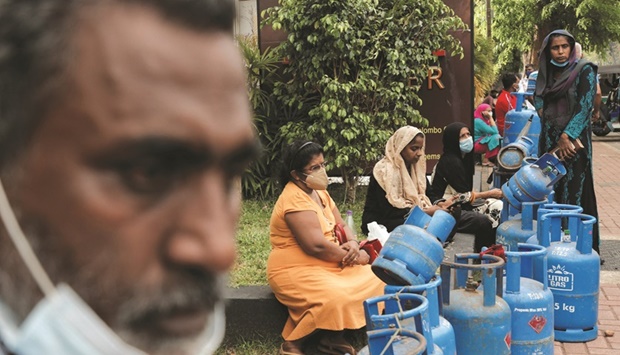
People wait in a line to buy domestic gas on a main road amid the country’s economic crisis in Colombo on Tuesday. Acute food and fuel shortages, as well as long daily electricity blackouts, have brought widespread suffering to the country’s 22mn people in its most painful downturn since independence in 1948.