


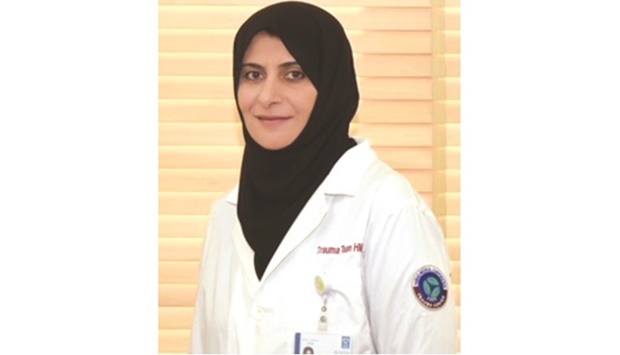
The Hamad Injury Prevention Programme (HIPP) at Hamad Trauma Centre of Hamad Medical Corporation (HMC) is advising families and residents to practise proven home safe techniques during Ramadan.
Dr Aisha Abeid, assistant director, HIPP, advised: “Let us keep our families and friends safe together by supervising young children, ensuring their safety and preventing unnecessary injuries that may arise from adults being preoccupied at home.”
Assign a responsible adult to provide continuous and visual supervision over young children at all times. Regardless of their age, unsupervised children are at a high risk for preventable home injuries, especially falls, poisoning, drowning, asphyxiation, and burns.
To prevent falls - Never leave your young child on a bed or counter unattended. Keep stairs and hallways clear and free of clutter that could cause a child or the elderly to trip and fall; keep all windows locked, install safety gates to block a toddler's access to a staircase, an outdoor terrace or balcony.
To prevent poisoning - Keep poisonous and toxic household items, like detergents, medicines and cleaning products, in locked cabinets that are above ground and inaccessible to crawling and younger kids.
To prevent drowning – Provide constant supervision for young children, especially those under one year, while they bathe, as drowning often happens silently and can go unnoticed. It only takes a few seconds for a young child or toddler to drown and they can drown in as little as 3-4 inches of water. Cover all water-filled containers and don’t leave kids unattended in or around swimming pools.
To prevent asphyxiation – Keep choking hazards, like coins, buttons, batteries and small toys out of reach of small children and toddlers. Any items that can fit through a toilet paper roll must be secured above ground in a closed container.
To prevent burns- Create a ‘safe zone’ in the kitchen so children do not enter the kitchen while cooking or baking is going on. Clear your path of children when transporting hot liquids like stews, coffee or tea. Cover unused electrical sockets with plastic covers and repair or discard any damaged appliances or electric cords.
To prevent backovers - Before you start your car check for hiding or playing small children around your car in your parking area specially before you backup or reverse. Backovers can be prevented by walking fully around your car, to visually check for young children or pets, before you even start your car.
To prevent heat or sun strokes- don’t allow young kids play outdoors for more than 30-45 minutes during extremely hot weather or during midday [10am to 3pm]. Likewise, children left in a hot car, even for a few minutes, can also succumb to heat stroke.
Dr Abeid also urged members of the public to take extra precautions when in the kitchen especially during the preparation of Iftar and Suhoor meals.
Young children must be supervised while in the home, especially when cooking is ongoing, their play areas must be far away from the kitchen, clear of trip hazards, like electrical wires, and furniture, like tall shelves, must be secured to the wall.
Make sure to have a “Kids free zone” around your cooking area and monitor children and ensure that they do not approach any kitchen stoves, or other hot oil, water, food, burning materials or electrical power sources.
Start early, do not rush and taking enough time to prepare a suitable meal for breakfast. Being fast and in a hurry are the main cause of many burns, splashes and spilling food, causing harm to yourself and those around you.
Avoid wearing inappropriate clothing such as nylon or flowing dresses near open fires while cooking.
Clean up spills immediately, wet floors are slippery. Keep the kitchen floor clear of toys and other items.
When moving hot food items, especially liquids like soup and tea, announce yourself, ‘I am coming through with a pot of hot tea!’ make sure your path is clear of trip hazards and young children and keep a cover on the pot to avoid scald burns.
When a fire breaks out in a cooking pan, avoid pouring water on it, as it may spread the fire further. Instead, cover the burning pan with a thick lid, a wet towel or fire blanket.
Make sure that you have a smoke detector in your kitchen and keep it in /or near the kitchen, but not near the stove or the heater; and at least one fire extinguisher must be charged, easily accessible and installed in your house. Check your smoke detector battery regularly.
If and when you get a whiff of cooking gas:
a)Do not switch on any lights or exhaust fans as they may be potential points of ignition for the inflammable gas.
b)Open all doors and windows immediately to reduce concentration of leaked gas.
c)Make sure the valve on the gas cylinder is turned off.
d)Never use a burning match near a gas cylinder to locate the place of leakage.
In case of any such issues, call the HMC Ambulance Services immediately at 999.