


HEC Paris and Weill Cornell Medicine-Qatar (WCM-Q), part of the Ivy League Cornell University, have launched the new Executive Certificate in Health Management and Policy, aimed at driving systems-level management expertise and accelerating patient outcomes in Qatar and across the region.
Both institutions are members of Qatar Foundation (QF).
The programme has drawn strong regional response for its dual five-day sessions, with the curriculum split between New York and Doha.
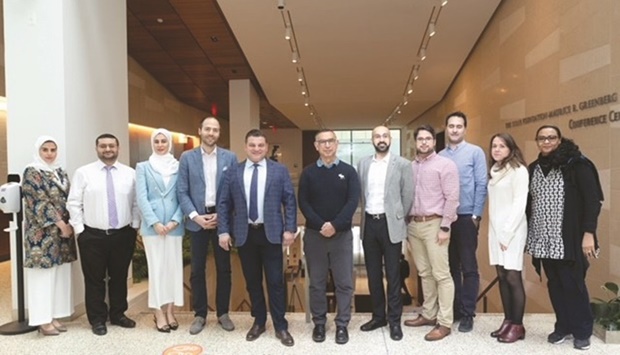
The first session is currently underway in New York, attended by senior, multinational healthcare participants – a mix of both clinicians and non-clinicians.
It focuses on the function, components, and indicators of healthcare policy and the basis and principles of health economics and incentives to pay for care delivery.
Participants will also gain firsthand experience through visits to major New York healthcare providers.
“The response to this new certificate from very senior healthcare leaders bodes well for subsequent deliveries of the programme and signals strong demand within the health community for the deeper insights that we can offer,” said Dimitrios Andritsos, associate professor of Information Systems and Operations Management at HEC Paris and the director of this programme in Paris. “We intend our participants to complete this programme in a significantly better position to guide their organisations towards becoming more flexible, innovative and adaptive, with enhanced team leadership capabilities.”
Participants began the programme by engaging in discussions on healthcare policy and exploring its utility, components, and indicators.
They will move on to cover the basics and principles of health economics as well as the incentives to pay for care delivery and discuss how private operators and government finance healthcare and how to set priorities and forecast expenditures.
“Participants will learn how to take decisions, set goals, and implement actions that determine how care is administered and accessed, referred to as “healthcare policy,” said Dr Charbel Abi Khalil, associate professor of Medicine at the WCM-Q and the director of the programme in Doha and New York.
The economic evaluation methods in healthcare will also be explored as participants gain insights into methods of measuring and valuing the benefits of new treatments.
“Finally, we will focus on the sector’s future, in particular machine learning and its expected paradigm shift in the diagnosis and treatment of diseases,” Dr Khalil said. “Participants will also greatly benefit from scheduled presentation meetings with senior leaders of major healthcare providers and learn from their experience in leading their institutions.”
“The programme will round off with an experiential learning project which will see participants work closely with a healthcare organisation to solve a managerial or policy challenge,” he added.
“I am looking forward to the challenge and the opportunity of implementing the knowledge gained by interacting with leading US healthcare professionals and understanding their delivery models and alignment of growth strategies with operational design,” said participant Dr Mohamed al-Hijji, consultant cardiologist and assistant professor of medicine at the Hamad Medical Corporation (HMC)’s Heart Hospital and Weill Cornell College of Medicine in Qatar.
The second module in the series will be held in Doha in June, when participants will be introduced to foundational frameworks for understanding interactions between key healthcare system players.
The programme has drawn strong regional response for its dual five-day sessions, with the curriculum split between New York and Doha.
The first session is currently underway in New York, attended by senior, multinational healthcare participants – a mix of both clinicians and non-clinicians.
It focuses on the function, components, and indicators of healthcare policy and the basis and principles of health economics and incentives to pay for care delivery.
Participants will also gain firsthand experience through visits to major New York healthcare providers.
“The response to this new certificate from very senior healthcare leaders bodes well for subsequent deliveries of the programme and signals strong demand within the health community for the deeper insights that we can offer,” said Dimitrios Andritsos, associate professor of Information Systems and Operations Management at HEC Paris and the director of this programme in Paris. “We intend our participants to complete this programme in a significantly better position to guide their organisations towards becoming more flexible, innovative and adaptive, with enhanced team leadership capabilities.”
Participants began the programme by engaging in discussions on healthcare policy and exploring its utility, components, and indicators.
They will move on to cover the basics and principles of health economics as well as the incentives to pay for care delivery and discuss how private operators and government finance healthcare and how to set priorities and forecast expenditures.
“Participants will learn how to take decisions, set goals, and implement actions that determine how care is administered and accessed, referred to as “healthcare policy,” said Dr Charbel Abi Khalil, associate professor of Medicine at the WCM-Q and the director of the programme in Doha and New York.
The economic evaluation methods in healthcare will also be explored as participants gain insights into methods of measuring and valuing the benefits of new treatments.
“Finally, we will focus on the sector’s future, in particular machine learning and its expected paradigm shift in the diagnosis and treatment of diseases,” Dr Khalil said. “Participants will also greatly benefit from scheduled presentation meetings with senior leaders of major healthcare providers and learn from their experience in leading their institutions.”
“The programme will round off with an experiential learning project which will see participants work closely with a healthcare organisation to solve a managerial or policy challenge,” he added.
“I am looking forward to the challenge and the opportunity of implementing the knowledge gained by interacting with leading US healthcare professionals and understanding their delivery models and alignment of growth strategies with operational design,” said participant Dr Mohamed al-Hijji, consultant cardiologist and assistant professor of medicine at the Hamad Medical Corporation (HMC)’s Heart Hospital and Weill Cornell College of Medicine in Qatar.
The second module in the series will be held in Doha in June, when participants will be introduced to foundational frameworks for understanding interactions between key healthcare system players.