


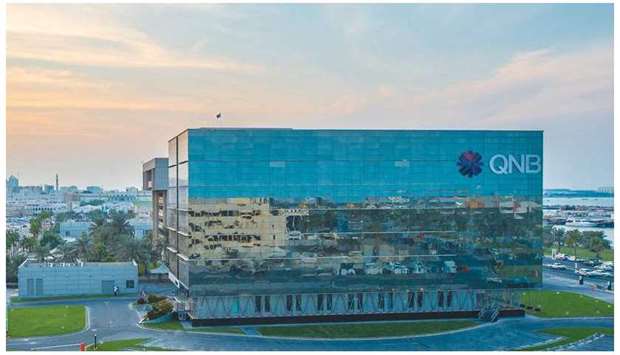
Qatar National Bank (QNB) expected in its weekly report that the Covid-19 pandemic and the Russian-Ukrainian conflict may become catalysts to a long-term reversion of the features of the "Great Moderation," producing a longer period of "stagflation." This would endanger all the efforts of fiscal and monetary policy that were undertaken during the pandemic, prompting growth to reverse to pre-pandemic levels.
Over the last several decades, from 1990 to 2020, the global economy thrived under a macro regime that is often dubbed as the "Great Moderation," i.e., a period in which advanced economies benefited from moderate growth and low inflation.
The "Great Moderation" was fuelled by several secular or long-term trends, including digitisation, globalisation, just-in-time manufacturing and independent central banks, QNB said in the report.
Importantly, "stagflation" may not be only a temporary phenomenon associated with pandemic-related supply bottlenecks and geopolitical shocks.
Two major changes suggest that global "stagnationary" forces may prevail for a longer period of time beyond the current cycle, the report indicated.
First, political relations among global super-powers are deteriorating rapidly, transforming the "geopolitical dividend" of global integration into a "geopolitical recession" of de-globalisation, it said, adding that examples include the US-China strategic rivalry and the recent sanctions against Russia, following the invasion of Ukraine.
This contributes to reverse globalisation and undermines just-in-time manufacturing, prompting an agenda of protectionism, supply-chain "onshoring," food security and more closed border for migration flows.
Moreover, it also makes the global economy more vulnerable to negative supply side shocks, such as the disruption in commodity markets triggered by the Russo-Ukrainian conflict.
Hence, the "geopolitical recession" is negative for productivity, trade and investment flows, increasing production costs.
This creates the conditions for lower growth and more elevated prices over the long-term, according to the report.
Second, the pandemic has again led to a significant increase in global debt, which was already at its all time highs, the reported noted, pointing out that debt levels in major economies are too high and this makes them too sensitive to a more meaningful cycle of rate hikes.
In this sense, should high inflation continue for longer, the magnitude and pace of monetary policy normalisation would be more contained in order to avoid credit tantrums and potential recessions.
In other words, high debt levels are forcing major central banks to moderate their inflation mandate in the name of credit and employment stability, it added.
Despite the "hawkish" pivot from major central banks in recent months, there is limited monetary policy room for a more comprehensive fight against inflation, and over time, this will contribute to persistent inflationary pressures, the report underlined.
Inflation and GDP growth are the two most powerful drivers in a modern economy.
Although indifferent ways, they both affect all major decisions about when or where to consume and invest, QNB said in the report.
An ideal macroeconomic environment would combine high growth with low inflation, i.e., a rapid expansion of activity alongside stable prices.
However, this "sweet spot" between growth and inflation is difficult to achieve, due to a historical positive correlation between them over the long-term, the report said.
Over the last several decades, from 1990 to 2020, the global economy thrived under a macro regime that is often dubbed as the "Great Moderation," i.e., a period in which advanced economies benefited from moderate growth and low inflation.
The "Great Moderation" was fuelled by several secular or long-term trends, including digitisation, globalisation, just-in-time manufacturing and independent central banks, QNB said in the report.
Importantly, "stagflation" may not be only a temporary phenomenon associated with pandemic-related supply bottlenecks and geopolitical shocks.
Two major changes suggest that global "stagnationary" forces may prevail for a longer period of time beyond the current cycle, the report indicated.
First, political relations among global super-powers are deteriorating rapidly, transforming the "geopolitical dividend" of global integration into a "geopolitical recession" of de-globalisation, it said, adding that examples include the US-China strategic rivalry and the recent sanctions against Russia, following the invasion of Ukraine.
This contributes to reverse globalisation and undermines just-in-time manufacturing, prompting an agenda of protectionism, supply-chain "onshoring," food security and more closed border for migration flows.
Moreover, it also makes the global economy more vulnerable to negative supply side shocks, such as the disruption in commodity markets triggered by the Russo-Ukrainian conflict.
Hence, the "geopolitical recession" is negative for productivity, trade and investment flows, increasing production costs.
This creates the conditions for lower growth and more elevated prices over the long-term, according to the report.
Second, the pandemic has again led to a significant increase in global debt, which was already at its all time highs, the reported noted, pointing out that debt levels in major economies are too high and this makes them too sensitive to a more meaningful cycle of rate hikes.
In this sense, should high inflation continue for longer, the magnitude and pace of monetary policy normalisation would be more contained in order to avoid credit tantrums and potential recessions.
In other words, high debt levels are forcing major central banks to moderate their inflation mandate in the name of credit and employment stability, it added.
Despite the "hawkish" pivot from major central banks in recent months, there is limited monetary policy room for a more comprehensive fight against inflation, and over time, this will contribute to persistent inflationary pressures, the report underlined.
Inflation and GDP growth are the two most powerful drivers in a modern economy.
Although indifferent ways, they both affect all major decisions about when or where to consume and invest, QNB said in the report.
An ideal macroeconomic environment would combine high growth with low inflation, i.e., a rapid expansion of activity alongside stable prices.
However, this "sweet spot" between growth and inflation is difficult to achieve, due to a historical positive correlation between them over the long-term, the report said.