


Bank of England Deputy Governor Dave Ramsden said the UK is likely to need “modest” tightening in interest rates, a remark that drained speculation for a larger increase in borrowing costs next month.
The policy maker, who was among four people on the nine-member Monetary Policy Committee to vote for a 50-basis-point rise in rates in February, said the bank was facing its biggest challenge on inflation since it gained independence in 1997.
Still, he also said his vote was “finely balanced” and pushed back against the markets’ aggressive bets on hikes this year. Current pricing showing rates peaking at nearly 2% would leave inflation below the BoE’s target within two years, he said.
“Some further modest tightening in monetary policy is likely to be appropriate in the coming months,” Ramsden said yesterday in a speech in Birmingham, England. “The word ‘modest’ is significant here though.”
Money markets trimmed their bets on for future rate hikes after the comments. They are now pricing a tightening of 33 basis points in March, versus 35 before the speech. That suggests a quarter-percentage-point increase to 0.75% is likely for bank rate, but the prospect of an increase to 1% next month is fading.
“The comments from Ramsden to me suggest that the likelihood of a 50 basis-points hike is diminishing,” said Stuart Cole, head macro economists at Equiti Capital UK Ltd in London. “Ramsden at best seems to be wavering on the need for a 50 basis-point hike. And given the data we had last week, I cannot see enough in those releases that would make me think any of the remaining five MPC members who voted against the 50 basis-point hike will be changing their position.”
Ramsden said the policy makers face a difficult balancing act in navigating three big shocks to the economy – Britain’s departure from the European Union, the resurgence of the coronavirus and the crisis in Ukraine that’s helped fan a surge in energy prices.
“I think on inflation I haven’t seen as challenging a set of circumstance as this,” Ramsden said in response to questions after the speech. “I began working as chief economist in the Treasury 2007, on the eve of the financial crisis. It was a different kind of challenge than we face at the moment. This really is the age of uncertainty.
His main priority is to ward off “second-round” effects on inflation where a surge in prices leads to workers demanding higher wages and a generalised expectation for further increases in the years ahead.
“We cannot tolerate generalised rise in inflation for long,” Ramsden said. “We do want to guard against an inflationary mentality right across the economy, in firms price setting behaviour and the inflation that you experience. We have seen the damage that persistent and high and volatile inflation does to the economy. It makes it difficult to invest and plan for the future.”
Even so, the level of rates needed to combat inflation won’t rise to “anything like its pre-2007 level of 5% or above, let alone to the kind of levels we used to see” in the early 1990s, he said.
“We take this as signalling an intent to vote for a 25 basis-point hike in the March meeting, rather than voting again for a 50 basis-point” hike, said Jari Stehn, chief European economist at Goldman Sachs in London. “We continue to expect the BoE to hike in back-to-back meetings through August.”
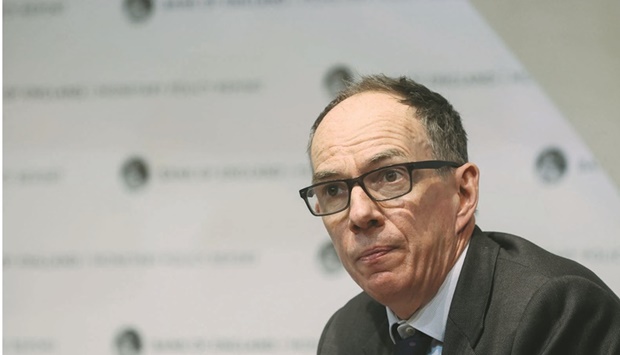
Dave Ramsden, Bank of England deputy governor.