


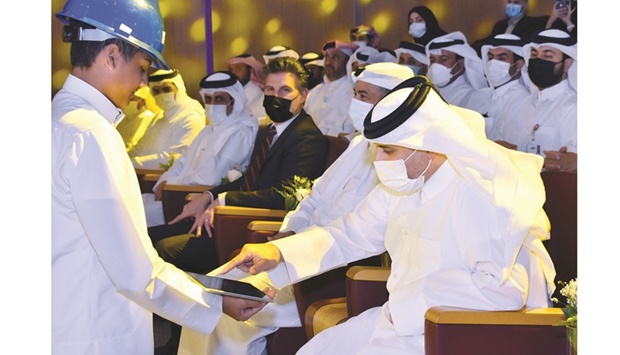
Incorporating several initiatives to combat waste menace and encourage recycling, the Ministry of Municipality on Thursday launched a Zero Waste campaign.
HE the Minister of Municipality Abdulla bin Abdulaziz bin Turki al-Subaie, HE the Minister of Environment and Climate Change Sheikh Dr Faleh bin Nasser bin Ahmed bin Ali al-Thani and HE Minister of Education and Higher Education Buthaina bint Ali al-Jabar al-Nuaimi attended a function held at the Ministry of Municipality office.
The campaign, which upholds the motto 'Undo the Damage, Redo the Beauty', is aimed at ensuring waste-free spaces across the country while encouraging recycling. The campaign, a part of Qatar National Vision 2030, will be implemented in coordination with ministries, government, semi government and private institutions.
The campaign aims at raising awareness on processing and recycling of waste, encourages generating electricity and producing agricultural fertilisers. Addressing the function, engineer Ahmed Muhamed Al-Sada, Assistant Undersecretary of Public Services Affairs at the Ministry of Municipality, said that the campaign is implemented in line with the need to keep pace with the shift towards clean and renewable energy.
“The campaign aims to reach an advanced level of community awareness while highlighting the importance of waste and to achieve many other goals of improving waste management in order to help mitigate its effects on the health of community safety and improve the quality of life,” al-Sada said, noting that it comes within the great national interest in waste recycling in line with the directives of His Highness the Amir Sheikh Tamim bin Hamad al-Thani.
Al-Sada noted that community support and participation of various bodies are among the characteristics of the campaign. “It encourages investment in the field of recycling, in addition to intensifying campaigns and awareness programmes in order to achieve the ministry’s objectives in providing sustainable services for green and clean cities by 2030,” he said.
The campaign would mobilise all governmental, private and community efforts to contribute to achieving its goals and achieving a waste-free society.
The ministry, according to al-Sada, is currently implementing many programmes to deal with all types of waste, reuse it, generate electricity and produce agricultural fertiliser. “The ministry's waste treatment centre is one of the largest of its kind in the Middle East. It produces fertiliser, electricity, biogas and recyclable materials. Last year, production reached more than 36000 tonnes of fertilizer that was distributed to municipalities, nurseries and all public authorities in the country. These are in addition to the production of 264,000mw electricity, biogas, iron, plastic and other products,” he said.
The official said the country’s interest in establishing an area dedicated to public factories in the field of recycling had an important role in encouraging recycling industries. “A total of 50 factories have been allocated land in Al-Afja area and they are carrying out many activities including recycling tyres, metals, medical waste, e-waste and fertilisers. Glass, construction waste, wood, oil, plastic, batteries, paper, aluminium and other materials can also be recycled,” he added.
The function also featured screening of a short film showing the harmful effects of the spread of waste on public health and the environment and a theatrical performance on the theme "Qatar is a trust".
HE the Minister of Municipality Abdulla bin Abdulaziz bin Turki al-Subaie, HE the Minister of Environment and Climate Change Sheikh Dr Faleh bin Nasser bin Ahmed bin Ali al-Thani and HE Minister of Education and Higher Education Buthaina bint Ali al-Jabar al-Nuaimi attended a function held at the Ministry of Municipality office.
The campaign, which upholds the motto 'Undo the Damage, Redo the Beauty', is aimed at ensuring waste-free spaces across the country while encouraging recycling. The campaign, a part of Qatar National Vision 2030, will be implemented in coordination with ministries, government, semi government and private institutions.
The campaign aims at raising awareness on processing and recycling of waste, encourages generating electricity and producing agricultural fertilisers. Addressing the function, engineer Ahmed Muhamed Al-Sada, Assistant Undersecretary of Public Services Affairs at the Ministry of Municipality, said that the campaign is implemented in line with the need to keep pace with the shift towards clean and renewable energy.
“The campaign aims to reach an advanced level of community awareness while highlighting the importance of waste and to achieve many other goals of improving waste management in order to help mitigate its effects on the health of community safety and improve the quality of life,” al-Sada said, noting that it comes within the great national interest in waste recycling in line with the directives of His Highness the Amir Sheikh Tamim bin Hamad al-Thani.
Al-Sada noted that community support and participation of various bodies are among the characteristics of the campaign. “It encourages investment in the field of recycling, in addition to intensifying campaigns and awareness programmes in order to achieve the ministry’s objectives in providing sustainable services for green and clean cities by 2030,” he said.
The campaign would mobilise all governmental, private and community efforts to contribute to achieving its goals and achieving a waste-free society.
The ministry, according to al-Sada, is currently implementing many programmes to deal with all types of waste, reuse it, generate electricity and produce agricultural fertiliser. “The ministry's waste treatment centre is one of the largest of its kind in the Middle East. It produces fertiliser, electricity, biogas and recyclable materials. Last year, production reached more than 36000 tonnes of fertilizer that was distributed to municipalities, nurseries and all public authorities in the country. These are in addition to the production of 264,000mw electricity, biogas, iron, plastic and other products,” he said.
The official said the country’s interest in establishing an area dedicated to public factories in the field of recycling had an important role in encouraging recycling industries. “A total of 50 factories have been allocated land in Al-Afja area and they are carrying out many activities including recycling tyres, metals, medical waste, e-waste and fertilisers. Glass, construction waste, wood, oil, plastic, batteries, paper, aluminium and other materials can also be recycled,” he added.
The function also featured screening of a short film showing the harmful effects of the spread of waste on public health and the environment and a theatrical performance on the theme "Qatar is a trust".