


Japan is set to unveil another record annual budget this week as Prime Minister Fumio Kishida adds to the world’s heaviest debt load with more spending ahead of an election next summer.
The budget for the year starting in April will increase to ¥107.6tn ($943bn), according to a report in the Nikkei newspaper yesterday. That’s up around 0.9% from the initial spending plan for last year, though final expenditure is typically inflated by extra budgets as the year goes on.
Tax income is expected to rise to a record ¥65.2tn, enabling new bond issuance to be limited to ¥36.9tn, according to the report. The current fiscal year’s initial budget required issuance of ¥43.6tn.
While the jump in forecast tax income indicates that the government’s efforts to support households and firms during the pandemic has reduced the amount of scarring to the economy, the bond issuance shows Japan is still having to borrow more than a third of the funds it needs to pay for its annual spending.
“While that would be a record budget, at this stage I think the finance ministry has managed to hold outlays down in relative terms,” said Yuichi Kodama, chief economist Meiji Yasuda Research Institute. “The problem is that Japan’s system allows for spending to balloon with its extra budgets, which aren’t scrutinised as closely.”
The annual budget will fund some of the spending for Kishida’s recent stimulus package of more than $690bn that aimed to shore up a recovery from Covid that is now facing the challenge of the new Omicron variant.
Despite the spread of that variant in the US and Europe, Japan has so far managed to avoid a major outbreak. While 73% of new cases reported in the US were identified as Omicron last week, Japan has registered less than 70 Omicron cases as of last weekend.
The combined spending is also aimed at setting the foundations for what the premier calls a new form of capitalism that distributes income more evenly and takes a longer-term perspective.
Kishida faces another key election in the summer that will likely determine whether he stays on as prime minister or joins a long cast of one-year leaders in Japan. His success in dealing with Omicron and boosting the economy will likely be key factors in ensuring that the ruling coalition maintains its control of both houses of the legislature.
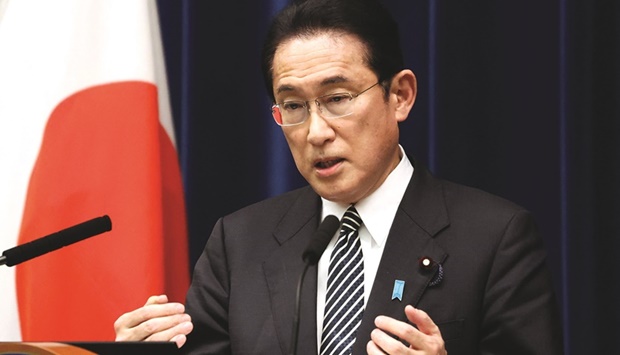
Japanese Prime Minister Fumio Kishida speaks during a press conference at the prime minister’s official residence in Tokyo on December 21. The annual budget will fund some of the spending for Kishida’s recent stimulus package of more than $690bn that aimed to shore up a recovery from Covid that is now facing the challenge of the new Omicron variant.