


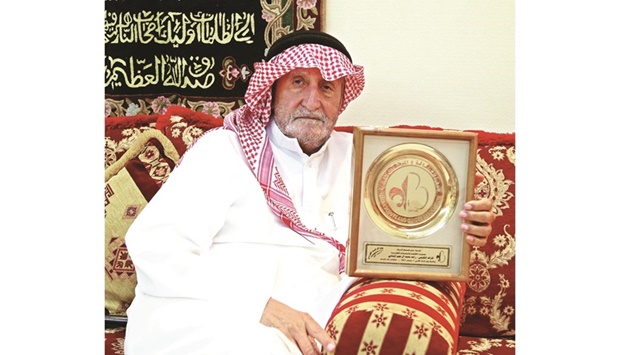
Al-Mannai, who was one of the first generation of Qatari engineers, and former director of the Civil Engineering Department at the Ministry of Public Works, oversaw the implementation of many road projects in the country during the eighties.
Engineer Rashid Mohamed al-Mannai, one of the first generation of Qatari engineers, and former director of the Civil Engineering Department at the Ministry of Public Works , oversaw the implementation of many road projects in the country during the eighties.
He recently talked about his memories of that important era in the history of Qatar’s renaissance to local Arabic daily Arrayah.
He is of the view that his generation of engineers was very fortunate. He oversaw the completion of many of the first projects in the country during the seventies and eighties. They represented an important and vital addition to the path of the modern renaissance of Qatar.
Engineer al-Mannai recalled that he was one of the three Qatari students who enrolled in various disciplines in the faculties of engineering after obtaining a secondary certificate in the 1960s. He pointed out that the total number of Qatari students in the two scientific and literary sections at that time was about 15. He said that in the sixties, there was the Doha Secondary School only, and the number of students did not exceed 15 in the scientific and literary sections. The State provided students with free clothes, shoes, books and food.
"Considering that we were the first graduates at the state level, we were five, and each of us specialised in a different area. When we returned after graduation, there were no large construction projects in the country, but the situation gradually changed, as many projects began to be implemented , thanks to the vision of the government at that time."
Engineer al-Mannai supervised the most prominent road projects of his time. At the forefront of these was the Corniche development project. The implementation of this project faced some difficulties, as most notably the land on which the Corniche was supposed to be constructed, were the private property of many citizens, and the procedures for expropriation was protracted and complicated. Then the American company that we contracted provided us with the solution of filling (reclaiming) the sea. "That is what we did in the Corniche, and the same in the case of the Al-Dafna area, where there was a hill."
With regard to the Al-Mannai Bridge and Tunnel, he said there was a roundabout in this area. "As we were looking at the long-term traffic situation, we set up a plan to build them. I remember that one of the funny paradoxes that occurred while we were constructing the Mannai Bridge and Tunnel was that we found oil on the site during the excavation work. This was a source of great joy to the state and brought happiness to our souls. But after the necessary analyses, we discovered that the source of this oil was a leakage from the underground tanks of one of the nearby petrol stations, and the necessary measures were taken to stop it."
It was named Al-Mannai Bridge due to the presence of the headquarters of Al-Mannai Motors there.
"As for Al Jaidah Bridge, there was a roundabout at its site, and the traffic on Salwa Road for those heading to Doha and Msheireb witnessed heavy congestion. In order to overcome these problems , we had to remove the roundabout and replace it with the bridge. It was named Al Jaidah Bridge due to the location of the Jaidah Company headquarters there."
Engineer al-Mannai pointed out that local contracting companies implemented most of the road projects in the country during that period. These projects contributed to the promotion of their activities and popularity. He said he supervised the important project of the construction of the Khalifa Bridge. It is located near the Mohammed Abdul Wahab Mosque and the area where it was built was a hill. It was a very difficult terrain because of the rocks that blocked the path of the road. We had to hire a foreign company to blast these rocks with dynamite. This caused some damages to houses near the area, and this was the first time that dynamite was used in a road project in Qatar.
The "Majnun (crazy) Roundabout” was one of the prominent projects that Engineer al-Mannai supervised, and it sparked some controversy. We had an English traffic engineer working as a consultant in the Ministry of Public Works. He suggested that we replace the large roundabout that was located in the same place with a roundabout similar to the one he had seen in Britain to overcome the relatively heavy traffic in the area. However, because of its complication, it required a certain amount of concentration and understanding on the part of the motorists and some of them felt it was difficult and called it "crazy roundabout" as a sign of their dissatisfaction with the design, and it was later removed.
Talking about his personal life he said: “Since childhood, I have been involved in boy scouts’ activities, and I have been honoured by the Pioneers Department of the Qatar Scouts and Guides Association recently.”
He recently talked about his memories of that important era in the history of Qatar’s renaissance to local Arabic daily Arrayah.
He is of the view that his generation of engineers was very fortunate. He oversaw the completion of many of the first projects in the country during the seventies and eighties. They represented an important and vital addition to the path of the modern renaissance of Qatar.
Engineer al-Mannai recalled that he was one of the three Qatari students who enrolled in various disciplines in the faculties of engineering after obtaining a secondary certificate in the 1960s. He pointed out that the total number of Qatari students in the two scientific and literary sections at that time was about 15. He said that in the sixties, there was the Doha Secondary School only, and the number of students did not exceed 15 in the scientific and literary sections. The State provided students with free clothes, shoes, books and food.
"Considering that we were the first graduates at the state level, we were five, and each of us specialised in a different area. When we returned after graduation, there were no large construction projects in the country, but the situation gradually changed, as many projects began to be implemented , thanks to the vision of the government at that time."
Engineer al-Mannai supervised the most prominent road projects of his time. At the forefront of these was the Corniche development project. The implementation of this project faced some difficulties, as most notably the land on which the Corniche was supposed to be constructed, were the private property of many citizens, and the procedures for expropriation was protracted and complicated. Then the American company that we contracted provided us with the solution of filling (reclaiming) the sea. "That is what we did in the Corniche, and the same in the case of the Al-Dafna area, where there was a hill."
With regard to the Al-Mannai Bridge and Tunnel, he said there was a roundabout in this area. "As we were looking at the long-term traffic situation, we set up a plan to build them. I remember that one of the funny paradoxes that occurred while we were constructing the Mannai Bridge and Tunnel was that we found oil on the site during the excavation work. This was a source of great joy to the state and brought happiness to our souls. But after the necessary analyses, we discovered that the source of this oil was a leakage from the underground tanks of one of the nearby petrol stations, and the necessary measures were taken to stop it."
It was named Al-Mannai Bridge due to the presence of the headquarters of Al-Mannai Motors there.
"As for Al Jaidah Bridge, there was a roundabout at its site, and the traffic on Salwa Road for those heading to Doha and Msheireb witnessed heavy congestion. In order to overcome these problems , we had to remove the roundabout and replace it with the bridge. It was named Al Jaidah Bridge due to the location of the Jaidah Company headquarters there."
Engineer al-Mannai pointed out that local contracting companies implemented most of the road projects in the country during that period. These projects contributed to the promotion of their activities and popularity. He said he supervised the important project of the construction of the Khalifa Bridge. It is located near the Mohammed Abdul Wahab Mosque and the area where it was built was a hill. It was a very difficult terrain because of the rocks that blocked the path of the road. We had to hire a foreign company to blast these rocks with dynamite. This caused some damages to houses near the area, and this was the first time that dynamite was used in a road project in Qatar.
The "Majnun (crazy) Roundabout” was one of the prominent projects that Engineer al-Mannai supervised, and it sparked some controversy. We had an English traffic engineer working as a consultant in the Ministry of Public Works. He suggested that we replace the large roundabout that was located in the same place with a roundabout similar to the one he had seen in Britain to overcome the relatively heavy traffic in the area. However, because of its complication, it required a certain amount of concentration and understanding on the part of the motorists and some of them felt it was difficult and called it "crazy roundabout" as a sign of their dissatisfaction with the design, and it was later removed.
Talking about his personal life he said: “Since childhood, I have been involved in boy scouts’ activities, and I have been honoured by the Pioneers Department of the Qatar Scouts and Guides Association recently.”