


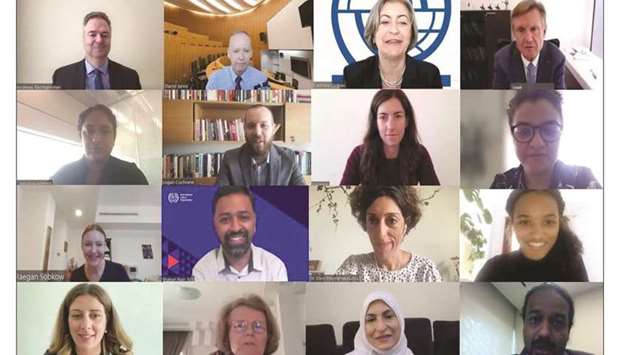
The College of Public Policy (CPP) at Hamad Bin Khalifa University (HBKU), Qatar Foundation (QF), and the International Organisation for Migration (IOM) jointly held a roundtable on Good Practices and Lessons Learned in Making Migration Work for All.
The event brought together academics, experts and policymakers from Qatar and other countries to identify and reflect on good practices and lessons learned in global migration governance and policy-making.
The discussions were situated in the context of the 2030 Agenda for Sustainable Development, the Global Compact for Safe, Orderly and Regular Migration (GCM), and the recognition that migration is a powerful driver of development.
IOM Regional Director for the Middle East and North Africa, Carmela Godeau, pointed out that labour migration can bring enormous benefits when governed in a way that reinforces the matching of workers skills with market needs, brings innovation, qualifications and expertise, fills the gaps in national labour markets, and contributes to the protection of the rights of migrant workers.
In turn, IOM Chief of Mission in Qatar, Iman Ereiqat, emphasised the importance of the partnership between IOM Qatar and HBKU, a member of QF, and the importance of these kinds of discussions in bringing lessons learned and best practices from across the world.
The first session explored "The Importance of Data and Research in Supporting Evidence-Based Policies", with presentations by Dr Pal, co-champion of QF's flagship initiative, the Qatar Human Capital Manara, to understand the future of work and identifying future skills-based training.
Data disaggregation and the 2030 agenda, as well as the Arab Regional Migration Situational Report 2020, were also discussed.
The second session highlighted "Best Practices and Lessons Learned From Labour Migration Models From Around the World", and how countries have adapted their policies to ensure respect and protection for migrant workers rights.
The session featured presentations on "Migrants and Obligations of Non-Discrimination and International Human Rights Perspectives"; and "Ethiopia-Qatar Bilateral Agreements Relating to Labour Migration".
The third session was on "Fostering Skilled Migration and Investing in Skills Development, Matching and Recognition" and speakers discussed the importance of skills development and specialisation for high and low-skill workers, and harmonisation through skills mobility partnerships.
Commenting after the roundtable, CPP founding Dean Dr Leslie A Pal said: "We express our appreciation to IOM for partnering with CPP on this event, and bringing the appropriate role players into this conversation, adding that while migration policies vary from country to country, and region to region, there is unison that work must continue to enhance the links between sustainable development and migration. This roundtable was valuable in bringing to the fore the growing role of data in evidence-based migration policies, and other important considerations for migration governance and policy development."
The discussions were situated in the context of the 2030 Agenda for Sustainable Development, the Global Compact for Safe, Orderly and Regular Migration (GCM), and the recognition that migration is a powerful driver of development.
IOM Regional Director for the Middle East and North Africa, Carmela Godeau, pointed out that labour migration can bring enormous benefits when governed in a way that reinforces the matching of workers skills with market needs, brings innovation, qualifications and expertise, fills the gaps in national labour markets, and contributes to the protection of the rights of migrant workers.
In turn, IOM Chief of Mission in Qatar, Iman Ereiqat, emphasised the importance of the partnership between IOM Qatar and HBKU, a member of QF, and the importance of these kinds of discussions in bringing lessons learned and best practices from across the world.
The first session explored "The Importance of Data and Research in Supporting Evidence-Based Policies", with presentations by Dr Pal, co-champion of QF's flagship initiative, the Qatar Human Capital Manara, to understand the future of work and identifying future skills-based training.
Data disaggregation and the 2030 agenda, as well as the Arab Regional Migration Situational Report 2020, were also discussed.
The second session highlighted "Best Practices and Lessons Learned From Labour Migration Models From Around the World", and how countries have adapted their policies to ensure respect and protection for migrant workers rights.
The session featured presentations on "Migrants and Obligations of Non-Discrimination and International Human Rights Perspectives"; and "Ethiopia-Qatar Bilateral Agreements Relating to Labour Migration".
The third session was on "Fostering Skilled Migration and Investing in Skills Development, Matching and Recognition" and speakers discussed the importance of skills development and specialisation for high and low-skill workers, and harmonisation through skills mobility partnerships.
Commenting after the roundtable, CPP founding Dean Dr Leslie A Pal said: "We express our appreciation to IOM for partnering with CPP on this event, and bringing the appropriate role players into this conversation, adding that while migration policies vary from country to country, and region to region, there is unison that work must continue to enhance the links between sustainable development and migration. This roundtable was valuable in bringing to the fore the growing role of data in evidence-based migration policies, and other important considerations for migration governance and policy development."