


One year after the pandemic forced a delay, Dubai is set to open its $7bn Expo on a desert site the size of 600 football fields.
Having spent years preparing for the event, the city hopes that an exhibition featuring autonomous vehicles, a pavilion shaped like falcons and one with an original Pharaoh coffin will attract enough tourists to help solidify a nascent economic recovery.
Starting Friday, diplomats, dealmakers, artists and musicians will fly in from around the world. The city has stuck to its target of 25mn visits – both virtually and in person – and at a time when travel restrictions have slowed business across financial centres, the six-month long exhibition may even help to create a template for others to follow.
Dubai has shunned lockdowns since emerging from one last year, keeping its economy open and embarking on an ambitious vaccination drive. The United Arab Emirates, of which Dubai is a part, has inoculated more than 80% of its population and infections rates have dropped. The country is now placed sixth on Bloomberg’s Resilience Rankings.
“There’s a good balance between keeping the city open for business and managing the public health issue,” said Nabil Alyousuf, a former senior UAE official who is the CEO of Dubai-based International Advisory Group.
An influx of tourists will benefit the city, given that a third of its economy is made up of sectors like hospitality and wholesale and retail trade. Dubai government employees will even get six days off to visit the event. Capital Economics economist James Swanston, however, cautioned long-term effects may “fail to live up to policymakers’ hopes.”
For now, employment numbers at least are looking up. The city’s flagship airline is planning to recruit thousands over the next six months and hoteliers are adding jobs.
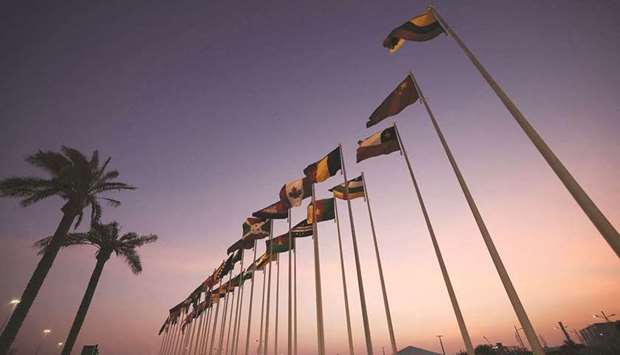
The national flags of countries participating in the Expo 2020 are lined up at the entrance of the venue yesterday.