


The College of Health and Life Sciences (CHLS) at Hamad Bin Khalifa University (HBKU) recently presented a talk by Dr Vishva M Dixit, vice president of Early Discovery Research at Genentech Inc., and one of the world’s most eminent biomedical science researchers.
Titled 'The Non-Canonical Inflammasome Pathway', the seminar was an opportunity for HBKU faculty, researchers, and graduate students to engage with a pioneering figure in the scientific community.
Dr Dixit’s publications rank among the most-cited in the world and his work explaining the molecular mechanisms of inflammation has become part of standard scientific textbooks. He also oversees Genentech’s postdoctoral fellowship programme. The interactive discussions were moderated by Dr Fadel Tissir, professor at CHLS.
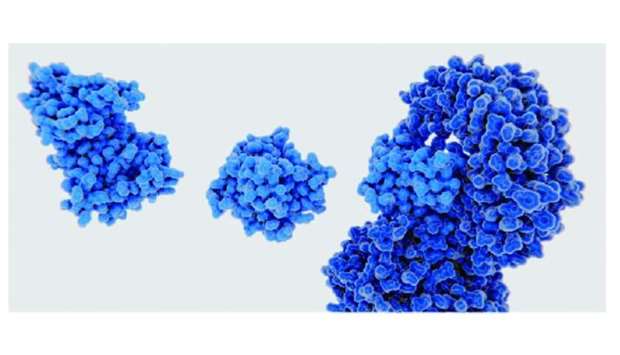
Dr Dixit presented an update on his team’s discovery that the protein ninjurin-1 (NINJ1) is an important driver of inflammation. His laboratory has recorded many pioneering research firsts that have defined the biochemical framework of the cell death pathway. This latest finding on the role of NINJ1 is widely recognised to have potential implications for novel strategies and therapeutics to target cell death-driven inflammation, and diseases with a prominent inflammatory component.
Dr Omar Khan, assistant professor at CHLS, said: “Dr Dixit’s seminal biomedical research has advanced the scientific community’s understanding of cell death signalling and inflammation, and how it can help the discovery of innovative treatments. For the CHLS and HBKU community, his talk was a tremendous learning opportunity. It will certainly enrich our work with cutting-edge knowledge to address pressing national and regional health challenges, and educate future generations of biomedical research scientists.”
Titled 'The Non-Canonical Inflammasome Pathway', the seminar was an opportunity for HBKU faculty, researchers, and graduate students to engage with a pioneering figure in the scientific community.
Dr Dixit’s publications rank among the most-cited in the world and his work explaining the molecular mechanisms of inflammation has become part of standard scientific textbooks. He also oversees Genentech’s postdoctoral fellowship programme. The interactive discussions were moderated by Dr Fadel Tissir, professor at CHLS.
Dr Dixit presented an update on his team’s discovery that the protein ninjurin-1 (NINJ1) is an important driver of inflammation. His laboratory has recorded many pioneering research firsts that have defined the biochemical framework of the cell death pathway. This latest finding on the role of NINJ1 is widely recognised to have potential implications for novel strategies and therapeutics to target cell death-driven inflammation, and diseases with a prominent inflammatory component.
Dr Omar Khan, assistant professor at CHLS, said: “Dr Dixit’s seminal biomedical research has advanced the scientific community’s understanding of cell death signalling and inflammation, and how it can help the discovery of innovative treatments. For the CHLS and HBKU community, his talk was a tremendous learning opportunity. It will certainly enrich our work with cutting-edge knowledge to address pressing national and regional health challenges, and educate future generations of biomedical research scientists.”