


China Evergrande Group is facing mounting protests by homebuyers, retail investors and even its own employees, raising the stakes for authorities in Beijing as they try to prevent the property giant’s debt crisis from sparking social unrest.
Police descended on Evergrande’s Shenzhen headquarters late Monday after dozens of people gathered to demand repayments on overdue wealth management products. Protesters numbered in the hundreds on Sunday, Caixin reported.
Evergrande told employees at its office in Shenyang, near the border with North Korea, to work from home after staffers who bought the company’s WMPs staged a protest over the weekend, a person familiar with the matter said. In Guangzhou, angry homebuyers surrounded a local housing bureau last week to demand Evergrande restart stalled construction.
Unconfirmed videos of protests against the developer in other parts of China were being shared widely on Weibo, the country’s popular microblogging platform. There’s no indication that any of them have turned violent.
In a statement late Monday, Evergrande said rumours that it will go bankrupt are not true. While the developer is facing unprecedented difficulties, it is firmly fulfilling its responsibilities and is doing everything possible to restore normal operations and protect the legitimate rights and interests of customers, according to the statement on its website. The company didn’t comment on the protests.
The latest uproar allows Evergrande’s proposal late last week to impose lengthy repayment delays on holders of WMPs, the lightly regulated investment vehicles that have become a key source of funding for the developer. While Evergrande tweaked its plan on Monday in an attempt to mitigate the backlash, retail and institutional investors will still face delays unless they accept repayment in the form of Evergrande-developed properties.
Small-scale protests over troubled investment products aren’t unheard of in China, but they’re rare enough to attract attention from authorities who put a premium on social stability and have little tolerance for unsanctioned gatherings.
Whether they prompt Xi Jinping’s government to change tack on Evergrande remains to be seen. China’s top financial regulator signed off on the developer’s plan to renegotiate payment deadlines with banks and other creditors in August, a person familiar with the matter said last week. It’s unclear if officials had given explicit guidance on WMPs.
With more than $300bn in liabilities, the developer has become one of the most systemically important companies in China. On top of its obligations to WMP investors and bondholders, it owes about $147bn in trade and other payables to suppliers and received down payments on yet-to-be-completed properties from more than 1.5mn home buyers as of December.
Evergrande’s bonds are pricing in a near-certain likelihood of default, with its dollar note due 2022 falling by about 2 cents to 31 cents on Monday.
The developer has said it’s exploring the sale of interests in its listed electric vehicle and property services units, as well as other assets, and seeking to bring in new investors and renew borrowings. It’s also discounting properties aggressively to boost sales, with mixed success. Contracted sales, including those to suppliers and contractors to offset payments, tumbled 26% last month from a year ago.
Evergrande said in August it was forced to suspend work on some projects due to overdue payables. The company’s billionaire founder, Hui Ka Yan, pledged to complete projects this month, issuing what he called a “military order” to ensure property construction and delivery.
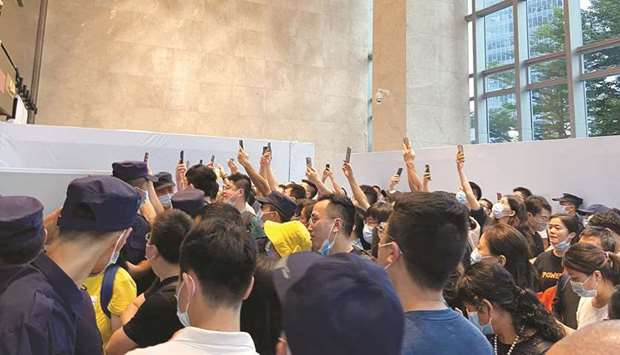
People gather to demand repayment of loans and financial products at Evergrande’s headquarters, in Shenzhen, Guangdong province, China, yesterday. With more than $300bn in liabilities, the developer has become one of the most systemically important companies in China.